Simulation of Complex Core Assemblies: From Geometry to Safety-Grade Predictions
A deep dive into the computational methods, high-fidelity geometry pipelines, and coupled multiphysics frameworks that enable reliable, safety-grade predictions for modern nuclear reactor core designs — from fast reactors to large-scale PWRs.
The Payoff: Transients, Control,
and Confidence Across
Operating Conditions
High-fidelity geometry and validated neutronics are necessary but not sufficient. The ultimate measure of a simulation framework's value lies in its ability to predict reactor behaviour under the challenging transient and off-normal conditions that define the safety envelope. Once validated steady-state models exist, the infrastructure supports coupled transient analysis that directly informs safety-case conclusions and operational limits.
Steady-State Models Become Safety Tools
Unprotected Loss of Flow (ULOF)
In a ULOF transient, primary coolant flow is lost without a reactor scram. The coupled neutronics-thermal-hydraulics response determines whether passive reactivity feedbacks (primarily Doppler broadening and coolant density effects) are sufficient to reduce power and prevent fuel damage.
Simulation must capture the interplay between rising coolant temperature, changing neutron spectrum, and spatial power redistribution — all on timescales of seconds to minutes.
Multiple Physical Mechanisms React Together
UBA & Transient Overpower (UTOP)
In accelerator-driven systems such as EFIT, beam-related transients introduce additional complexity. SIMMER-III modelling of UTOP conditions shows power stabilising approximately 40% above nominal, with peak fuel temperatures reaching approximately 1,750°C — a margin-consuming but sub-damage outcome under the modelled conditions.
Crucially, a beam trip can reduce the maximum fuel temperature by approximately 720°C, demonstrating the passive safety benefit of accelerator-driven subcritical operation.
Depletion and Full-Power Extensions
Beyond accident transients, validated high-fidelity tools enable reliable predictions across the full operating cycle — including burnup-dependent changes in isotopic composition, reactivity coefficients, and power distribution.
This capability supports extension of operating conditions, justification of increased burnup targets, and evaluation of mixed-core configurations, all of which have direct economic and fuel-cycle efficiency implications.
Reliable Analysis Across the Entire Fuel Cycle
From Simulation to Safety-Grade Conclusion
Each stage — parallel mesh generation, pin-by-pin neutron transport, coupled thermal-hydraulics, and transient integration — must be individually validated before the chain can support a safety-grade conclusion.
Better Predictions Enable Better Decisions
→ Multiphysics → Safety
The VERA-CS and SIMMER-III results demonstrate that contemporary HPC resources can now support physically faithful and computationally tractable safety-grade reactor predictions.
The Simulation Pipeline
Is Mature Enough To Deliver
Safety-Grade Predictions.
High-fidelity tools paired with validated benchmarks — including Monte Carlo cross-checks, measured critical configurations, and peer-reviewed transient databases — provide the technical foundation for extending reliable predictions to a broader range of operating conditions than empirical correlations alone can support. The practical outcome is reduced conservatism in safety limits, more defensible licensing submissions, and the analytical confidence to evaluate novel core designs and fuel management strategies that would otherwise require costly in-reactor demonstration programmes. The simulation pipeline, from parallel mesh generation through pin-by-pin transport to coupled transient analysis, is now mature enough to deliver safety-grade predictions for complex core assemblies, provided each component is rigorously validated against independent references.
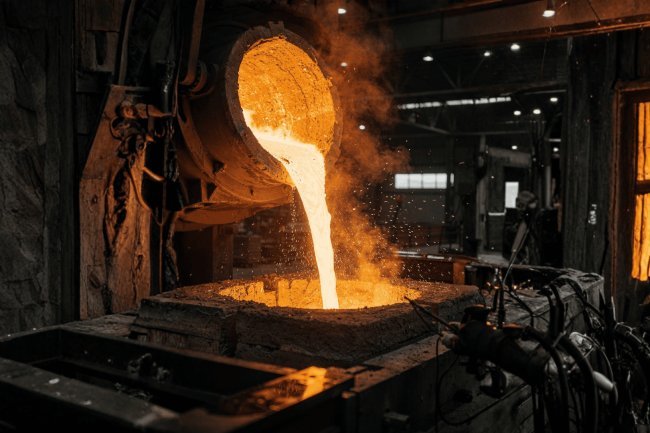
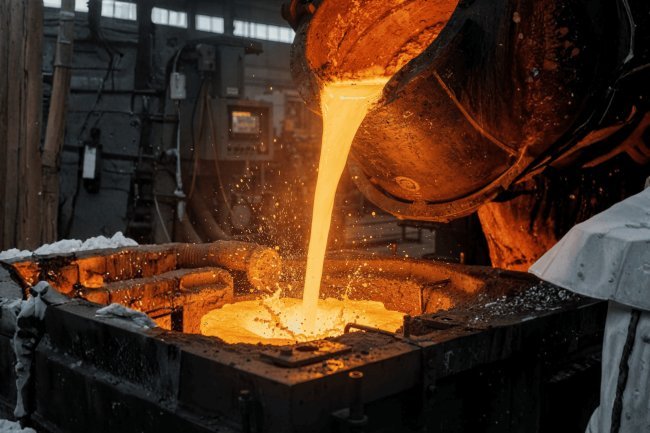
Before any neutron transport or thermal-hydraulics calculation can begin, the reactor geometry must be discretised into a computational mesh. For a full reactor core—comprising hundreds of fuel assemblies, control rods, reflectors, and structural components—this mesh generation step is frequently the single most time-consuming and memory-intensive stage of the entire simulation workflow.
Generating detailed unstructured meshes for a full reactor core in serial can consume multiple days of wall-clock time and may exhaust the memory capacity of even high-specification engineering workstations. The problem scales poorly: doubling geometric fidelity does not merely double mesh size—it compounds through assembly-to-assembly interfaces, coolant subchannels, and contact surfaces, rapidly pushing requirements beyond what conventional meshing workflows can accommodate.
Sandia National Laboratories addressed this limitation through the Reactor Geometry (and mesh) Generator (RGG) framework, built on top of the MeshKit toolkit. The key tools—AssyGen for individual fuel assembly geometry construction and CoreGen for full-core assembly—exploit coarse-grained parallelism to distribute the meshing workload across multiple processors simultaneously.
AssyGen and CoreGen exploit coarse-grained parallelism to distribute meshing workload across processors—reducing generation time from days to hours.
The transition from coarse to fine models is governed by physics requirements rather than mesh generation limitations—making high-fidelity models practical within an engineering workflow.
Sandia's parallel RGG approach transforms mesh generation from a serial bottleneck into a parallel enabler—making 1.2B-element, 137GB full-core models practical within an engineering workflow.
Why "Making the Mesh"
Becomes the BottleneckDays of wall-clock time, memory exhaustion.
From days to hours via coarse-grained parallelism.
Measurable, significant practical impact.
and memory-intensive stage of the entire simulation workflow
—and parallel RGG turns it from bottleneck into enabler.
Diffusion theory and lattice-physics approximations have supported nuclear engineering for decades, but their limitations become important in heterogeneous cores, near control rod banks, and during startup transients with steep neutron-flux gradients. VERA-CS advances whole-core analysis by resolving individual fuel pins with high-fidelity neutron transport.
Whole-core spatial resolution
VERA-CS performs whole-core neutron transport on a pin-by-pin spatial mesh, treating every individual fuel rod as a distinct computational entity rather than relying entirely on assembly-homogenized representations.
Cross-sections are generated during the calculation to account for local burnup, temperature, and coolant density conditions, reducing dependence on pretabulated data and conventional group-collapse approximations.
VERA-CS uses continuous-energy Monte Carlo codes, including KENO and SHIFT, as reference benchmarks. These calculations provide a rigorous comparison for deterministic transport methods, especially for startup configurations where measurement data may not yet exist before first criticality.
Continuous-energy neutron transport reference
Avoids conventional spatial and energy-group approximations in the reference calculation
Enables deterministic results to be assessed before reactor operation
Reported agreement with Monte Carlo reference calculations across the tested core configurations.
Sub-1% RMS agreement in individual pin powers indicates that VERA-CS can reproduce the spatial power distribution with high fidelity relative to the stochastic reference calculation for the configurations tested.
Engineering advantage: Deterministic calculations can support repeated design iterations without requiring a computationally expensive Monte Carlo run for every variant.
VERA-CS combines pin-by-pin whole-core transport, on-the-fly cross-section generation, and Monte Carlo benchmarking to improve the fidelity of reactor power predictions. Its reported sub-1% pin-power RMS difference in the tested AP1000 configurations is a strong benchmark result, while the applicability of any safety analysis still depends on configuration-specific validation, uncertainty treatment, and regulatory review.
Neutronics That Don't Handwave: VERA's Pin-by-Pin Transport
Pin-by-Pin Transport at Scale
On-the-Fly Cross-Sections
Validation Against Monte Carlo
Why Use Monte Carlo?
Pin-Power RMS Difference
What the Result Demonstrates
The Engineering Takeaway
High-fidelity geometry and validated neutronics are necessary but not sufficient. The ultimate measure of a simulation framework's value lies in its ability to predict reactor behaviour under the challenging transient and off-normal conditions that define the safety envelope. Once validated steady-state models exist, the infrastructure supports coupled transient analysis that directly informs safety-case conclusions and operational limits.
In a ULOF transient, primary coolant flow is lost without a reactor scram. The coupled neutronics-thermal-hydraulics response determines whether passive reactivity feedbacks are sufficient to reduce power and prevent fuel damage.
Simulation must capture the interaction of coolant temperature rise, neutron-spectrum evolution, Doppler broadening, coolant density feedback, and spatial power redistribution across timescales ranging from seconds to minutes.
In accelerator-driven systems such as EFIT, beam-related transients introduce additional complexity. SIMMER-III modelling of UTOP conditions shows reactor power stabilising at approximately 40% above nominal while peak fuel temperatures reach approximately 1,750°C.
Although this consumes thermal margin, the condition remains below damage thresholds under the modelled assumptions. The results highlight how tightly coupled neutronics and thermal response determine transient outcomes.
A beam trip can reduce maximum fuel temperature by approximately 720°C, illustrating one of the principal passive safety benefits of accelerator-driven subcritical systems.
Beyond accident transients, validated high-fidelity tools enable reliable predictions throughout the full operating cycle, including burnup-dependent changes in isotopic inventories, reactivity coefficients, and power distributions.
These capabilities support increased burnup targets, operating-condition extensions, and the evaluation of mixed-core configurations with direct implications for fuel-cycle efficiency and plant economics.
High-fidelity tools allow engineers to justify expanded operating conditions, strengthen licensing submissions, and evaluate innovative core concepts without relying exclusively on costly in-reactor demonstration programmes.
The ultimate value of reactor simulation emerges when validated steady-state models are extended into transient and off-normal operating conditions. ULOF scenarios require tightly coupled neutronics and thermal-hydraulics to evaluate passive feedback effectiveness, while accelerator-driven systems introduce unique beam-related transient behaviors whose consequences depend on detailed multiphysics interactions. Beyond accident analysis, modern simulation frameworks support burnup evolution, cycle-extension studies, mixed-core evaluation, and advanced fuel-management strategies. The complete path from parallel mesh generation to pin-by-pin neutron transport, coupled thermal-hydraulic analysis, and transient integration forms a mature engineering workflow capable of supporting licensing, safety assessment, and operational decision-making. When each stage is independently validated against trusted references, the resulting predictions provide the confidence required to reduce unnecessary conservatism, evaluate innovative reactor concepts, and support safety-grade conclusions across a wider range of operating conditions than empirical methods alone can achieve.
The Payoff: Transients, Control,
and Confidence Across
Operating ConditionsSteady-State Models Become Safety Tools
Unprotected Loss of Flow (ULOF)
Multiple Physics Domains Respond Simultaneously
A Seconds-to-Minutes Physics Problem
UBA & Transient Overpower (UTOP)
Fuel Temperature Reduction
Depletion and Full-Power Extensions
Follow the Core Through Its Entire Life
From Simulation to Safety-Grade Conclusion
Every Link Must Be Verified
Greater Analytical Confidence.
The Complete Chain Is Now Feasible
The Simulation Pipeline
Is Now Capable of Delivering
Safety-Grade Confidence.
What's Your Reaction?