Investment Casting: The Hidden Heart of Aerospace
Behind every turbine blade, every structural airframe component, and every high performance defense system lies a manufacturing process as ancient as civilization itself — and as indispensable as the engines it enables. Investment casting is the quiet backbone of modern aerospace, shaping the parts that withstand the most extreme conditions on Earth and beyond.
An Ancient Art, A Modern Necessity
The Same Core Process, Reimagined for Flight
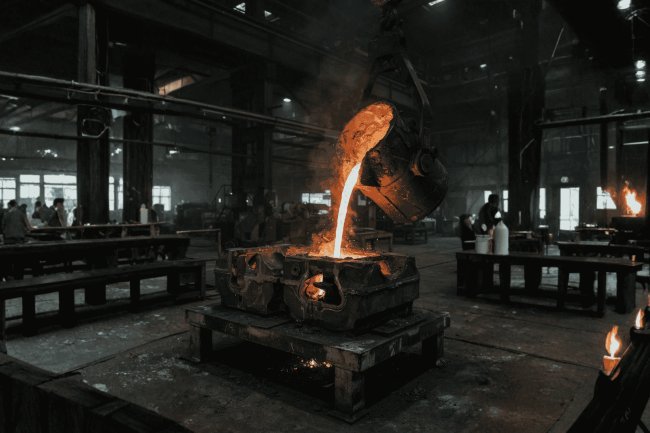
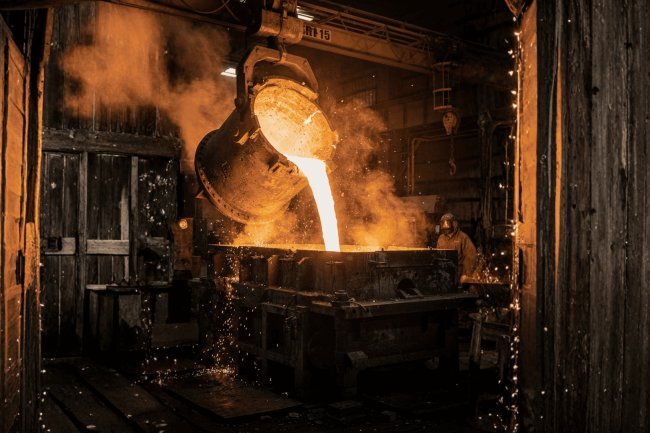
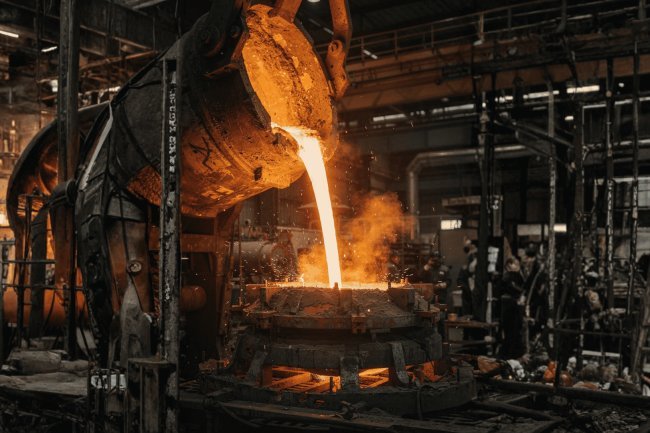
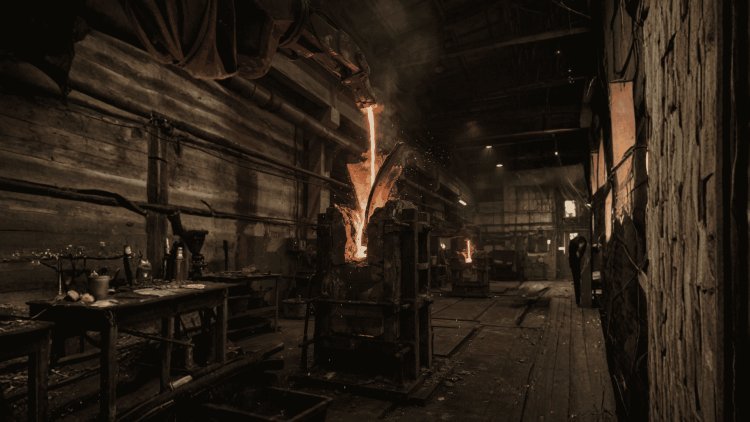
What began as a technique using beeswax and clay in ancient civilizations has evolved into one of aerospace manufacturing's most sophisticated production methods. Modern investment casting delivers geometric complexity and metallurgical precision that remain unmatched for many flight-critical applications.
Near-Net-Shape Production
Investment casting produces components remarkably close to final geometry, reducing machining hours, conserving expensive aerospace alloys, minimizing waste, and lowering total production costs.
Complex Geometries, Critical Applications
From turbine blades to engine hardware, investment casting enables intricate internal cooling passages and highly complex shapes that would be difficult or uneconomical to achieve through alternative manufacturing methods.
Enabling Efficient Engines
Advanced propulsion systems depend on lightweight, thermally resilient components. Investment casting helps manufacturers achieve demanding fuel-efficiency, emission-reduction, and performance targets simultaneously.
Where Investment Casting Creates Value
Major aircraft programs and defense primes are dealing with long queues that suppliers cannot absorb overnight.
Small process deviations can ruin entire batches, turning scarce capacity into lost schedule time and higher cost.
Requalifying a new foundry can take 18 to 36 months, so buyers are often stuck with the same constrained supplier even during shortages.
Capacity expansions require years of investment and certification, so today’s shortage tends to compound tomorrow’s backlog instead of clearing it.
The result is delayed deliveries, program overruns, and high dependence on a small number of qualified foundries across the aerospace supply base.
The Reality of the Bottleneck
10-Year Order Books
Yield Volatility
The Certification Trap
Investment casting relies on decades of practical experience that often cannot be found in manuals or databases. As veteran foundry professionals retire, invaluable process intuition is leaving the industry. At the same time, educational programs increasingly emphasize emerging materials technologies, creating a shortage of engineers with hands-on casting expertise.
Aerospace casting depends heavily on nickel and titanium alloy systems. Geopolitical pressures, mining disruptions, and growing demand from energy-transition industries continue to create volatility in pricing, supply availability, and long-term planning for foundries operating under tight margins.
Many aerospace programs continue applying forged-part assumptions to cast components. Tolerance targets, inspection requirements, and surface finish expectations developed for wrought materials can create unnecessary conflict when imposed on castings, leading to redesign cycles, delayed qualification, and supplier frustration.
Human and Material Constraints
The Workforce Knowledge Gap
Raw Material Instability
Misaligned Design Expectations
How Constraints Impact Aerospace Programs
RISK
Foundries adopting simulation-driven development report meaningful reductions in first-article scrap and rework.
Virtual casting environments simulate thermal gradients, alloy behavior, mold geometry, and feeding performance before production begins, dramatically reducing expensive trial-and-error development cycles.
Robotic shell building, automated wax injection, and machine-vision inspection systems improve repeatability while reducing process variability across thousands of production cycles.
Programs such as METAL and CAST-IT encourage collaboration across the aerospace ecosystem, accelerating technology adoption, workforce development, and manufacturing modernization throughout the supply chain.
Scaling the Solution: The Path Forward
Scrap Reduction Potential
Advanced Modeling & Digital Twins
Automation of Critical Operations
Industry-Led Modernization Ecosystem
Foundry engineers, designers, and materials scientists should engage at the start of development, before geometry and process choices become locked in.
Co-location, acquisition, and contractual alignment reduce handoffs, improve traceability, and create the consistency aerospace qualification requires.
Casting-specific design guidelines and revised qualification pathways can improve yield, delivery reliability, and program success.
Investment casting should be treated as a strategic capability, with sustained investment and policy support instead of being managed as a commodity service.
The path to a resilient supply base runs through partnership, integration, and standards that reflect casting reality rather than idealized assumptions.
Building a Resilient Aerospace Casting Base
Strategic Partnerships
Vertical Integration
Design with Reality
What's Your Reaction?