Machine Learning Applications in Mold Filling Prediction
In modern foundry and manufacturing, predicting how molten metal fills a mold is critical to quality. Machine learning is transforming this process — enabling smarter, faster, and more accurate casting outcomes for companies like PoligonCast.
Why Mold Filling Prediction Matters
Quality Control
Predict and eliminate casting defects before production begins, improving yield and product reliability.
Cost Reduction
Minimize scrap, reduce physical trial runs, and lower manufacturing costs through virtual validation.
Faster Time-to-Market
Accelerate design validation and production readiness using simulation-driven decision making.
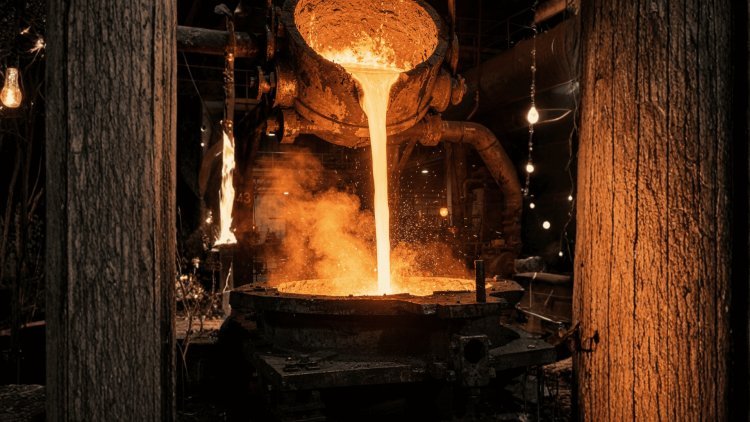
Better Flow Predictions Lead to Better Castings
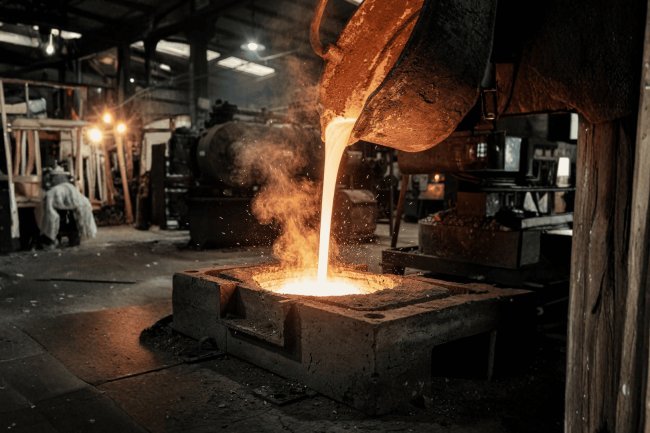
By accurately modeling mold filling behavior, engineers can optimize gating systems, reduce turbulence, improve flow balance, and eliminate costly defects long before metal enters the mold.
Model complex fluid dynamics during mold filling.
Predict fill time, cooling behavior, and temperature distribution.
Automatically flag defect-prone geometries before production begins.
How Machine Learning Enhances Simulation
Neural Networks
Regression Models
Classification Models
CNNs and RNNs capture complex spatial and temporal flow patterns across challenging mold geometries, enabling accurate prediction of filling behavior and defect formation.
Pre-trained machine-learning models rapidly adapt to new alloy systems, casting geometries, and mold designs while requiring significantly less training data.
Lightweight ML surrogates replace computationally expensive CFD calculations, enabling rapid design-space exploration and faster engineering decisions.
Key ML Techniques in Mold Filling
Deep Learning
Transfer Learning
Surrogate Modeling
Sensor measurements and casting simulation logs are gathered into a centralized dataset.
Machine learning algorithms learn from historical production and simulation data.
Real-time inference predicts mold filling behavior before production begins.
Fine-tune casting parameters to prevent defects and maximize process stability.
PoligonCast integrates this machine learning pipeline directly into its casting simulation workflow—connecting live foundry sensor data, historical simulation results, and AI inference to deliver continuous process optimization, faster decision-making, and proactive defect prevention across every production stage.
From Data to Defect Prevention
Collect Data
Train Model
Predict Filling
Optimize Process
Connected Intelligence
Accelerated model evaluation enables rapid design iteration and faster engineering decisions.
Intelligent defect prediction reduces waste and improves overall production yield.
By combining physics-based simulation, machine learning, and practical foundry expertise, PoligonCast enables manufacturers to predict quality outcomes, accelerate product development, and continuously improve production performance through a fully digital engineering workflow.
PoligonCast's Digital Manufacturing Edge
Faster Simulation Cycles
Lower Scrap Rates
Smarter Foundries Deliver Better Results
Accelerated model evaluation enables rapid design iteration and faster engineering decisions.
Intelligent defect prediction reduces waste and improves overall production yield.
By combining physics-based simulation, machine learning, and practical foundry expertise, PoligonCast enables manufacturers to predict quality outcomes, accelerate product development, and continuously improve production performance through a fully digital engineering workflow.
PoligonCast's Digital Manufacturing Edge
Faster Simulation Cycles
Lower Scrap Rates
Smarter Foundries Deliver Better Results
What's Your Reaction?