Dead Zones in Casting Flow Simulation
Where metal stalls, defects are born. Understanding and eliminating dead zones in casting flow simulation is the cornerstone of modern foundry excellence — separating precision manufacturing from costly, unpredictable failure.

The Hidden Cost of Stagnant Flow
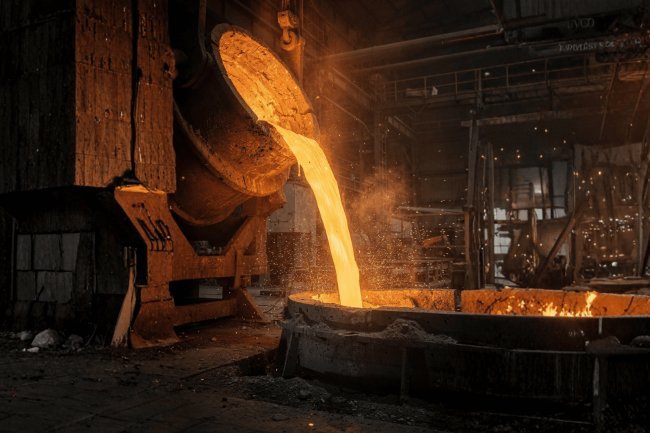
Dead zones are among the most insidious failure modes in metal casting — regions where molten metal velocity drops so dramatically that the material effectively stagnates before the mold is fully filled. The consequences ripple across the entire component: cold shuts form at boundary interfaces where two sluggish flow fronts meet without fusing, and hidden structural voids develop deep within the casting where no visual inspection can reach. These defects only reveal themselves under mechanical stress — often catastrophically, and always at great expense.
Root Causes of Dead Zones
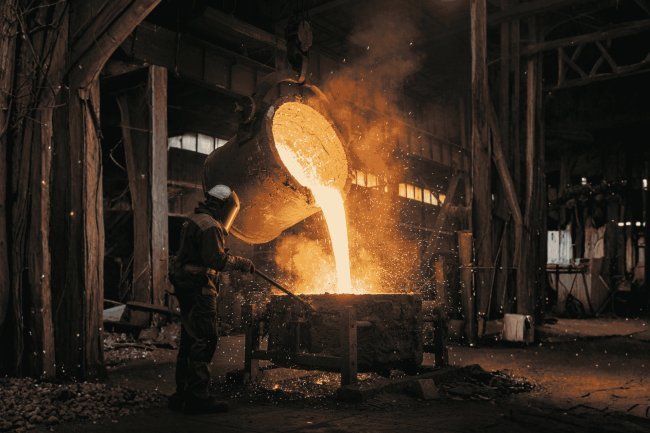
Poorly designed gating architectures are the primary culprit. When runner geometry forces metal to change direction abruptly, or when gate cross-sections are oversized relative to flow demand, turbulence becomes unavoidable.
Turbulent flow aspirates air into the melt stream, generating dross — a brittle, oxidized film that weakens the final casting and clogs flow channels, amplifying stagnation further downstream.
The Compounding Defect Chain
Dead zones rarely act in isolation. A single stagnant pocket triggers a chain reaction: trapped gas cannot escape, local temperature drops accelerate premature solidification, and misruns occur as metal fails to reach thin-section extremities.
Each defect compounds the last, turning a single gating oversight into a systematic quality failure across an entire production run.
Explore the full spectrum of solutions at PoligonCast Engineering Modules — from gating design to thermal management.
Three Defects That Follow Stagnant Flow
Cold Shuts
Form when two low-velocity flow fronts meet without adequate heat to fuse — producing a visible seam and a hidden structural weakness invisible to surface inspection.
Dross Formation
Air aspiration caused by turbulent gating oxidizes the melt surface, creating brittle inclusions that compromise mechanical properties and fatigue resistance.
Structural Voids
Subsurface porosity originating in stagnant zones remains undetected until component failure — making simulation the only reliable prevention strategy.
For decades, the internal flow behavior of molten metal during mold filling was effectively invisible—engineers relied on heuristic rules, physical trials, and costly post-mortem analysis to understand what had gone wrong. Modern casting simulation has fundamentally changed this dynamic, transforming fluid flow from an educated guess into a fully visualized, mathematically governed discipline.
Contemporary simulation platforms track the free surface of molten metal with remarkable resolution throughout the entire fill sequence. Engineers can observe exactly where the metal front decelerates, where flow paths split and recombine, and where stagnant pockets begin to form—all before a physical mold is ever constructed.
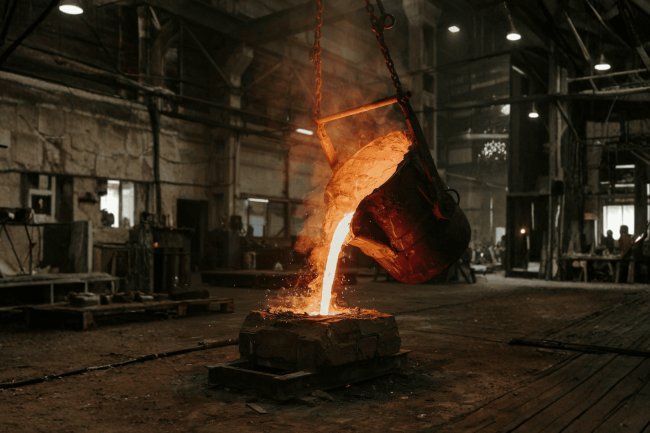
At the heart of dead zone prevention lies deliberate Gating System Architecture. A properly proportioned gating system—with controlled sprue taper, optimized runner cross-sections, and correctly sized ingate areas—promotes laminar, pressurized flow throughout the fill.
Euler solvers compute local metal velocity at every point in the mold, exposing stagnant dead zones with sub-millimeter spatial resolution across the full fill sequence.
Simultaneous temperature tracking identifies regions where the metal cools below liquidus before fill completion—predicting misruns and cold shuts with high accuracy.
Simulation confirms whether gating proportions maintain a Reynolds number consistent with laminar, non-turbulent fill—the definitive test of a properly designed gating architecture.
Mapping the Invisible
See the metal front before the mold exists.
Deliberate architecture prevents dead zones.
Expose stagnant dead zones.
Predict misruns and cold shuts.
The definitive gating architecture test.
mathematically governed discipline—
mapping the invisible before the mold is built.
The evolution of casting simulation has moved far beyond simple fill-pattern visualization. Today, transient fluid dynamics solvers capture the full complexity of wave propagation, turbulent entrainment, and gas bubble migration — phenomena that static flow maps could never reveal and that physical trials could never economically explore at scale.
Advances in transient fluid dynamics now allow engineers to watch turbulent wave propagation unfold in slow-motion digital replay. As the metal front surges into complex cavity geometries, secondary waves reflect off walls and intersect with the primary flow, creating transient high-velocity and near-zero-velocity zones that shift in position throughout the fill.
Gas bubbles born at these interfaces can be tracked from their point of entrainment through their migration path — revealing whether they will escape through the mold's venting system or become permanently trapped as porosity in a critical cross-section.
The true power of modern casting simulation lies in solver integration. By combining Fourier and Hooke solvers with fluid dynamics engines, engineers gain a fully coupled multi-physics environment.
FOURIER
Heat conduction equations govern solidification progression — predicting where hot spots will develop, where shrinkage cavities will nucleate, and how the solidification front advances from the mold wall inward.
HOOKE
Constitutive equations for elastic and plastic deformation then translate those thermal gradients into residual stress and distortion predictions.
The integration means engineers can predict shrinkage distribution, micro-porosity location, and thermally induced cracking potential — all before a single drop of metal is poured.
Design iterations that once required multiple physical trials, radiographic inspection, and weeks of analysis can now be completed in hours of computational time, delivering a profound reduction in development cost and time-to-market.
Transient Navier-Stokes solvers map velocity, turbulence, and gas entrapment throughout the entire fill sequence.
Fourier heat transfer equations predict solidification front progression, hot spots, and shrinkage cavity nucleation sites.
Hooke's constitutive solvers translate thermal gradients into residual stress and distortion — before metal is ever poured.
From Static Maps to Predictive Physics
Transient Turbulence & Gas Entrapment
Multi-Physics Solver Integration
Three Physics, One Workflow
Fluid Dynamics
Thermal Analysis
Stress Prediction
The foundry of the future is not built from sand and iron alone — it is built on a foundation of digital twins, physics-based simulation, and iterative virtual validation. Organizations that embrace this paradigm shift are systematically eliminating the manual bottlenecks, the costly physical trials, and the unpredictable defect rates that have long defined traditional casting operations.
Virtual Validation of gating systems moves the entire optimization process upstream — into the digital domain — where changes are instantaneous and iterations are essentially free. Engineers can systematically vary runner lengths, adjust gate cross-sections, reposition ingates, and modify sprue geometry, observing the effect of each change on flow uniformity, dead zone elimination, and thermal balance.
The result is a gating architecture that has been proven — not assumed — to deliver laminar, fully pressurized fill with no stagnant regions and no gas entrapment pathways.
Beyond gating geometry, virtual validation encompasses the full casting process chain: sand permeability and mold coating effects on heat transfer, chill placement for directional solidification control, and riser sizing for shrinkage compensation. Each variable is quantified, optimized, and locked into the process specification before production tooling is ever committed.
A digital twin is more than a simulation model — it is a living, evolving representation of your casting process that grows more accurate with every production run. By feeding real production data back into the simulation environment, the digital twin continuously refines its boundary conditions, improving predictive accuracy and enabling proactive process adjustments before defects can occur on the shop floor.
Explore our complete range of capabilities at PoligonCast Engineering, and discover how integrating multi-physics simulation tools can transform your foundry's performance metrics.
Maximize yield, minimize scrap, and achieve the zero-defect production standard that modern supply chains demand.
Virtual validation routinely achieves up to 90% reduction in casting defect rates by eliminating dead zones before production begins.
Digital twin-driven design cuts physical trial requirements by up to 70%, dramatically compressing development timelines and tooling costs.
Every critical process variable — flow, thermal, stress, shrinkage — is simultaneously evaluated in a single integrated simulation environment.
Explore PoligonCast Engineering and start building your virtual foundry advantage today.
The Virtual Foundry Advantage
Virtual Validation: Precision Before Production
Build Your Digital Twin Today
Measurable Production Advantages
Ready to eliminate dead zones from your casting process?
What's Your Reaction?