Traditional Foundry Challenges
The Cost of Trial Castings
COST
Trial-And-Error Manufacturing
Every Physical Trial Adds Cost, Time, and Risk
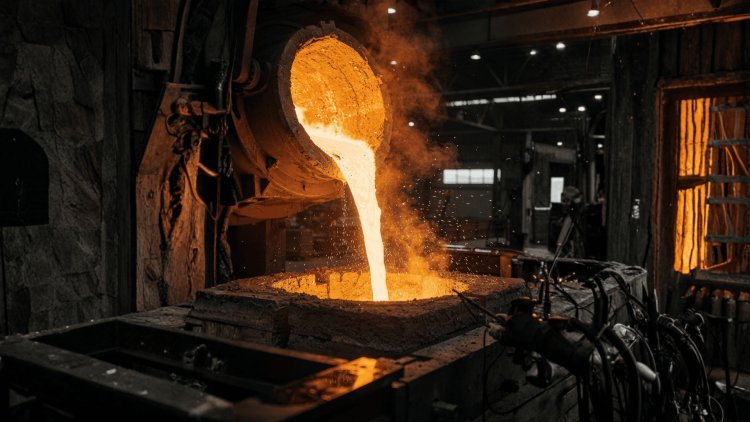
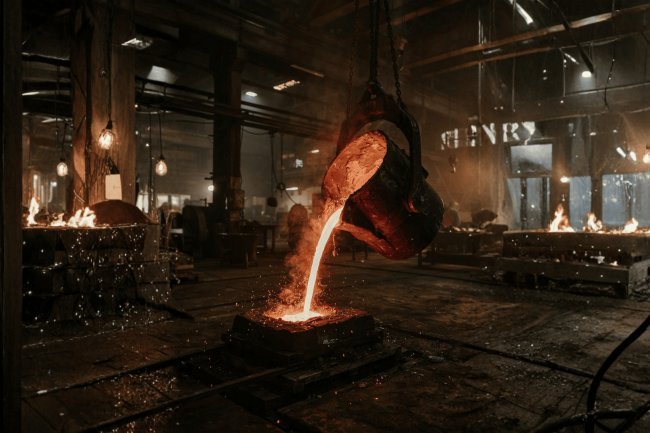
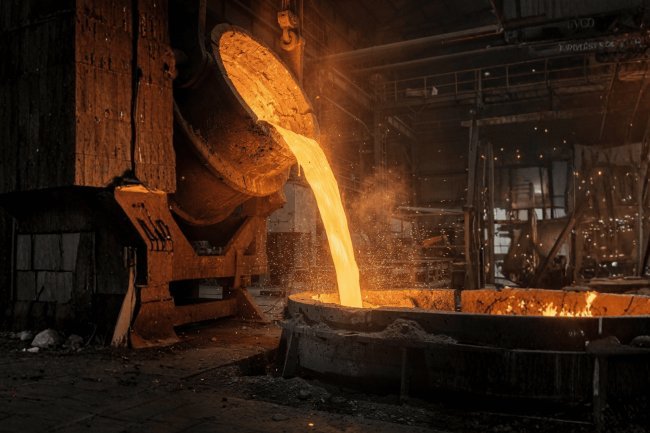
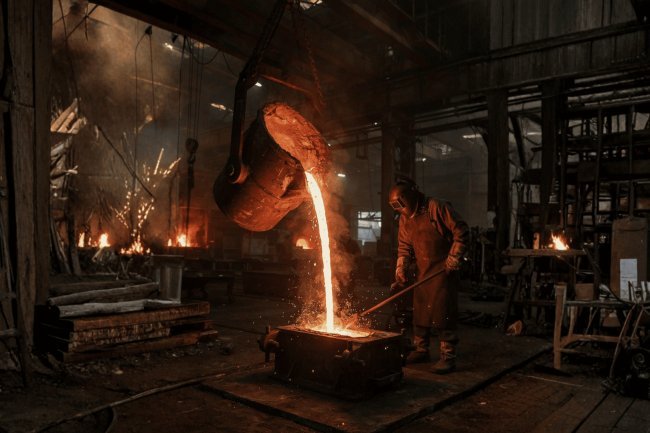
Traditional foundry workflows rely on repeated physical trial castings to uncover defects such as shrinkage, porosity, and misruns. Each iteration consumes valuable resources while delaying production readiness and increasing project costs.
01
Direct Production Cost
Material & Energy
Every trial pour consumes raw metal, energy, furnace time, labor, and operational resources before a saleable casting is produced.
02
Development Delays
Lead Time
Weeks can be lost to tooling modifications, process adjustments, inspection cycles, and repeated production trials.
03
Quality Loss
Scrap & Rework
Defective castings increase rejection rates, rework requirements, material waste, and overall manufacturing costs.
Digital Validation
What Is Digital Process Validation?
Digital process validation uses advanced casting simulation software to virtually replicate the entire casting process — from mold filling and solidification to thermal analysis — before a single physical trial is conducted.
Mold Filling Simulation
Predict flow behavior and turbulence.
Solidification Analysis
Identify hot spots and shrinkage zones.
Thermal Modeling
Optimize cooling rates and cycle times.
Defect Prediction
Detect porosity and misruns virtually.
Virtual Validation Workflow
How Simulation Replaces Physical Trials
SIM
Digital-First Engineering
Eliminate Trial-and-Error Before Tooling Begins
By iterating entirely within the digital environment, engineers resolve design flaws before committing to tooling. This closed-loop process compresses development cycles and ensures the first physical casting closely matches the validated virtual model.
01
Process Definition
Define Parameters
Configure alloy properties, pouring conditions, mold materials, and process constraints before simulation begins.
02
Virtual Validation
Run Simulation
Execute mold filling, thermal, and solidification analyses to predict casting performance and defect formation.
03
Engineering Insight
Analyze Results
Evaluate flow patterns, hot spots, porosity risk, and thermal behavior to uncover root causes before production.
04
Continuous Improvement
Optimize Design
Refine gating, risers, cooling paths, and process parameters until target quality and yield are achieved.
LOOP
Closed-Loop Optimization
Validate Virtually, Cast Confidently
The simulation cycle continuously refines casting performance in a risk-free environment, reducing physical trials, shortening development timelines, and delivering production-ready designs with greater confidence.
Foundry Benefits
Key Benefits for Foundries
Lower Production Costs
Fewer physical trials mean significantly reduced material, energy, and labor expenditure per component.
Cost Efficiency
Faster Time-to-Market
Simulation-driven design cuts weeks from the development timeline, accelerating delivery to customers.
Speed
Higher First-Pass Quality
Defects are resolved virtually, resulting in cleaner first-pour castings and lower scrap rates.
Quality
Sustainability Gains
Reduced trial pours lower energy consumption and metal waste, supporting greener foundry operations.
Sustainability
PoligonCast Advantage
PoligonCast's Digital Validation Approach
DV
Simulation + Foundry Expertise
Validated Casting Processes Built Around Your Production Reality
PoligonCast integrates simulation expertise with deep foundry engineering knowledge to deliver validated casting processes tailored to each client's alloy, geometry, and production requirements.
01
Accurate Material Data
Alloy-Specific Modeling
Calibrated material databases and alloy-specific properties ensure highly accurate simulation results across diverse casting applications.
02
Engineering Partnership
Collaborative Engineering
Close collaboration from design review through first-article production ensures simulation insights translate into real manufacturing success.
03
Continuous Improvement
Continuous Optimization
Iterative simulation refinement continues until the process is fully validated, maximizing quality, yield, and production confidence.
Digital Foundry
The Future of Foundry Is Digital
Digital process validation is no longer optional — it is the competitive standard. Foundries that adopt simulation-driven workflows reduce waste, accelerate delivery, and consistently produce higher-quality castings.
PoligonCast helps foundries eliminate unnecessary trial castings through advanced simulation, engineering expertise, and a commitment to first-time-right manufacturing.
Simulation-Driven Precision
By integrating digital validation, foundries achieve higher yields, lower costs, and superior quality — setting a new benchmark for modern manufacturing.