Predicting Casting Quality: From Intuition to Precision
Modern manufacturing demands more than experience and instinct. This presentation explores how advanced simulation models are transforming the casting industry — replacing costly trial-and-error with data-driven, virtual precision that delivers consistent quality from the very first pour.
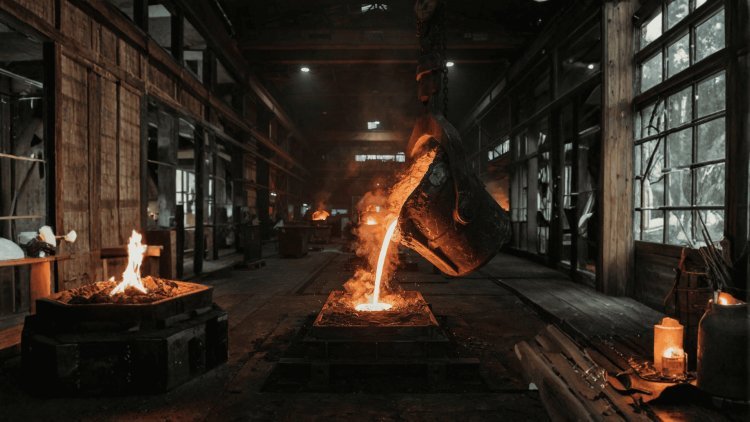
The Hidden Cost of "Trial and Error"
For decades, casting has relied on expert intuition, physical prototyping, and destructive testing. While valuable, this approach creates hidden costs that compound across design, production, inspection, and delivery.
The Problem with Traditional Methods
Expert intuition cannot fully anticipate the complex interactions of fluid dynamics, thermal gradients, and material behavior during solidification. Without predictive data, process design can develop systematic blind spots.
The Financial and Operational Impact
Reactive quality management creates downstream costs across scrap, rework, inspection, delivery, and customer relationships. The true economic impact is often much larger than the visible production loss.
Rework & Re-tooling
Complex components can require costly physical rework and tooling changes after problems are discovered late.
Higher Unit Costs
Scrap, rework, and repeated trials increase production costs and gradually erode margins and competitiveness.
Delivery Delays
Late-stage defect discovery can delay customer deliveries and put important contracts and relationships at risk.
Compliance Exposure
Safety-critical and regulated industries face greater audit and traceability risks when quality data is incomplete.
The Cost You Don't See Is Often the Biggest
In many foundries, the complete cost of poor casting quality—including scrap, rework, inspection, energy, downtime, and delayed deliveries—is never fully captured. This makes reactive manufacturing appear less expensive than it really is.
Simulation captures turbulence, air entrapment, velocity gradients, and heat exchange with the mold wall—revealing production behavior that cannot be observed directly.
CAD geometry provides the foundation for testing flow channels and riser configurations, revealing whether the design fills evenly and feeds shrinkage-prone regions.
Thermal maps reveal areas that solidify last, guiding virtual changes to riser placement, alloy chemistry, and cooling design before physical trials.
Virtual experimentation replaces repeated physical iterations with faster, lower-cost design evaluation and documented evidence of expected quality.
Problems that once required weeks of physical trials can often be investigated and resolved in days, reducing material consumption and compressing the development cycle.
The Power of Virtual Casting
Fluid Dynamics & Thermodynamics
CAD-Driven Gating & Risers
Hot Spot Identification
Traditional models rely on idealized material properties and boundary conditions. Errors arise from fitting to historical data, simplified turbulence assumptions, and validation gaps due to limited defect data collection.
ML correlates simulation outputs with defect records, creating a correction layer. Classification and regression map features to defect probabilities, ensemble methods combine predictors, and models improve continuously with new data.
Automated Defect Prediction Technology integrates statistical learning with simulation outputs. It reduces manual calibration, improves production applicability, and transforms casting into a transparent, auditable process with quantified defect probabilities.
Historical defect records linked to simulation outputs.
Algorithms learn predictive correlations across features.
Models applied in production for real-time defect scoring.
Transparent defect probability at every stage of workflow.
Solving the "Black Box" Problem
Limitations of Conventional Simulation
Machine Learning as the Bridge
Hitachi's ADPT Approach
Defect Prediction Workflow
Collect Data
Train Model
Deploy
Scoring
The leading edge of casting simulation is moving beyond predicting whether a part will be defect-free. Next-generation workflows connect casting, structural, fatigue, and microstructure models to predict performance across the full service life.
Casting outputs such as residual stress fields, distortion maps, and predicted porosity distributions can feed directly into FEA solvers. This creates structural predictions based on the actual as-cast condition rather than idealized geometry.
Advanced models can combine solidification history with thermal and mechanical load histories to estimate crack initiation and propagation risk in components exposed to thermal cycling or high-cycle fatigue.
Simulation increasingly predicts secondary dendrite arm spacing, grain size, and phase distribution—linking local microstructure to tensile strength, ductility, and fatigue resistance.
For safety-critical castings such as aircraft structures, pressure vessels, and medical components, service-life prediction can reduce dependence on empirical testing and strengthen the technical basis for design margins and qualification.
The full value of integrated simulation depends on interoperability. Casting models increasingly need to exchange information with FEA, CFD, and material-property databases through open data standards and API-based architectures—making advanced multi-physics workflows more accessible across the foundry industry.
Advanced Frontiers in Casting Integrity
Simulation-to-Structural Integration
Fatigue Life Prediction Under Dynamic Loading
Microstructure & Grain Structure Analysis
Why This Matters
The Multi-Physics Simulation Ecosystem
Validate designs and optimize process parameters against predicted quality metrics before tooling or production is committed.
Automated design-of-experiments can vary gating, temperature, alloy composition, and cooling to map the process window for defect-free production.
Replacing physical test castings with validated virtual trials saves material, energy, machine time, labor, and qualification effort.
Reported by foundries implementing full simulation-driven optimization.
Acceleration in qualification timelines compared with physical prototype iteration.
The ultimate target: first-article acceptance through autonomous virtual validation.
The right-first-time foundry replaces reactive troubleshooting with evidence-based virtual design, using simulation and data to make quality a repeatable process capability.
The New Standard: Right the First Time
Proactive Optimization
Virtual DOE at Scale
Less Physical Sampling
Scrap Reduction
Faster Development
Defect Goal
What's Your Reaction?