From High Emissions to High Efficiency: The Future of Casting
The aluminum casting industry stands at a pivotal crossroads. As global pressure mounts to decarbonize manufacturing, foundries and die casters must confront a fundamental challenge: how to maintain productivity and profitability while dramatically reducing their carbon footprint. This presentation explores the strategies, technologies, and measurement frameworks that are transforming casting operations from carbon-intensive legacy processes into models of sustainable, high-efficiency manufacturing.
The Hidden Cost of Casting
Casting Sits at the Heart of the Emissions Problem
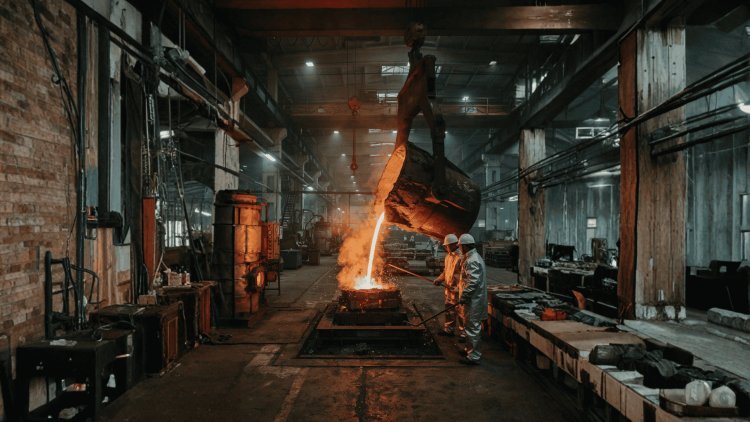
Alloy melting, furnace holding, thermal conditioning, and die preparation collectively make casting one of the most energy-intensive manufacturing processes. Any meaningful sustainability strategy within metalworking must address foundry operations first, where the largest concentration of energy demand exists.
Primary aluminum production remains one of the most carbon-intensive material streams in manufacturing. Embedded emissions from bauxite extraction, refining, and smelting make material selection a major contributor to total lifecycle impact.
Carbon reporting and supply-chain sustainability requirements are rapidly moving from voluntary initiatives to commercial necessities. Demonstrable emissions performance is becoming a prerequisite for participation in major industrial programs.
The New Competitive Reality
Decarbonization Is No Longer Optional
The true cost of casting can no longer be measured solely in kilowatt-hours or production expenses. Energy intensity, embedded material emissions, carbon regulations, and customer sustainability requirements now influence competitiveness as directly as quality and delivery performance. The foundries that successfully reduce emissions, improve energy efficiency, and provide transparent carbon reporting will be best positioned to secure future aerospace and industrial business.
Leading foundries now run charge mixes with over 90% recycled aluminum, supported by robust scrap sourcing, sorting, and metallurgical control to maintain alloy specs.
Scrap wheels remain a premium feedstock, but operations are expanding into 5000 and 6000 series scrap to broaden the base and improve supply resilience.
High-recycled charge mixes reduce emissions from over 2 t CO₂e/t Al to under 1 t CO₂e/t Al, positioning casters well below industry averages and near low-carbon certification thresholds.
For aluminum casters, recycled-content feedstock is now one of the most effective levers to cut embodied carbon, differentiate with customers, and prepare for emerging low-carbon product requirements.
The Power of High-Recycled Feedstocks
Recycled Content
Scrap Wheels & Beyond
Carbon Footprint
Decarbonization without defensible data is simply estimation. Accurate accounting is the foundation of every credible net-zero strategy.
Customer qualification, regulatory reporting, sustainability disclosures, and green-financing initiatives all depend on auditable carbon data. Organizations that cannot accurately measure emissions cannot reliably reduce them, verify progress, or defend their environmental claims.
Recycled scrap enters the system with no inherited carbon burden. Simpler to calculate, but can distort the true environmental contribution and upstream emissions profile of recycled materials.
Allocates a portion of primary-production impacts to recovered scrap based on economic value, providing more transparent and commercially meaningful carbon intensity reporting.
Define organizational boundaries, determine accounting methodology, identify major emission sources, and create a defensible baseline for future improvement tracking.
Establish energy baselines, implement sub-metering, monitor consumption trends, investigate anomalies, and create measurable improvement targets through a structured management system.
Shift performance evaluation from energy cost alone toward carbon intensity metrics such as kg CO₂e per tonne of castings, machine hour, or production batch delivered.
Effective decarbonization begins with trusted measurement. Carbon accounting methodology, ISO 50001 energy management, emissions traceability, and carbon-intensity reporting collectively create the decision-making framework that guides investment, operational improvements, and customer-facing sustainability declarations. Organizations that master measurement gain the credibility required to prove progress and compete in an increasingly carbon-conscious industrial economy.
Calculating Your Path to Net Zero
Measure First. Improve Second.
The Accounting Choice That Changes Everything
Establish the Carbon Baseline
ISO 50001 Energy Management
Transition to Carbon Intensity Metrics
The Mindset Shift Every Foundry Must Make
Net Zero Is an Accounting Problem Before It Becomes an Engineering Problem
PPAs for wind and solar, on-site generation, and green tariffs will decarbonize Scope 2 emissions, with induction furnaces well positioned to use clean electricity at scale.
Third-party verified Product Carbon Footprints, supply chain disclosures, and SBTi alignment are becoming commercial differentiators in customer RFQs.
Invest in intelligent recycling, high-efficiency induction melting, yield optimization, and energy management to secure your position in the low-carbon economy.
The path to net zero in aluminum casting is systematic: maximize recycled content, optimize process efficiency, build rigorous carbon measurement, and transition to renewable energy. Each step compounds the last, creating a durable competitive advantage in a decarbonizing global economy.
The Green Casting Mandate
Renewable Energy
Transparency
Call to Action
What's Your Reaction?