High-Performance Computing: The Evolution of Casting Simulation
From centuries of trial-and-error craftsmanship to quantum-enabled digital ecosystems — this is the story of how high-performance computing fundamentally transformed the science and art of metal casting. Explore the pivotal breakthroughs, intelligent automation, and the digital twin revolution reshaping the foundry of the future.
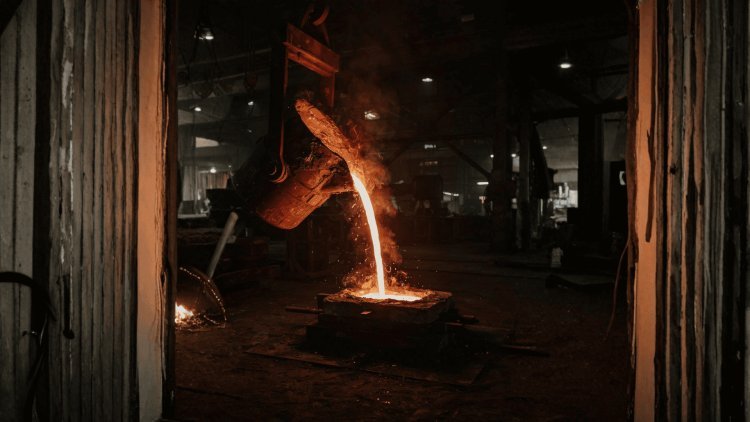
The Era of
Empirical Trial and Error
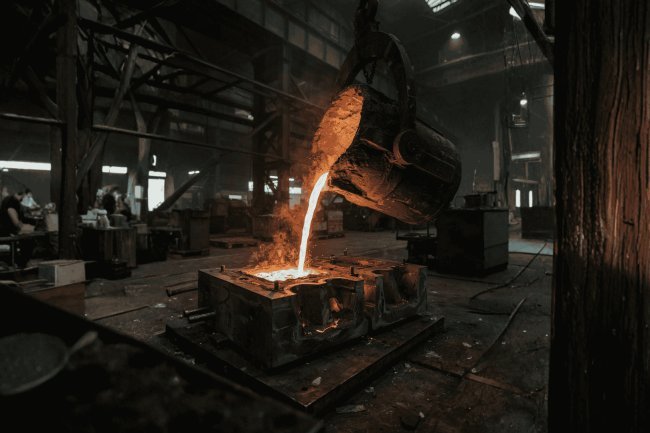
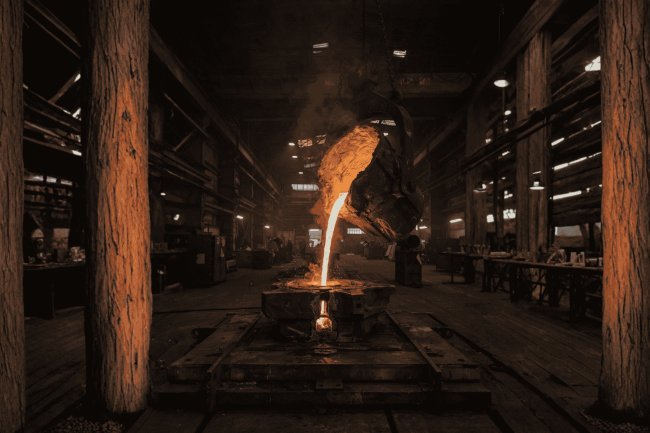
Long before simulation, digital twins, and AI-driven manufacturing, metal casting depended almost entirely on the judgment of experienced craftspeople. Success was earned through observation, experimentation, and repeated physical trials. While this expertise built the foundations of modern industry, it also imposed significant limits on efficiency, scalability, and innovation.
Manufacturing Built On Human Experience
Skilled Pourers
Decisions based on years of shop-floor experience.
Intuition
Process adjustments guided by feel and observation.
Tribal Knowledge
Expertise transferred through apprenticeships and practice.
The Human Cost of Uncertainty
Before predictive modeling existed, each engineering change required real metal, real tooling, and real production trials. Complex components frequently demanded multiple casting iterations before acceptable quality could be achieved, dramatically increasing cost, schedule, and risk.
Traditional Development Cycle
Scrap Rates Were Common
Complex aerospace and automotive castings often suffered significant material losses because defect formation could not be predicted accurately before production.
Structural Barriers To Innovation
The Siloed Engineering Reality
Critical information moved slowly between departments through paper reports, static drawings, and manual communication, delaying engineering feedback and limiting coordinated problem-solving.
The Four Major Consequences
High Scrap Rates
Unpredictable defect formation caused significant material waste and production inefficiency.
Delayed Time-to-Market
Physical iteration cycles stretched development schedules and slowed innovation.
Siloed Engineering
Valuable lessons often remained isolated within departments rather than benefiting the entire organization.
Energy Waste
Repeated remelting, repouring, and scrapping consumed large amounts of energy without producing value.
Slow Feedback Loops Limited Progress
Skill Was Never The Problem
The industry's greatest challenge was not a lack of expertise. It was the inability to scale expertise, predict outcomes before production, and rapidly share knowledge across teams and facilities.
Manufacturing Was Limited
By What It Could Not Predict
The era of empirical trial and error created generations of highly skilled foundry professionals, but it also imposed hard limits on efficiency, innovation, and growth. Product quality depended heavily on experience, development required expensive physical experimentation, and valuable knowledge was difficult to preserve or transfer. The emergence of simulation, digital engineering, and data-driven manufacturing would ultimately break these constraints by converting experience into predictive capability and transforming foundry operations from reactive craftsmanship into proactive engineering science.
Casting simulation evolved from basic thermal models into a multiphysics discipline that predicts hidden process behavior and compresses years of physical experimentation into hours of computation.
Temperature gradients, hot spots, and shrinkage risk—without fluid flow.
Navier–Stokes modeling exposed mold filling, turbulent flow, and air-entrapment risk.
Residual stress, hot tearing, distortion, and mechanical integrity joined the model.
Sub-millimeter resolution across large domains became industrially feasible.
Modern casting simulation couples heat transfer, fluid dynamics, phase transformation, and mechanical deformation in one environment—reflecting the nonlinear interactions that shape real process behavior.
The 2017 supercomputing milestone made sub-1 mm resolution across meter-scale casting domains practical, opening design spaces that had previously been economically inaccessible.
The Computational Breakthrough
The physics cannot be separated.
Hidden phenomena, resolved in one model
From research curiosity to industrial tool
It expanded what foundry engineering could know.
Modern optimization platforms integrate with CAD environments to autonomously modify mold geometries, riser configurations, cooling channels, and gating systems. Engineers define parameter ranges, and the system generates, simulates, and evaluates thousands of variants overnight, delivering ranked results by morning.
Virtual DOE shifts the focus from single-point analysis to systematic exploration of process windows. Statistical methods like Latin hypercube sampling, response surface modeling, and Pareto front analysis map quality outcomes across hundreds of combinations, revealing robust defect-free operating regions rather than just one optimal solution.
Automation amplifies engineering expertise by handling routine parametric evaluations. Engineers focus on higher-order decisions: interpreting results, challenging assumptions, and communicating findings. The casting engineer evolves from simulator operator to scientific strategist, defining the questions that computers answer at scale.
Foundries can test hundreds of parameter combinations overnight — a task that once required months of physical experimentation.
Navigating Vast Design Spaces
1. Autonomous Geometry Modification
2. Virtual Design of Experiments (DOE)
3. Elevating Engineering Decision-Making
Virtual DOE Advantage
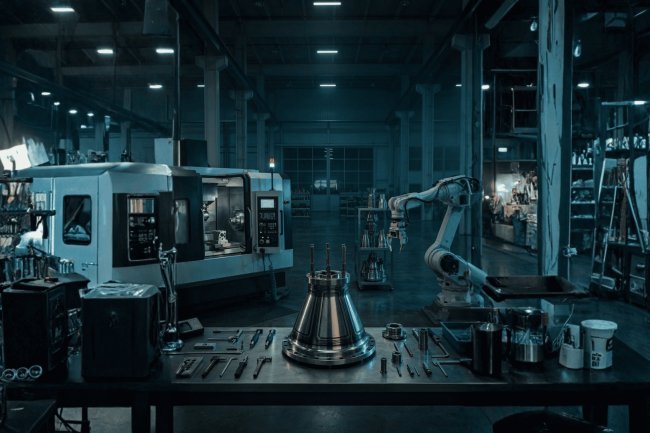
The digital twin represents the most advanced stage of manufacturing intelligence: a continuously updated virtual counterpart of the physical production system. Instead of isolated simulations and disconnected engineering models, digital twins connect every stage of manufacturing into a single living source of truth where decisions can be evaluated, validated, and optimized before physical execution.
Individual simulations performed at isolated stages of product development.
A living digital replica continuously synchronized with manufacturing reality.
Modern digital twins extend beyond a single process. Casting, forging, heat treatment, machining, inspection, and performance analysis are digitally connected into one continuous engineering thread. Every process change can be evaluated across the entire manufacturing chain before production begins.
The Modern
Digital Twin EraDigital Twin Evolution
Snapshot Analysis
Continuous Intelligence
Integrated Production Chain Twins
The Connected Manufacturing Thread
Manufacturing Knowledge Never Stops
Real-Time Cloud Simulation
High-performance computing, quantum methods, zero-defect production, and connected digital twins are converging into a new vision for precision and sustainability in metalcasting.
The near-term path is expected to be hybrid: quantum methods target selected computational bottlenecks while classical systems continue to support the broader simulation workflow.
Every scrapped component consumes raw material, energy, and carbon without creating useful output. Real-time digital-twin feedback and AI-driven anomaly detection can identify defect-generating deviations before they become scrap.
Before the first drop of metal, the connected ecosystem virtually validates filling, solidification, microstructure, residual stress, and dimensional accuracy—closing the gap between digital prediction and physical production.
The Future: Quantum Precision
From numerical approximation toward quantum precision
Less scrap means less carbon.
+ sustainabilityFirst-time-right becomes engineered.
It predicts, adapts, and produces them right the first time.
What's Your Reaction?