Digital Approaches to Alloy Qualification and Certification
As manufacturing demands grow more complex, traditional alloy qualification methods struggle to keep pace. PoligonCast explores how digital tools are transforming the way foundries validate, certify, and deploy advanced alloys — faster, smarter, and with greater confidence.
The Challenge of Traditional Qualification
A Slow Path to Production Readiness
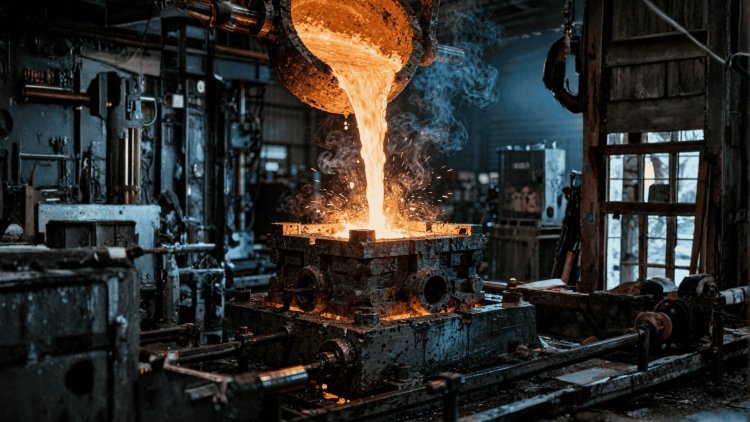
Traditional alloy qualification depends heavily on physical testing, repeated trial castings, laboratory evaluations, and lengthy certification programs. While effective, this approach often consumes significant time, budget, and engineering resources before a material reaches production approval.
Qualification bottlenecks can delay entire manufacturing programs.
Time-Intensive & Costly
Multiple casting trials, destructive testing, material consumption, and certification requirements drive up both development costs and project timelines.
Inconsistency Risk
Manual evaluations, process variability, and human interpretation can introduce inconsistencies between development cycles.
Complex Geometry Validation
Qualification becomes increasingly difficult as casting complexity grows, requiring additional testing and validation effort.
Slow Material Adoption
Traditional workflows struggle to rapidly qualify new alloy compositions, slowing innovation and market responsiveness.
Industries Most Affected by Qualification Delays
Qualification delays can stall entire production pipelines, impacting delivery schedules, innovation programs, and time-to-market for mission-critical applications.
Shift Qualification Left with Simulation
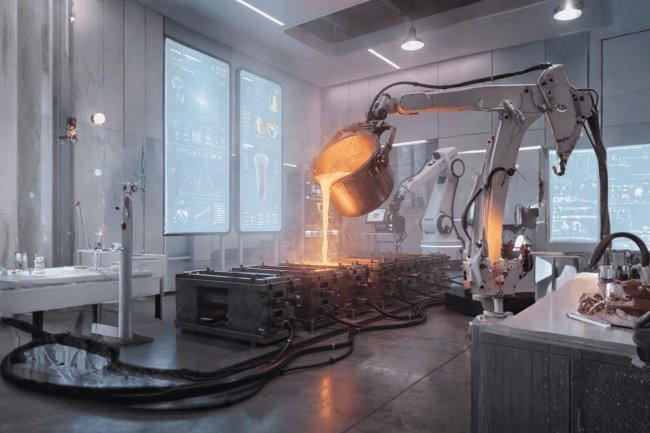
By validating material behavior digitally before casting begins, manufacturers can reduce physical testing requirements, accelerate certification activities, lower development costs, and bring advanced alloys into production much faster.
Predict shrinkage and hot spots with precision.
Simulate heat transfer across complex geometries.
Forecast grain structure and mechanical properties.
Casting Simulation as a Qualification Engine
Solidification Modeling
Thermal Analysis
Microstructure Prediction
Define the alloy concept and qualification targets digitally.
Run digital tests under real process conditions.
Approve faster with traceable simulation-backed validation.
The Digital Qualification Workflow
Virtual Design
Simulation
Digital Cert
Accelerate alloy screening by learning from historical simulation and test data to predict performance outcomes with unprecedented accuracy.
Mirror real-world casting processes digitally to continuously validate alloy behavior under varying conditions, ensuring robustness.
Link simulation outputs directly to quality assurance records, creating a seamless, auditable certification trail for every component.
Key Digital Technologies Enabling Certification
AI & Machine Learning
Digital Twins
Integrated QA Systems
Traditional alloy qualification depends heavily on physical testing, repeated trial castings, laboratory evaluations, and lengthy certification programs. While effective, this approach often consumes significant time, budget, and engineering resources before a material reaches production approval.
Qualification bottlenecks can delay entire manufacturing programs.
Multiple casting trials, destructive testing, material consumption, and certification requirements drive up both development costs and project timelines.
Manual evaluations, process variability, and human interpretation can introduce inconsistencies between development cycles.
Qualification becomes increasingly difficult as casting complexity grows, requiring additional testing and validation effort.
Traditional workflows struggle to rapidly qualify new alloy compositions, slowing innovation and market responsiveness.
Qualification delays can stall entire production pipelines, impacting delivery schedules, innovation programs, and time-to-market for mission-critical applications.
By validating material behavior digitally before casting begins, manufacturers can reduce physical testing requirements, accelerate certification activities, lower development costs, and bring advanced alloys into production much faster.
The Challenge of Traditional Qualification
A Slow Path to Production Readiness
Time-Intensive & Costly
Inconsistency Risk
Complex Geometry Validation
Slow Material Adoption
Industries Most Affected by Qualification Delays
Shift Qualification Left with Simulation
Compress qualification cycles dramatically.
Minimize physical trials and scrap rates.
Digital records supporting regulatory compliance.
The Future of Alloy Qualification is Digital
Faster Time-to-Market
Reduced Cost & Risk
Full Traceability
What's Your Reaction?