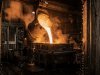
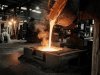
Core–Metal Interaction During Casting
The physics of solidification govern everything from grain morphology to dimensional integrity in metal casting. Understanding the complex interplay between heat extraction, atomic mobility, and alloy chemistry is essential for engineering components that meet modern performance demands. This presentation examines the fundamental mechanisms that transform liquid metal into a solid, high-integrity casting — from the first nucleation event at the mold wall to the final macro-structure of the finished component.

The Foundation:
Nucleation and Growth
Solidification is not an instantaneous event — it is a carefully sequenced physical transformation that begins at the atomic scale and propagates outward through the entire casting. Understanding the two primary stages, nucleation and growth, is fundamental to controlling the final microstructure.
The Evolution from Liquid to Solid
Nucleation at the Mold Wall
Solidification commences with heterogeneous nucleation — the formation of tiny, stable crystalline embryos at the mold–metal interface. The mold wall acts as a powerful chill surface, extracting heat rapidly from the adjacent liquid metal and depressing its temperature below the equilibrium liquidus.
This local undercooling provides the thermodynamic driving force for nuclei to form and survive. Nuclei that exceed the critical radius are thermodynamically stable and proceed to grow; smaller clusters dissolve back into the melt.
Undercooling Creates Stable Nuclei
Formation of the Chill Zone
The result is a fine-grained chill zone immediately adjacent to the mold wall, where rapid cooling generates a dense population of small equiaxed crystals.
Columnar Growth and
the Mushy Zone
Once stable nuclei are established, the growth phase begins. Atoms from the adjacent liquid deposit onto the solid nuclei, releasing the latent heat of fusion. This heat must be continuously extracted through the mold for solidification to progress.
In pure metals, solidification occurs at a single invariant temperature, producing a sharp solid–liquid interface. In commercial alloys, however, solidification occurs over a freezing range between the liquidus and solidus temperatures.
Sharp Solid–Liquid Interface
Solidification occurs at a single invariant temperature.
Freezing Range Exists
Solidification spans the interval between liquidus and solidus temperatures.
The Mushy Zone
Mushy-Zone Behavior Controls Defect Risk
Columnar Dendrites Eliminate Weaker Orientations
Grains favored by crystallographic orientation preferentially survive and grow inward as columnar dendrites, eliminating less favorable orientations.
Four Critical Solidification Regions
Fine Equiaxed Grains
Fine equiaxed grains at the mold surface; produced by rapid heterogeneous nucleation under high undercooling.
Directional Growth
Elongated grains growing inward along the direction of maximum heat extraction.
Randomly Oriented Grains
Forms when constitutional undercooling suppresses columnar advance and promotes bulk nucleation.
Solid + Liquid Coexistence
Morphology and permeability govern macro-segregation and hot tearing susceptibility.
From Mold Wall to Casting Center
Control Grain Structure
Nucleation density, undercooling, dendritic growth rate, and mushy-zone development all originate from the thermal conditions imposed during solidification.
Solidification Begins
With Nuclei and Ends
With Microstructure.
Solidification begins at the mold wall through heterogeneous nucleation driven by localized undercooling and rapid heat extraction. Only crystalline embryos exceeding the critical radius survive to become stable nuclei, producing the fine-grained chill zone characteristic of the casting surface. As growth proceeds, atoms attach to these nuclei while latent heat is continuously removed through the mold. In alloys, solidification occurs across a freezing range, creating the mushy zone where solid dendrites and interdendritic liquid coexist. The permeability and morphology of this region strongly influence feeding efficiency, macro-segregation, and hot tearing susceptibility. Competitive growth then favors crystallographically aligned grains, producing columnar structures that advance inward until constitutional undercooling enables equiaxed nucleation. The resulting chill, columnar, equiaxed, and mushy regions collectively define the final casting microstructure and mechanical performance.
As solidification advances beyond the initial chill zone, the growth morphology of the solid–liquid interface becomes increasingly complex. The transition from a smooth, planar interface to the intricate tree-like dendritic structure that characterises most commercial castings is driven by constitutional undercooling—one of the most important concepts in solidification science.
During solidification of an alloy, the growing solid phase typically rejects solute into the adjacent liquid. This solute pile-up at the solid–liquid interface progressively enriches the liquid immediately ahead of the growth front. Because a higher solute content depresses the equilibrium liquidus temperature, the actual liquidus temperature of the liquid just ahead of the interface falls below that of the liquid further away.
The progressive breakdown of the interface morphology follows a well-defined sequence governed by the ratio of thermal gradient \(G\) to solidification velocity \(V\). High \(G/V\) ratios stabilise a planar interface. As \(G/V\) decreases—either by increasing casting speed or reducing the temperature gradient—the interface first breaks down into a cellular morphology, producing an array of parallel cells separated by solute-enriched grooves.
Dendrite arms are not static once formed. During the latter stages of solidification—and even after the bulk of the metal has solidified—coarsening occurs: smaller, finely spaced secondary arms dissolve and re-deposit onto larger arms, driven by the reduction of total solid–liquid interfacial energy.
The G/V ratio governs the transition from planar to cellular to dendritic morphology—setting the trajectory for micro-segregation, porosity, and mechanical property outcomes in every casting.
The Dendritic Frontier
Solute pile-up destabilizes the planar front.
G/V sets the morphology sequence.
Coarsening sets SDAS, segregation, fatigue.
— provides a quantitative guide for selecting process parameters that avoid
undesirable dendritic breakdown in applications demanding a planar or cellular interface,
such as single-crystal turbine blade casting.
Sound casting design is fundamentally an exercise in controlled heat extraction. The casting engineer must orchestrate solidification so that liquid metal remains available to feed volumetric shrinkage wherever and whenever it occurs. Failure to achieve directional solidification—from the casting extremities toward the riser—can result in internal porosity, shrinkage cavities, and compromised structural integrity.
Control the sequence, predict the timing, and direct the heat flow. Directional solidification, modulus-based riser sizing, and strategic chill placement work together to maintain feeding paths and reduce shrinkage-related defects.
Engineering the Solidification Path
The quality, performance, and dimensional integrity of a finished casting are determined by the cumulative effect of every solidification event that occurred from the moment liquid metal entered the mold. Achieving a net-shape, high-integrity component demands precise control over cooling rate, feeding geometry, thermal management, and defect prevention strategies — all applied simultaneously throughout the solidification process.
The local cooling rate is the single most influential process variable governing final microstructure. Slow cooling rates — arising from thick sections, low-conductivity mold materials, or poor chill placement — produce coarse grains with large secondary dendrite arm spacings.
Conversely, rapid cooling — achieved through metallic molds, chills, or pressurised processes — refines the grain structure, reduces SDAS, homogenises solute distribution, and enhances mechanical properties.
The relationship between secondary dendrite arm spacing (SDAS) and local solidification time follows the classical coarsening law. Longer solidification times produce larger dendrite spacings and reduced fatigue performance.
Engineers use SDAS measurements to benchmark simulation predictions against achieved microstructure.
Caused by insufficient superheat, excessive flow length, or inadequate gating.
Occur when metal streams meet below the required fusion temperature.
Macro-porosity generated when liquid metal cannot compensate for shrinkage.
Controlled through degassing, venting, and turbulence reduction.
Typical solidification shrinkage for ferrous alloys requiring riser feeding compensation.
Secondary arm spacing scales with local solidification time to the one-third power.
Governs transition between planar, cellular, and dendritic interfaces.
Riser modulus must exceed the modulus of the section being fed.
Quantitative solidification simulation enables engineers to achieve demanding dimensional, structural, and fatigue performance targets through precise control of cooling, feeding, and defect prevention.
The final structure of a casting emerges from the combined influence of solidification time, cooling rate, feeding efficiency, and defect control. Cooling conditions directly determine SDAS, grain size, segregation behavior, porosity development, and ultimately mechanical performance. Defects such as misruns, cold shuts, shrinkage cavities, and gas porosity are fundamentally thermal and fluid-flow problems that can be addressed through intelligent gating design, superheat control, directional solidification, riser engineering, and melt-quality management. Quantitative metrics including volumetric shrinkage, the SDAS coarsening relationship, the G/V morphology ratio, and Chvorinov's modulus provide the engineering framework for these decisions. Precision in riser design, chill placement, gating geometry, and thermal management remains the definitive pathway to producing net-shape, high-integrity castings capable of meeting the most demanding aerospace, automotive, and power-generation performance requirements.
Mastering the
Final StructureEvery Thermal Event Contributes to Final Integrity
Cooling Rate and Microstructural Consequences
Coarse Structure
Refined Structure
λ₂ = A · tf1/3
Critical Defects and Their Prevention
Premature Freezing
Incomplete Fusion
Feeding Failure
Dissolved or Entrained Gas
Defects Are Solved Through Thermal Control
Four Quantitative Design Parameters
Chvorinov's Rule Drives Riser Design
The Four Levers of Casting Optimization
High-Integrity Castings
Mastering Cooling,
Feeding, and Thermal Control
Means Mastering Quality.
What's Your Reaction?