Modeling Fluid Turbulence During Mold Filling
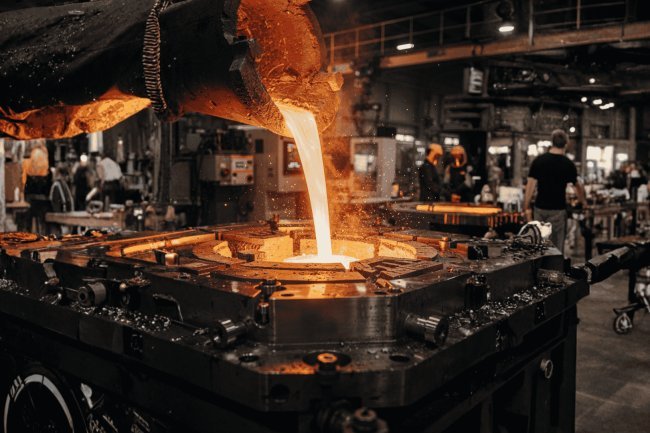
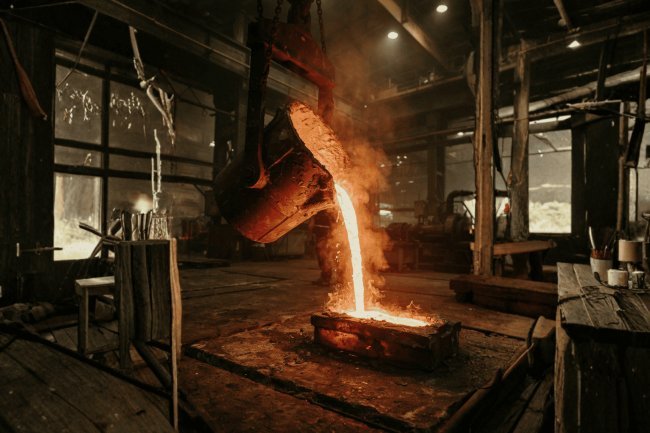
In modern foundry engineering, controlling fluid turbulence during mold filling is critical to producing defect-free castings. PoligonCast leverages advanced simulation to predict, analyze, and optimize metal flow — transforming how manufacturers approach casting quality.
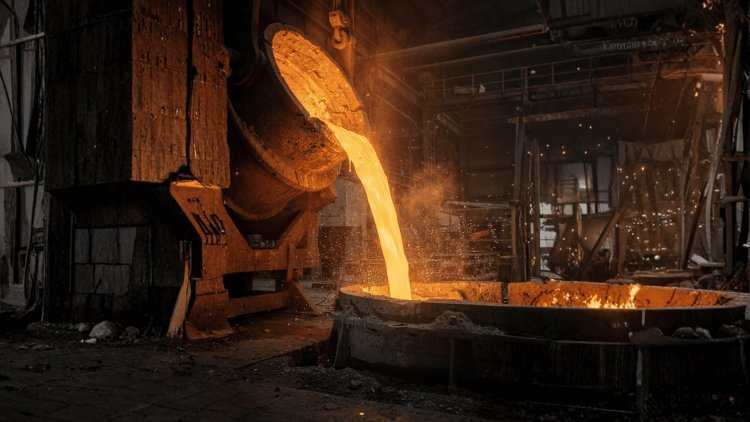
Why Turbulence Matters
Oxide Inclusions
Turbulent metal flow folds surface oxides into the melt, trapping inclusions inside the casting and weakening overall mechanical performance.
Porosity
Air becomes trapped within the molten metal during turbulent filling, creating internal voids that reduce strength and reliability.
Cold Shuts
Chaotic flow patterns can cause metal streams to cool before properly fusing together, leaving weak interfaces and incomplete bonding.
High-velocity metal jet enters mold.
Flow patterns and vortices develop.
Turbulence dampens as metal cools.
Requires solving the Navier-Stokes equations coupled with turbulence models such as k-ε and k-ω SST — capturing velocity gradients, pressure fluctuations, and free-surface behavior throughout the fill cycle.
The Physics of Mold Filling
Ingate Entry
Cavity Filling
Solidification Front
Accurate Turbulence Modeling
Computational Fluid Dynamics resolves turbulent eddies and free-surface dynamics with high fidelity, providing detailed insight into molten metal flow behavior.
k-ε and k-ω SST turbulence models are calibrated for high-temperature metallic flows, enabling accurate prediction of turbulent behavior during casting.
Simulation Approaches at PoligonCast
CFD-Based Modeling
Turbulence Models
Effective turbulence suppression requires simultaneous optimization of multiple interdependent variables. PoligonCast's simulation platform evaluates all parameters in a unified digital environment — enabling engineers to identify the optimal filling strategy before any metal is poured.
A 10% reduction in gate velocity can reduce oxide entrapment by up to 40% in aluminum castings.
Optimized gating and riser design reduces turbulence and ensures smooth cavity filling.
Controlled cooling rates minimize turbulence persistence and improve solidification uniformity.
Key Parameters in Turbulence Control
Gate Velocity
Mold Geometry
Thermal Gradients
From Simulation to Superior Castings


Mastering fluid turbulence during mold filling is no longer guesswork — it is a precise, simulation-driven science. PoligonCast combines deep foundry expertise with cutting-edge CFD tools to help manufacturers eliminate defects, reduce scrap, and accelerate time-to-quality.
CFD & VOF modeling for every alloy and process.
Gating, runner, and pour parameter engineering.
Measurable defect reduction across industries.
Partner with PoligonCast
Advanced Simulation
Process Optimization
Proven Results
What's Your Reaction?