Virtual Reality and Simulation- Based Training for Aerospace and Foundry Engineers
How immersive simulation is transforming the way high-stakes industries train their engineers — reducing risk, accelerating skill acquisition, and redefining what's possible in the classroom and on the factory floor.
Why VR Training Became
Inevitable in High-Stakes
Engineering
Aerospace manufacturing and foundry operations combine technical complexity, hazardous environments, and near-zero tolerance for error. Traditional training methods struggle to provide enough hands-on experience without exposing organizations to excessive cost, operational disruption, or safety risk. Virtual Reality changes that equation fundamentally.
The Traditional Training Gap
Knowledge
Theory, procedures, manuals, and engineering principles.
Competence
Repetition, judgment, spatial awareness, and hazard recognition.
Aerospace Training Complexity
Aerospace manufacturing involves highly complex procedures such as CNC machining, component integration, inspection, and maintenance workflows where even a small mistake can have significant operational consequences. Access to real aircraft hardware is limited, expensive, and often incompatible with repeated trainee practice.
Why Traditional Aerospace Training Struggles
Foundry-Specific Risks
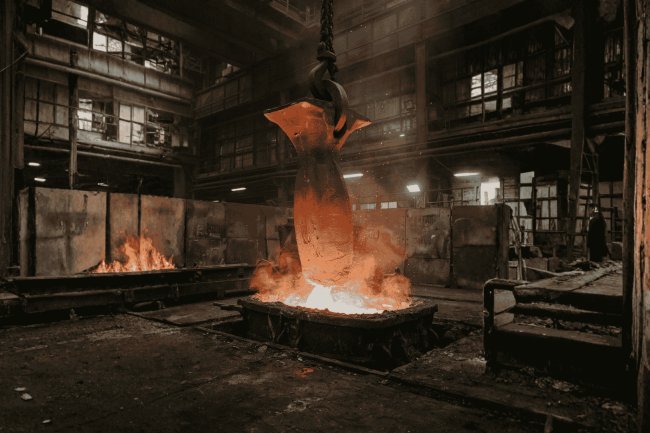
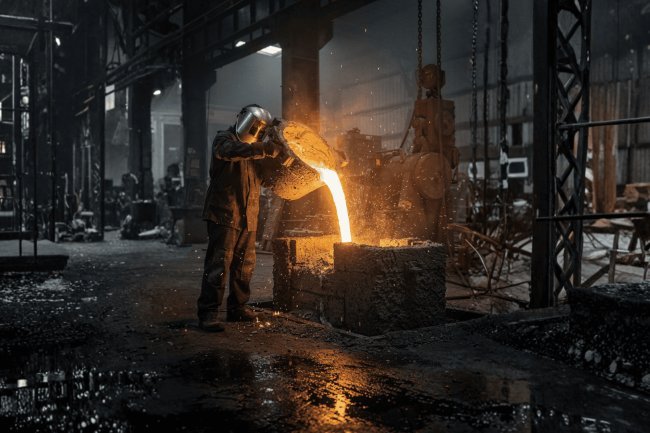
Foundries present unique training challenges. Operators work near molten metal, extremely high temperatures, heavy lifting systems, moving equipment, and tightly sequenced process workflows. Traditional training often requires exposing inexperienced personnel to dangerous conditions before competency is fully established.
High-Risk Foundry Activities
Real Competence Requires Real Practice
Yet real practice is often expensive, difficult to schedule, disruptive to operations, and potentially hazardous. This conflict between safety and experience has defined industrial training for decades.
Why VR Became Inevitable
Four Advantages Traditional Training Cannot Match
Immersive
Replicates environments, equipment, and workflows with high realism.
Repeatable
Procedures can be repeated endlessly without consuming resources.
Risk-Free
Mistakes become learning opportunities rather than safety incidents.
Data-Rich
Every action can be measured, tracked, evaluated, and improved.
The VR Learning Loop
Before Entering The Real Environment
VR Didn't Replace Training.
It Removed Its Greatest Limitation.
High-stakes industries demand competence before exposure to real risk, yet traditional training methods struggle to provide enough safe, repeatable experience. Virtual Reality resolves this contradiction by creating immersive environments where engineers can master procedures, recognize hazards, and refine decision-making skills repeatedly and safely. In aerospace and foundry operations, VR is no longer an experimental tool. It is becoming an essential bridge between theory and operational readiness.
A purpose-built VR environment for aircraft landing-gear CNC machining showed how immersive simulation can train real decisions, tool selections, parameter inputs, and quality checks—not just theory.
The environment was designed around the actual decision flow of manufacturing an aircraft landing-gear component using CNC machining workflows.
VR removes the cost, floor-space, consumable-material, and scheduling constraints of physical CNC training. Operators can repeat a complex sequence ten, twenty, or fifty times while receiving consistent feedback.
Training Operators
for Real PartsA digital replica of the operator’s workflow
Rare comparative depth
Practice without consuming production capacity.
It makes real-part competence repeatable.
Traditional aerospace design cycles required sequential handoffs across teams, consuming weeks. Generative tools and robotic fabrication collapse this cycle, automating iterations and enabling near-immediate fabrication. What once took months now executes in days.
NASA documented requirements-to-parts timelines of 1–2 weeks using integrated generative design and AM workflows. Performance metrics improved 2x–4x in structural efficiency, mass reduction, and load-path optimization — step-change gains enabled by simulation infrastructure.
With fabrication no longer rate-limiting, the critical path shifts to stakeholder requirements. Precise specification of interfaces, load cases, safety margins, and constraints is essential. Ambiguous requirements yield suboptimal designs at machine speed.
NASA generates design outputs quickly to elicit requirements. Prototypes help stakeholders identify missing constraints or conflicts more effectively than abstract reviews. Fast generative iterations make this strategy economically viable.
Robotic fabrication systems — multi-axis CNC, directed energy deposition, hybrid cells — execute designs directly from CAD models. Digital-to-physical handoff becomes instantaneous, governed by machine precision rather than human variability.
NASA-documented requirements-to-parts timeline
Structural efficiency, mass reduction, load-path optimization
Direct CAD-to-robotic fabrication eliminates handoff errors
The "Requirements to Parts" Time Collapse
From Months to Days
NASA's Reported Benchmarks
1. The New Bottleneck: Requirements Definition
2. The Practical Workaround: Iterate Fast
3. Robotics as the Execution Layer
1–2 Weeks
2–4x Improvement
~0 Manual Reinterpretation
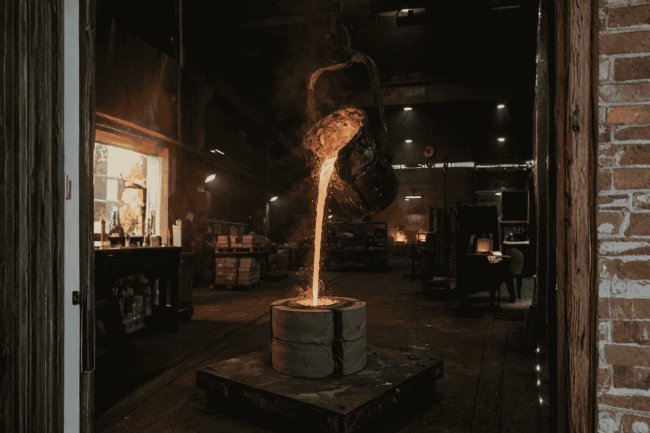
Tennessee Tech University's Virtual Foundry demonstrates how immersive virtual reality can solve one of manufacturing's oldest challenges: developing real operational competence in high-risk environments without exposing trainees to real hazards. The result is a training platform that combines realism, safety, scalability, and continuous repetition in ways physical facilities alone cannot achieve.
Focuses primarily on knowledge transfer and procedural awareness.
Requires trainees to execute complete foundry operations in sequence.
Unlike simplified educational simulations, the Tennessee Tech Virtual Foundry recreates the complete operational sequence of a real foundry. Every training stage mirrors actual industrial processes, creating procedural familiarity and operational confidence through repetition.
Foundry Breakthrough:
Risk-Free Practice for
Molten-Metal WorkflowsMore Than A Training Simulator
Observe & Learn
Perform & Master
Complete Workflow Replication
End-To-End Foundry Workflow
Safety Protocol Training
The next chapter of VR training is evidence-based: rigorous comparisons, adaptive feedback, better hardware, and deployment across standard engineering education.
The quasi-experimental design is not a fully randomized controlled trial, but it provides comparative evidence while controlling for important confounding variables.
From VR Demos
to Adaptive TrainingA matched comparison of training methods
Strong benefits—with known limits
with procedural memory, hazard awareness, and confident competence.
What's Your Reaction?