Simulation-Based Design of Large Steel Castings

In modern foundry engineering, producing large steel castings without defects demands more than experience — it requires precision-driven simulation. PoligonCast leverages advanced casting simulation to optimize design, reduce waste, and deliver quality at scale.
Simulation-Based Design of Large Steel Castings
Steel Casting Challenges

Why Large Steel Castings Are Complex

STL
Large-Scale Manufacturing

Size Amplifies Every Casting Challenge

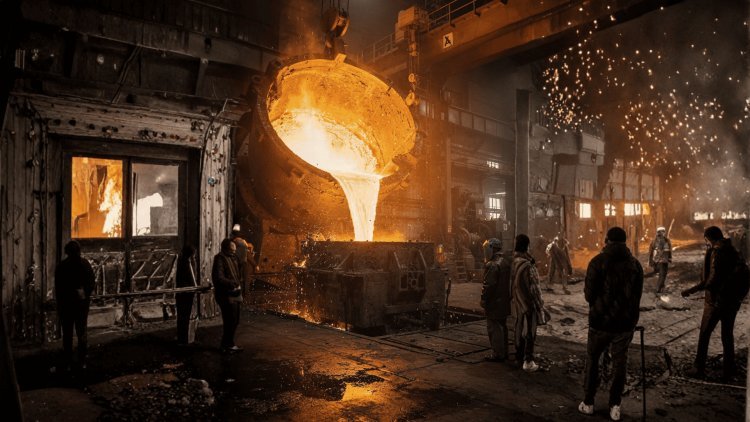
Large steel castings—from turbine housings and machine bases to heavy structural frames—experience prolonged cooling cycles, complex thermal behavior, and increased susceptibility to internal defects. Small process variations can produce significant quality issues across massive geometries.

01
Heat Distribution

Thermal Gradients

Uneven cooling across large sections creates internal stresses, distortion, and dimensional instability throughout the casting.

02
Internal Defects

Shrinkage & Porosity

Volume loss during solidification can create hidden voids that reduce structural integrity and performance.

03
Process Duration

Long Solidification Times

Extended cooling cycles amplify defect risks and make process control significantly more challenging.

Casting Simulation

The Role of Casting Simulation

Simulation transforms the design process by predicting failure before metal is ever poured. PoligonCast uses industry-leading tools to model every critical phase.

1

Mold Filling

Predict turbulence, air entrapment, and cold shuts during pour.

2

Solidification

Map thermal gradients to identify hot spots and shrinkage zones.

3

Stress Analysis

Evaluate residual stress and distortion before tooling is built.

Digital Engineering Process

Simulation-Driven Design Workflow

SIM
Iterative Optimization

Optimize Before the First Metal Pour

PoligonCast's iterative simulation workflow eliminates costly physical trials. Each design cycle refines gating systems, riser placement, and cooling channels—converging on an optimized solution before any foundry resources are committed.

Four-Step Workflow

Design → Simulate → Refine → Validate

01
Design Definition

Geometry & Gating

Define casting geometry, feeders, runners, gates, and process layout for simulation study.

02
Virtual Testing

Simulation & Analysis

Run flow, thermal, and solidification models to identify performance risks and defect zones.

03
Iterative Refinement

Design Optimization

Improve gating systems, riser placement, and cooling strategies using simulation feedback.

04
Production Approval

Validated Casting

Finalize a production-ready casting design with minimized risk and verified performance.

ROI
Workflow Outcome

Eliminate Physical Trial-and-Error

By validating casting performance digitally, manufacturers reduce tooling revisions, minimize scrap, accelerate approval cycles, and confidently move into production with optimized designs.

Simulation Parameters

Key Simulation Parameters

Accurate simulation depends on precise input parameters. PoligonCast engineers calibrate each variable to reflect real foundry conditions, ensuring simulation results translate directly to production outcomes.

Pouring Temperature

Even small deviations in pouring temperature can significantly alter solidification behavior.

Alloy Composition

Minor changes in alloy chemistry can shift microstructure evolution and defect formation.

Boundary Conditions

Accurate heat transfer and cooling boundary inputs ensure simulation mirrors real foundry conditions.

Precision in simulation parameters empowers engineers to predict outcomes reliably, reduce scrap, and accelerate time-to-production.

Foundry Performance Metrics

Measurable Benefits for Foundries

ROI
Manufacturing Impact

Better Castings with Fewer Resources

Simulation-driven engineering helps foundries reduce defects, minimize development iterations, and control production costs while accelerating the path to first-good-part manufacturing.

40%
Quality Improvement

Defect Reduction

Fewer shrinkage and porosity defects through optimized riser design.

60%
Development Efficiency

Fewer Trials

Reduced physical prototyping cycles before first-good-part production.

30%
Financial Impact

Cost Savings

Lower scrap rates and material waste across large casting programs.

Simulation Partner

PoligonCast: Your Simulation Partner

PoligonCast combines deep foundry expertise with cutting-edge digital simulation to help manufacturers produce large steel castings right — the first time.

Advanced Simulation Tools

Industry-leading software for filling, solidification & stress.

Expert Engineering Support

Experienced foundry engineers guiding every project phase.

End-to-End Solutions

From concept design to validated production-ready castings.

What's Your Reaction?

like

dislike

love

funny

angry

sad

wow