Sustainable Gating and Feeding System Optimization: A New Era of Efficiency
As global demand for animal protein continues to rise, the pressure on producers to deliver more with less has never been greater. Feeding and gating systems — long treated as operational afterthoughts — are now recognized as critical levers for profitability, animal welfare, and environmental stewardship. This presentation explores how modern, data-driven feeding infrastructure is transforming farms and aquaculture operations into precision-managed, sustainable enterprises.
The Hidden Cost of
Traditional Feeding
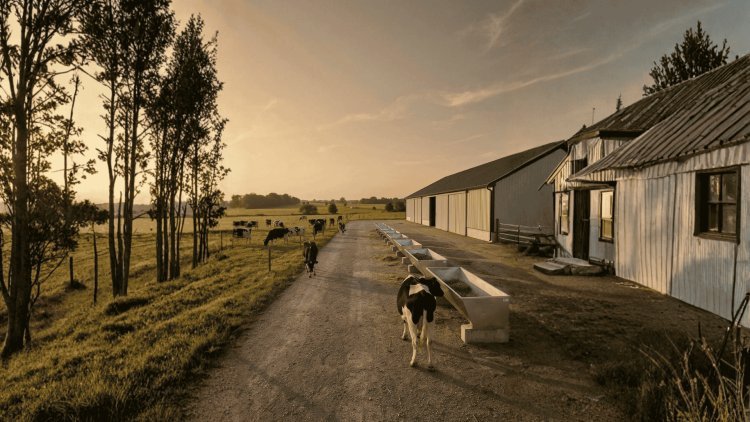
Feed is the single largest operating expense in livestock and aquaculture production. Yet inefficient feeding systems continue to generate hidden financial losses, environmental impacts, and increasing regulatory exposure across the agricultural sector.
The difference between profit and loss often depends entirely on how efficiently feed is utilized.
The Largest Input, Often the Least Optimized
Traditional feed purchasing and distribution systems are frequently based on quantity rather than nutritional precision. This approach encourages overfeeding, uneven consumption patterns, and unnecessary inventory costs while delivering little improvement in productivity or animal health outcomes.
How Feed Value Disappears
Waste Before Conversion
Open troughs, broadcast feeding systems, and uncontrolled access commonly result in excessive feed loss. In aquaculture, uneaten feed increases organic loading, while in livestock operations dominant animals consume disproportionately at the expense of herd uniformity.
Nutrients Become Pollution
Uneaten feed and excess waste contribute nitrogen and phosphorus to surrounding ecosystems. These nutrient releases can accelerate eutrophication, trigger algal blooms, and increase environmental compliance requirements for producers.
The True Cost Escalation Path
Profitability Risk
Feed Inefficiency Is More Than a Cost Problem
Poor feed management simultaneously impacts profitability, animal performance, environmental quality, and regulatory compliance. The future of sustainable livestock and aquaculture production depends on precision feeding systems that optimize nutrient delivery, minimize waste, reduce environmental impact, and convert feed from a hidden liability into a strategic competitive advantage.
Automated dosing units and programmable conveyors deliver exact feed quantities on schedule, reducing labor and improving access consistency.
Starter, grower, and finisher rations are matched to changing protein, energy, and particle-size requirements to avoid deficiency and overfeeding.
Species-specific algorithms adjust feed rates using water temperature, dissolved oxygen, and biomass estimates for more responsive management.
Precision metering often improves Feed Conversion Ratio by 10–25%, lowering feed costs while improving growth performance and environmental outcomes.
This is not just a hardware upgrade; it is a stepwise transition from bulk distribution to automated dosing and life-stage optimization that compounds gains over time.
The Shift to Precision Feeding
From Distribution to Dosing
Life-Stage Feeding
Aquaculture Control
PLCs serve as the backbone, managing feed augers, conveyors, and dosing mechanisms with millisecond precision. Cloud-connected dashboards provide visibility into consumption, schedules, and system faults, integrating seamlessly with ERP workflows.
RFID ear tags and transponders enable individual intake tracking. Automated feed stations record visits and consumption, building nutritional profiles that detect disease indicators, underperformance, and ensure equitable access in group housing.
Roller and hammer mills optimize particle size for species needs, while pneumatic conveyance prevents spillage and contamination. Precision bunk design — 30–45 cm per animal — ensures unrestricted access and reduces wastage.
Modern Optimization in Feeding Systems
Centralized Automation
Animal Identification
Mechanical Infrastructure
Modern intelligent gating systems transform animal movement from a passive containment function into an active management strategy that improves welfare, productivity, labor efficiency, and operational control.
Smart gates reduce congestion, crowding, and abrupt handling events. Smooth movement patterns lower stress exposure, reduce aggression, and help maintain healthier, more stable animal populations.
RFID-enabled systems automatically direct animals according to weight, health indicators, production stage, or treatment schedules, minimizing labor requirements and handling stress.
One-way gates and timed access systems prevent dominant animals from monopolizing feed resources, supporting more consistent intake and improved group-wide performance.
Gate operations synchronize with feeding schedules, health checks, weighing stations, and production workflows, creating predictable movement patterns across the facility.
Every movement becomes traceable, measurable, and automatically managed.
Modern systems combine identification technologies, software logic, sensor networks, and automated controls to transform gates into active management tools. Rather than simply restricting movement, they continuously optimize resource allocation and animal flow throughout the facility.
Intelligent gating systems create highly responsive production environments where movement, feeding, welfare, and operational efficiency are managed as one integrated system. By combining automation with real-time animal data, producers can improve welfare outcomes, reduce labor demands, increase production consistency, and build more sustainable livestock and aquaculture operations.
Gating Systems and Animal Flow Management
Intelligent Animal Flow Cycle
Stress Reduction & Welfare
Automated Sorting & Drafting
Competitive Behavior Control
Synchronized Flow Patterns
Gates Become Decision Engines
Tangible Operational Gains
From Static Facilities to Responsive Ecosystems
Precision Movement Enables Precision Production
Precision dosing cuts spillage and overfeeding, lowering one of the largest recurring costs in conventional systems.
Tailored nutrition improves conversion efficiency, meaning less feed is needed for the same biomass gain.
Automation reduces manual feeding, monitoring, and sorting time, freeing staff for higher-value tasks and lowering operating burden.
Modern systems reduce exposure to volatile feed prices, improve health outcomes, and lower compliance risk, adding resilience beyond direct savings.
Typical transitions report payback periods of 18 to 36 months, making modernization highly attractive with a clear near-term return.
The real cost is not only the upfront investment, but the compounding losses from inefficiency, waste, and missed opportunities; early adoption is the more profitable long-term path.
Measuring ROI: The Case for Modernization
Reduced Feed Waste
Improved FCR
Labor Savings
What's Your Reaction?