Lightweight Casting Design for Electric Vehicles
As the automotive industry accelerates toward electrification, lightweight casting design has emerged as a cornerstone of EV engineering — directly influencing range, performance, and structural integrity.
Why Weight Reduction Is Critical for EVs

Vehicle Mass Reduction
Range Impact
Reducing overall vehicle mass by approximately 10% can improve EV driving range by up to 8%, helping manufacturers maximize battery efficiency without increasing battery size.
Enhanced Dynamics
Lower weight improves acceleration, cornering stability, vehicle handling, responsiveness, and braking performance while reducing overall energy consumption.
Lightweighting Benefits Cascade Across the Entire Vehicle
Lightweight Materials Enable Next-Generation EV Design
Advanced casting simulation and alloy optimization help manufacturers reduce component weight without sacrificing strength, safety, or durability. By engineering lightweight structural castings digitally, EV manufacturers can extend vehicle range, improve driving dynamics, and accelerate the transition toward more efficient electric mobility.
Produces thin-walled, complex geometries with excellent dimensional accuracy — ideal for EV battery housings and structural nodes.
Delivers superior mechanical properties for safety-critical components like subframes and suspension parts.
Single-piece gigacasting replaces dozens of stamped parts, reducing joints, weight, and assembly complexity.
Advanced Casting Techniques
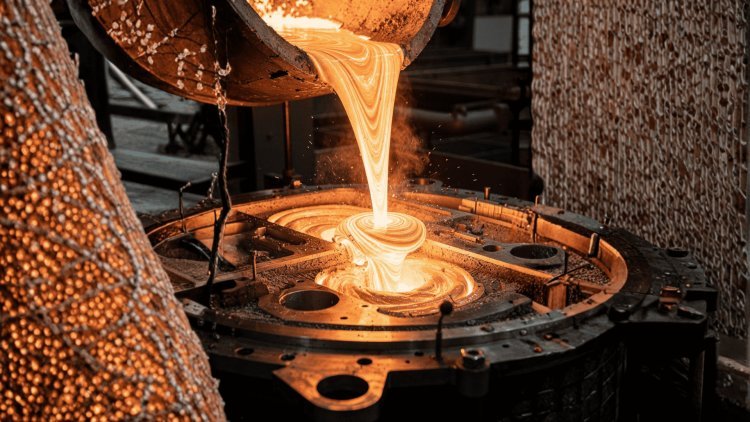
High-Pressure Die Casting
Low-Pressure Casting
Mega-Casting
Choosing the right alloy is as critical as the casting process itself. Modern EV manufacturers rely on engineered aluminum and magnesium alloys to achieve the optimal strength-to-weight ratio.
Al-Si series alloys offer excellent castability, corrosion resistance, and thermal conductivity — ideal for battery enclosures and structural components.
Up to 35% lighter than aluminum — used in instrument panels, seat frames, and transmission housings for maximum weight reduction.
Material Selection: Alloys That Drive Efficiency
Aluminum Alloys
Magnesium Alloys
PoligonCast bridges the gap between digital prediction and manufacturing reality. Every optimized geometry, validated mold design, and defect prediction contributes to faster development cycles, lower costs, reduced scrap, and consistently higher-quality cast components.
Simulation-Driven Design: The PoligonCast Advantage
Validated Design
Geometry Opt.
Mold Flow
Defect Predict
The Digital Engineering Workflow
Remove material from low-stress zones while preserving structural load paths — enabled by simulation software.
Embed cooling channels and mounting features directly into castings to eliminate secondary components.
Achieving wall thicknesses below 2mm requires precise process control and validated simulation models.
Combine multiple components into a single casting to reduce weight, joints, and assembly cost simultaneously.
Design Principles for Lightweight Casting Success
Topology Optimization
Integrated Functionality
Thin-Wall Design
Part Consolidation
Lightweight casting design is no longer an engineering afterthought — it is a strategic imperative for every EV manufacturer. From alloy selection to simulation-validated geometries, every decision shapes range, safety, and cost.
Advanced simulation, foundry engineering, and digital manufacturing expertise — purpose-built for next-generation EV components.
PoligonCast bridges the gap between digital design and production-ready castings with precision and speed.
The Future of EV Casting Is Lightweight by Design
Partner with PoligonCast
From Design to Foundry
What's Your Reaction?