Simulation Strategies for Superalloy Castings
From Trial to Prediction — Engineering the future of high-integrity turbine components through advanced casting simulation.
The High-Stakes Reality of Superalloys
Tiny Defects. Massive Consequences.
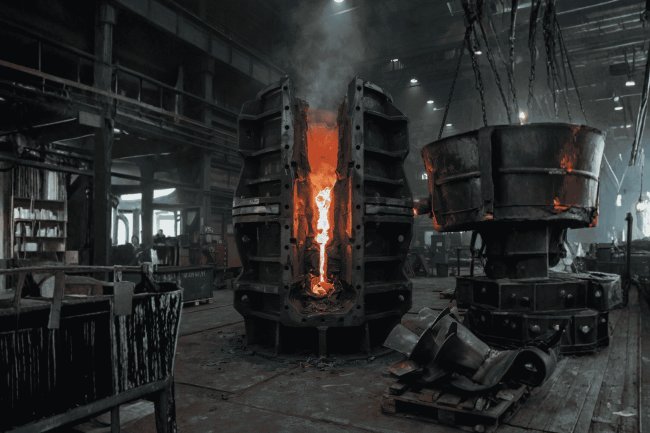
Superalloy turbine and turbocharger components operate under extreme thermal and mechanical loading. In these environments, a microscopic casting defect can become the initiation point for fatigue cracking, reduced service life, or catastrophic component failure.
Precision Investment Casting
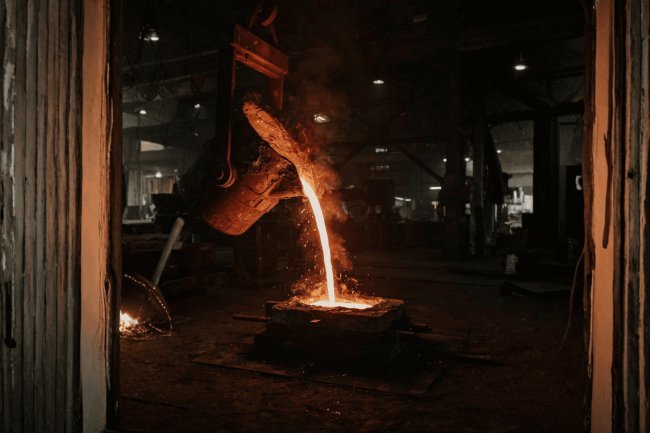
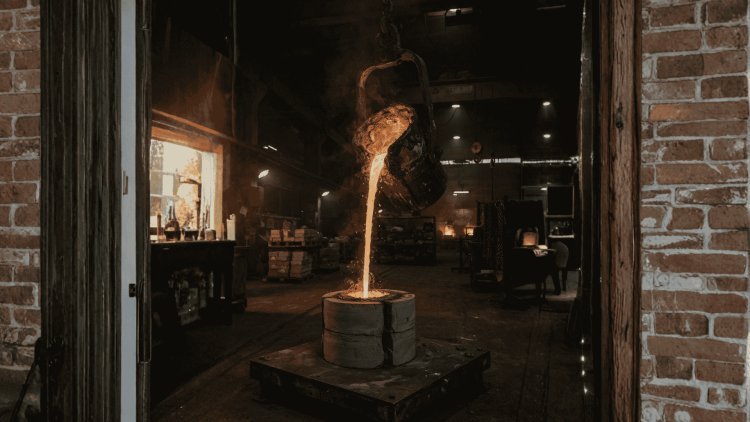
The lost-wax process delivers high-integrity turbine and turbocharger components with exceptional dimensional accuracy and near-net-shape geometry.
Volatile Phase Transitions
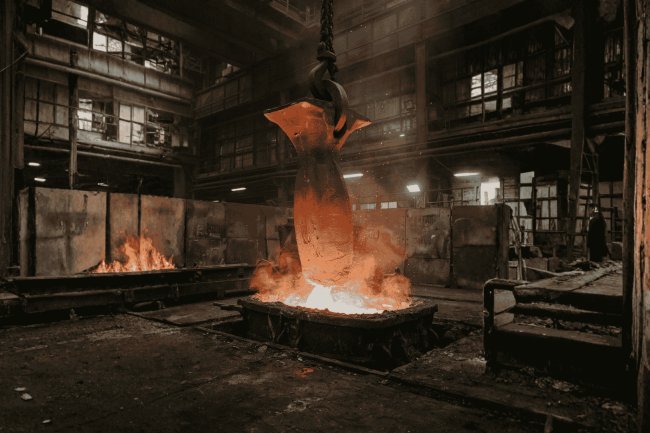
K418 and K213 superalloys require tightly controlled thermal conditions throughout solidification to manage liquid-to-solid phase transformations and microstructure development.
Cost of Failure
Shrinkage porosity, hot tears, and cold shuts can compromise structural integrity and create unacceptable risk in high-temperature rotating equipment.
The Superalloy Solidification Challenge
Superalloy Success Is Determined During Solidification
For high-performance superalloys, casting quality is not simply a matter of geometry. Thermal gradients, cooling rates, and solidification behavior ultimately determine microstructure, fatigue resistance, and service reliability. Simulation-driven process control has therefore become an essential tool for eliminating defects before production and ensuring the performance demanded by modern aerospace and turbo-machinery applications.
Process parameters were tuned through physical casting iterations rather than predictive modeling, extending development lead times to months.
Complex geometries such as turbine blades routinely suffered high rejection rates because defects were discovered late, after costly tooling and material had already been committed.
The Traditional Bottleneck
Trial-Dependent Development
High Scrap on Complex Parts
~1550 °C for most superalloy grades.
Heat transfer coefficients calibrated to shell thickness.
Accurate alloy property data for K418 and K213 grades.
Balanced for blade-tip resolution vs. compute cost.
Together, these platforms eliminate costly physical iterations before a single mold is built.
Simulation Parameters & Predictive Platforms
Pouring Temperature
Mold Preheat & HTC
Thermo-Physical DB
Mesh Density
Predictive Platforms
Bottom-gating designs introduce molten metal from the lowest region of the mold cavity, allowing a smooth, upward filling sequence. By reducing turbulence, oxide entrainment, and air capture, the process promotes cleaner metal flow and significantly improves casting integrity in highly demanding turbine applications.
Niyama-based evaluation identifies regions vulnerable to shrinkage formation by combining thermal gradient and cooling-rate behavior. Engineers can predict feeding deficiencies before production begins.
Liquid fraction contours reveal how metal transitions from liquid to solid throughout the casting. These maps guide feed-path design and validate directional solidification behavior across critical regions.
Modern casting engineering no longer relies on discovering shrinkage after production. Using bottom-gated filling strategies, directional solidification planning, Niyama-based feeding analysis, and liquid-fraction prediction, engineers can digitally validate the complete solidification sequence before a single mold is poured. The result is a robust process that maximizes feeding efficiency, minimizes porosity risk, and delivers high-integrity turbine components with confidence.
Engineering the Perfect Solidification
Fill Quietly. Feed Continuously.
Niyama Criterion
Liquid Fraction Isotherms
The Golden Rule of Feeding
Design the Solidification, Eliminate the Defect
Coupled fluid flow, heat transfer, and stress evolution modeling move simulation beyond steady-state assumptions into real-world accuracy.
AI-driven rigging design maximizes yield and density automatically, removing operator-dependent trial-and-error from the process.
First-trial scrap rates are transformed into sound, defect-free castings, dramatically shortening time-to-market for next-generation propulsion components.
Multi-Physics and Optimization
Multi-Physics Integration
OPTICast Automation
Defect-Free Results
What's Your Reaction?