Environmental Benefits of First- Time-Right Casting
How precision casting technology is transforming foundry operations from sources of industrial waste into models of sustainable, resource-efficient manufacturing — one perfect pour at a time.
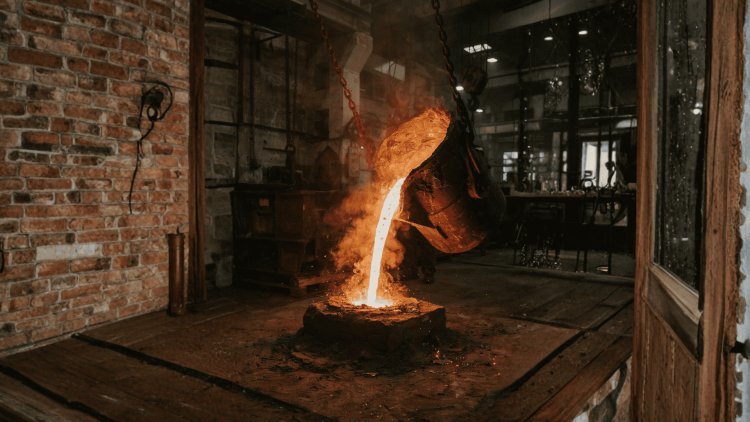
The Legacy of Waste
For generations, the foundry sector accepted scrap, defects, and rework as unavoidable realities of production. Today, that assumption is being challenged as manufacturers recognize the true environmental and economic cost hidden within every rejected casting.
What Happens When a Casting Fails?
Rates
Conventional casting processes frequently encounter defects such as porosity, shrinkage cavities, cold shuts, and misruns. Because these issues are often detected only after production is complete, considerable energy and material inputs have already been consumed. Every failure creates a cycle of additional remelting, handling, inspection, and production effort.
The Hidden Waste Ecosystem
Millions of Tonnes of Waste
Large volumes of spent molds and cores are discarded annually after a single production cycle. Disposal costs continue to rise while landfill capacity and environmental regulations become increasingly restrictive.
VOC and Binder Emissions
Chemical binders used during molding release volatile organic compounds and other emissions throughout mold preparation, pouring, and cooling operations, affecting both environmental performance and workplace conditions.
The True Cost of Rework
Casting
4% of Turnover Lost
Rework, wasted materials, repeated thermal cycles, disposal costs, and additional chemical consumption collectively consume a significant portion of annual revenue across traditional foundry operations.
Looking Beyond Scrap Weight
A defective casting is not simply a piece of wasted metal. It carries an embedded footprint of energy, transport, labor, chemicals, emissions, inspection effort, and process resources that have already been consumed across the production lifecycle.
First-Time-Right Casting Is An Environmental Strategy
Reducing defects is no longer just a quality objective. It is one of the most powerful sustainability interventions available to modern foundries. Every scrap reduction initiative simultaneously lowers emissions, reduces material consumption, minimizes waste streams, and improves profitability. The path toward a low-carbon foundry begins by preventing waste before it is created.
Virtual models reproduce mold filling, solidification, cooling, and ejection while accounting for alloy thermodynamics, permeability, gating, and ambient conditions.
Simulation identifies likely shrinkage porosity, gas entrapment, and cold shuts before pouring, enabling gating, temperature, and riser redesign at low cost.
First-time-right development reduces re-melt cycles that typically consume 400–700 kWh per tonne of processed metal.
Eliminating in-plant tryouts can reduce a new component’s development-phase carbon footprint by more than 60%.
Simulation-led foundries report re-melt reductions of 40–70%, lowering furnace energy use, greenhouse-gas emissions, scrap, and trial-run chemical inputs.
The Power of Simulation
Digital Twin Technology
Predicting Defects
Reducing Re-Melts
Simulation-guided gating optimization maximizes yield rates by minimizing metal use while ensuring reliable cavity filling. Foundries achieve 8–15% yield improvements, reducing furnace energy consumption and emissions per part.
Real-time melt temperature and pouring pressure control eliminates variability. Closed-loop systems detect and correct deviations in milliseconds, reducing scrap events and embedding quality into the process by design.
Near-net-shape casting minimizes or eliminates machining, grinding, and finishing. This reduces energy, coolant use, and metal chip waste while improving dimensional consistency and product quality.
The First-Time-Right Pivot
Optimized Gating & Riser Design
Automated Temperature & Pressure Monitoring
Net-Shape Components
First-time-right casting is only the beginning. Leading foundries are now redesigning their entire resource ecosystem, transforming waste streams into assets, reducing emissions at the source, and closing material, water, and energy loops across the production lifecycle.
Replacing conventional organic binder systems with silicate- and phosphate-based inorganic alternatives dramatically reduces hazardous emissions during molding, pouring, cooling, and shakeout operations.
Mechanical and thermal reclamation systems regenerate used molding sand through scrubbing, cleaning, and thermal treatment processes. High-quality reclaimed sand is then returned to production, dramatically reducing landfill dependency and virgin sand consumption.
Beyond Production:
Circular SustainabilityThe Circular Foundry Model
Inorganic Binders
Binder Technology Transformation
Organic Binders
Inorganic Binders
Sand Reclamation: Closing the Loop
Lower re-melt rates, higher yields, closed-loop materials, renewable energy, and byproduct recovery create a compounding path toward carbon neutrality.
First-time-right operations are better prepared for carbon-border measures, tighter VOC and particulate rules, and customer-driven Scope 3 requirements.
Simulation mastery, process control, and circular material management are no longer optional differentiators; they are the disciplines required to compete.
First-time-right foundries reduce energy intensity per usable casting and avoid the costly retrofits that lagging suppliers will face as compliance thresholds rise.
Investing in first-time-right excellence today builds the sustainable manufacturing infrastructure on which the next decade of industrial competition will be won.
First-Time-Right as the New Competitive Baseline
Carbon Neutrality
Regulatory Alignment
The New Quality Baseline
What's Your Reaction?