Preprocessing Strategies for Large Casting Models
A comprehensive exploration of the computational, geometric, and simulation-driven techniques that define modern casting excellence — from raw mold design to predictive defect modeling.
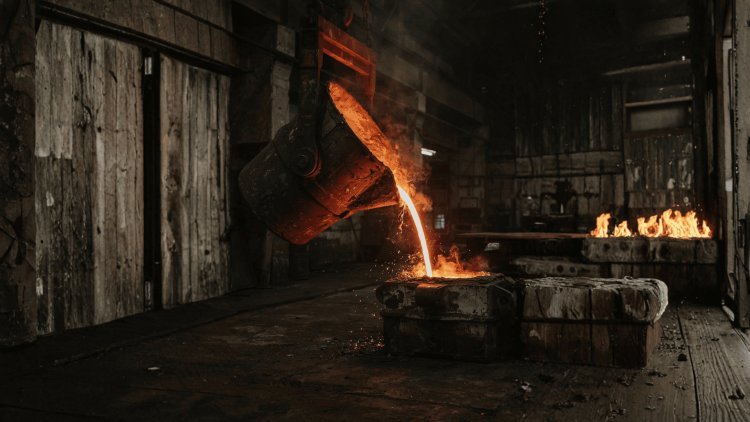
The Evolution of
Casting Fundamentals
Modern casting engineering rests upon decades of accumulated metallurgical, thermal, and manufacturing knowledge. Yet as component size and geometric complexity continue to increase, engineers must move beyond simple process understanding and confront the deeply interconnected physical mechanisms that govern casting quality. Effective preprocessing begins with a rigorous understanding of these fundamentals long before simulation models, meshes, or optimization algorithms are introduced.
Core Foundations of Casting Engineering
Defining the Core Process
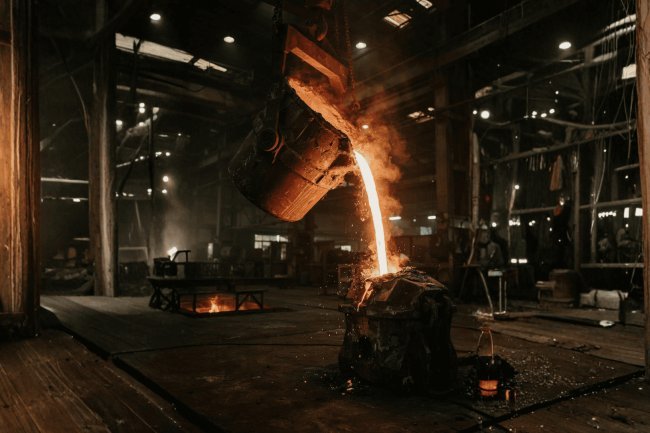
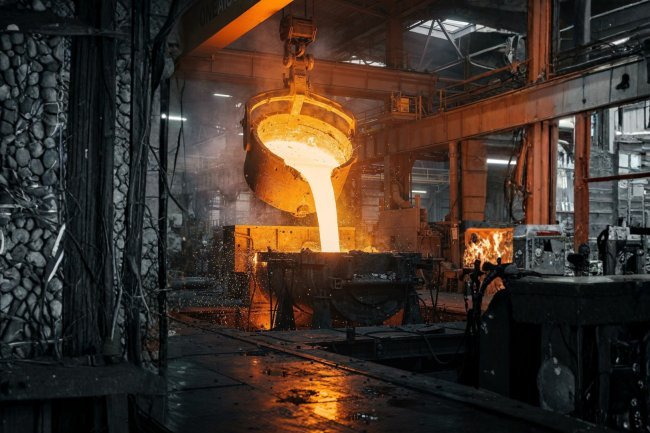
At its most basic level, casting involves introducing molten metal into a refractory mold cavity where it cools, solidifies, and assumes its final shape. While conceptually simple, industrial-scale castings introduce significant complexity through large thermal gradients, extended filling paths, dimensional requirements, and demanding structural performance targets.
Examples of Large-Scale Cast Components
Critical Requirements During Casting
The Balancing Act of Phase Changes
During solidification, multiple physical processes occur simultaneously. Shrinkage changes part dimensions, heat extraction alters temperature fields, and latent heat release modifies cooling rates. These interactions create a tightly coupled thermomechanical system that cannot be accurately described through simple analytical calculations alone.
Strongly Coupled Casting Physics
The "Dirty" Data Problem
Casting quality is rarely determined by a single parameter. Instead, it emerges from a complex interaction of design and process decisions made before production begins. Small errors or seemingly minor adjustments can propagate through the process chain and create serious downstream defects.
How Small Decisions Become Major Defects
Common Consequences of Poor Upstream Decisions
The First and Most Important Engineering Decision
Effective preprocessing is the discipline of identifying and controlling critical casting variables before production begins. It transforms uncertainty into engineered predictability, reducing downstream defects and improving manufacturing success rates.
The Modern Preprocessing Strategy
Great Castings Are Not
Created At The Pouring Station.
They Are Created During Preparation.
The evolution of casting engineering has shown that successful manufacturing outcomes depend far more on preparation than correction. Molten metal flow, solidification shrinkage, latent heat release, thermal gradients, and defect formation are all tightly interconnected physical processes. Because imperfections often originate from decisions made long before metal enters the mold, preprocessing has become one of the most critical disciplines in modern foundry engineering. By properly defining geometry, feeding systems, thermal strategies, and process conditions upfront, engineers dramatically increase the probability of achieving a sound casting on the very first production attempt.
Effective preprocessing hinges on a core set of interacting parameters that govern dimensional accuracy, metallurgical soundness, and mechanical performance.
Pattern allowances, gating design, and geometric optimization interact to determine dimensional accuracy, metallurgical soundness, and mechanical performance.
Compensates for volumetric contraction from liquid to solid—typically 1.0% for cast iron to over 2.0% for aluminum alloys.
Adds stock to finish-machined surfaces—typically 1.5–6 mm depending on process and part size.
Typically 1–3° on vertical surfaces to permit pattern withdrawal without damaging the cavity.
For large, thin-walled castings, these allowances must be modeled with full 3D accuracy to prevent cumulative dimensional errors.
Too fast → turbulence, oxide films, air entrainment. Too slow → premature solidification and misruns. Velocity must be carefully managed to balance these risks.
Pressurized systems maintain choked flow at the ingate to minimize turbulence; unpressurized systems prioritize smooth, laminar filling.
Ceramic foam filters placed in the runner are increasingly standard for large structural castings, intercepting inclusions before they reach the part cavity.
Break up thermal mass concentrations and add structural rigidity to large flat surfaces prone to warping.
Reduce stress concentration factors at interior corners and improve metal flow.
Gradual section-thickness changes avoid hot spots that create porosity or shrinkage cavities.
Critical Preprocessing
ParametersCompensate for predictable material behavior.
Critical Preprocessing
ParametersCompensate for predictable material behavior.
Control how metal enters the cavity.
Design the shape to solidify well.
It is the first act of defect prevention.
Modern casting simulation platforms such as MAGMASOFT, ProCAST, and AnyCasting integrate fluid dynamics, heat transfer, and solidification mechanics. Engineers can evaluate gating geometry, riser sizing, and chill placement virtually, identifying problems that would take weeks to uncover physically. For large castings, this predictive capability prevents costly scrap and accelerates development timelines.
The Volume of Fluid (VOF) method tracks the interface between advancing metal and displaced gas with high fidelity. It predicts air entrapment pockets, oxide film folding, and backfilling instabilities — phenomena difficult to control physically but well-resolved computationally. High-performance computing clusters enable accurate VOF simulations for complex internal cavities in large castings.
Transient thermal-fluid analysis solves Navier-Stokes equations for flow and energy equations for heat transfer, including latent heat of fusion. This coupled approach captures conjugate heat transfer between liquid metal, solidified shell, and mold, revealing dynamic thermal gradients. The result is high-fidelity prediction of shrinkage, porosity, and residual stress in the finished casting.
The Rise of Simulation-Driven Design
Beyond Trial-and-Error
Multiphase Simulation with VOF
Transient Coupled Analysis
The ultimate objective of casting preprocessing is not simply predicting metal flow or thermal behavior. It is accurately forecasting where defects will occur, why they will form, and how they can be eliminated before production begins. Modern defect prediction operates across multiple scales, combining physics-based simulation, empirical quality criteria, material databases, and cyclic process modeling to provide unprecedented visibility into casting integrity long before the first mold is filled.
Modern casting simulation simultaneously analyzes quality at multiple length scales. Large visible defects such as shrinkage cavities and porosity are evaluated alongside microscopic dendritic structures that ultimately determine long-term mechanical performance and fatigue resistance.
SDAS is one of the most important microstructural quality indicators. Faster cooling reduces dendrite spacing, producing stronger castings with improved fatigue life and enhanced mechanical performance.
Modern casting platforms convert raw thermal and solidification outputs into practical quality predictions through empirical criteria functions. These relationships have been developed through decades of foundry experimentation and validation studies.
Material databases connect alloy chemistry, thermal behavior, process conditions, and resulting mechanical properties into a unified knowledge system used directly by simulation software.
Permanent mold and die casting operations cannot be accurately evaluated using only first-shot conditions. The thermal state of the die changes continuously during production, creating significant differences between startup behavior and steady-state manufacturing performance.
Accurate macro-scale and micro-scale defect prediction can dramatically reduce rejection rates in large structural castings, creating substantial quality and cost advantages for high-value manufacturing programs.
Advanced defect prediction combines physics-based simulation, empirical quality criteria, alloy knowledge databases, and cyclic manufacturing models into a single predictive framework. Engineers can now evaluate shrinkage behavior, porosity formation, hot tearing risk, dendritic microstructure development, and die thermal stabilization long before production begins. By resolving quality issues virtually rather than discovering them on the shop floor, foundries reduce scrap, improve mechanical performance, accelerate development cycles, and achieve higher first-pass success rates on even the most demanding cast components.
Advanced Defect Prediction
Multi-Scale Defect Prediction Framework
Macro vs. Micro Defect Modeling
Two Levels of Defect Prediction
Visible Defects
Material Structure
Macro-Defect Prevention Strategy
Secondary Dendrite Arm Spacing
Criteria Functions & Material Databases
Material Intelligence Databases
Common High-Performance Alloy Systems
Die Cycling Simulation
Thermal Stabilization Variables
Potential Scrap Reduction
Modern Defect Prediction Workflow
The Future Of Casting Quality
Is Not Detection.
It Is Prediction.
The next frontier is not just better simulation—it is the seamless integration of digital design, additive manufacturing, real-time monitoring, and machine learning into a self-optimizing production ecosystem.
Produced via binder jetting, enabling complex internal cooling channels, undercuts, and lattice-filled cavities that were previously impossible to core.
Printed cores combined with conventional mold sections are becoming standard in aerospace and defense foundries.
Additive tooling compresses the prototyping cycle from months to days, allowing physical validation of simulation predictions on first-article castings with unprecedented speed.
The digital twin requires accurate simulation models plus systematic validation against production data—correlating simulated temperature profiles, filling sequences, and solidification maps with thermocouple measurements, X-ray CT scans, and mechanical test results from actual castings.
Real-time sensor data feeds algorithms trained on historical casting datasets, enabling autonomous adjustment of pour temperature, fill rate, and die cooling in response to observed deviations.
The Future:
Integrated Casting IntelligenceRemove geometric constraints from tooling.
A virtual model that reflects the real process.
From monitoring to self-correction.
optimizing quality, yield, and energy for the components of tomorrow.
What's Your Reaction?