Augmented Reality and Simulation-Based Foundry Process Development
How digital twin technology, immersive VR training, and augmented reality overlays are transforming traditional foundry operations into precision-driven, data-powered smart manufacturing environments — reducing waste, accelerating development cycles, and setting the standard for Industry 4.0 excellence.

The Hidden Cost of
Traditional Casting
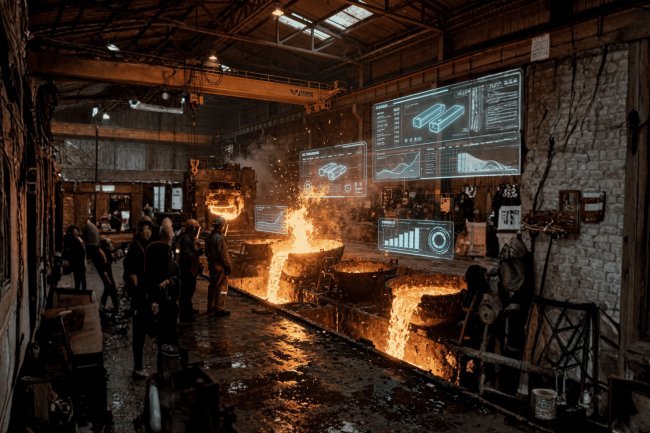
Foundry expertise remains one of the industry's greatest assets, but experience alone is no longer enough. Rising quality expectations, compressed development schedules, and increasing competitive pressure are exposing the hidden costs of traditional, trial-and-error casting development.
Trial & Error
Data Silos
Market Pressure
High-Stakes Trial & Error
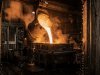
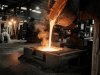
Complex castings such as aerospace brackets, turbine components, structural housings, and medical parts often require multiple physical trials before achieving acceptable quality. Every failed casting consumes materials, labor, furnace energy, machine time, and engineering resources while providing lessons that could have been learned virtually.
The Cost of a Failed Pour
Where Failure Becomes Expensive
The Silo Effect in Simulation
Many foundries have adopted simulation tools, but often use them only for isolated design studies. Results are stored separately from quality records, maintenance history, process parameters, and shop-floor outcomes. Without integration, every new project starts from limited knowledge rather than organizational learning.
Why Simulation Alone Isn't Enough
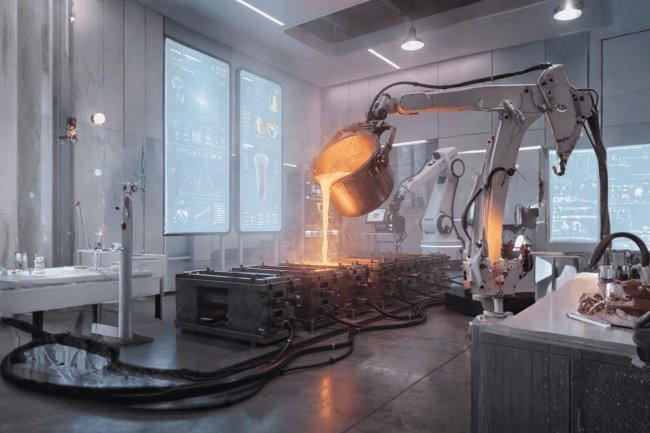
A digital twin turns the foundry into a living, data-connected model that can predict, optimize, and simulate process outcomes before they occur in the physical world.
Unlike a static 3D model, the twin ingests live process information and uses it to represent current conditions, test scenarios, and guide decisions.
Digital twins systematically evaluate pouring rate, shell preheat temperature, mold-wall thickness, alloy composition, and cooling rate. Large-scale analysis can reveal optimal parameter windows that would be impractical to discover through physical trials alone.
High-fidelity simulation reveals thermal gradients and solidification fronts so engineers can understand where porosity, shrinkage cavities, hot tears, and cold shuts will form—and modify gating, risering, or cooling until the risk is reduced before physical commitment.
Reduced physical sampling lowers material consumption and furnace energy use, while optimized parameters reduce scrap and extend equipment and tooling life.
Virtualizing the Foundry
A continuously updated source of truth
Explore thousands of scenarios virtually
Knowledge scalableEliminate defects in the virtual environment
More resilient production
Less waste, more efficiency
Virtualize → Integrate → Optimize
Immersive VR headsets allow operators to practice furnace charging, monitoring, pouring, and spill management in a safe simulated environment. High-consequence scenarios can be repeated until mastered, compressing training timelines and reducing incident rates.
VR-based planning tools let engineers place and reposition equipment in interactive models. This optimizes material flow, ergonomics, and safety compliance while avoiding costly rework and downtime compared to 2D layouts.
Distributed teams across continents can enter the same virtual environment simultaneously. VR platforms enable real-time annotation, assembly simulation, and troubleshooting, eliminating travel costs and reducing misinterpretation risks inherent in static drawings or video calls.
The VR Revolution: Training and Layout
Risk-Free Operator Training
Strategic Facility Layout Planning
Global Design Collaboration
While Virtual Reality replaces the physical world entirely, Augmented Reality enhances it by overlaying digital intelligence directly onto real objects. For casting inspection, engineering validation, and quality assurance, this capability fundamentally changes how engineers compare design intent, simulation results, and manufactured reality.
Immerses the user inside a completely digital environment.
Places digital engineering information directly onto physical objects.
Large castings often require engineers to mentally convert 2D drawings, cross-sections, and simulation screenshots into a three-dimensional understanding of the actual component. This translation process consumes time, increases cognitive load, and creates opportunities for error.
Augmented Reality removes the cognitive gap by projecting engineering information directly onto the physical component. Simulation outputs, thermal histories, quality indicators, and dimensional data become visible exactly where they matter most.
Engineers can instantly identify geometry deviations, verify assembly interfaces, evaluate repair quality, and compare actual measurements to expected performance. What once required extensive interpretation becomes visually obvious.
AR allows large castings to be visualized at their actual physical size before tooling investment begins. Engineers can walk around designs, evaluate clearances, review handling requirements, and identify access challenges long before manufacturing starts.
Augmented Reality closes the long-standing gap between engineering data and physical reality. By placing simulation results, measurement data, and design intent directly onto the casting itself, AR transforms inspection from an exercise in interpretation into an experience of direct visual understanding, enabling faster decisions, higher confidence, and earlier detection of costly issues.
Augmented Reality:
Bridging the Physical GapVirtual Reality vs Augmented Reality
Replaces Reality
Enhances Reality
The Limitations of Traditional Inspection
The Traditional Inspection Workflow
Complex Geometry
Internal Passages
Wall Thickness
Simulation Meets Reality
Engineering Data Overlays
Digital and Physical Become One
Faster, Safer, More Accurate Reviews
Unlocking Full-Scale Visualization
True-Scale Engineering Evaluation
Issues Found Weeks Earlier
AR Does Not Replace Inspection.
It Enhances Understanding.
Digital twins, simulation, VR training, and AR inspection reach their full value when connected into one intelligent system that senses, learns, and improves continuously.
Industry 4.0 infrastructure and 5G connectivity can support large real-time sensor streams, wireless AR and VR applications, remote analytics, and synchronized global teams working from a shared virtual model.
Market leaders will be those that digitize process knowledge, connect systems, and build the infrastructure for continuous, compounding improvement—not simply those with the largest furnaces or longest histories.
Audit current simulation and data-capture capabilities, identify the highest-cost recurring defect, and launch a digital-twin pilot for that casting family.
The Connected Smart Factory
Every process event makes the system smarter.
The foundry becomes a network node.
Active improvement is the imperative.
A self-improving operation
Start with one data-driven decision.
→ Identify
→ Pilot
What's Your Reaction?