Casting Fundamentals
What Is Directional Solidification?
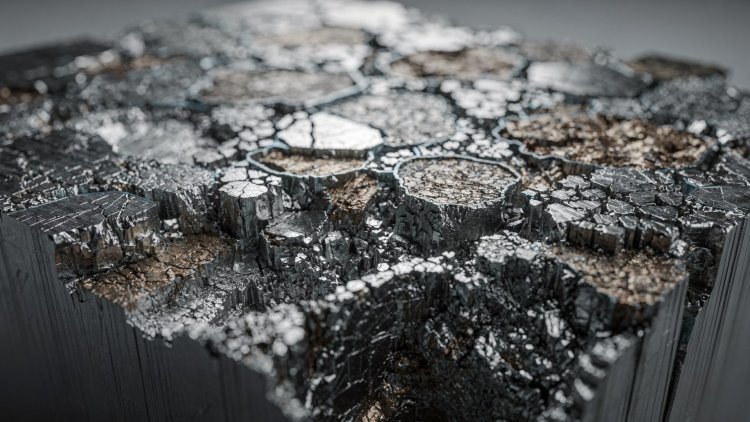
A controlled casting process that guides metal solidification in a single direction to improve microstructure, strength, and thermal performance.
Directional solidification (DS) is a controlled casting technique where molten metal is solidified progressively in a single, defined direction. This process eliminates random grain boundaries that normally form during conventional solidification, resulting in significantly improved mechanical strength, fatigue resistance, and high-temperature stability in critical engineering components such as turbine blades and aerospace parts.
Single-Crystal Growth
Produces components with no grain boundaries, enabling maximum fatigue resistance and exceptional structural integrity under extreme conditions.
Columnar Grain Structure
Aligns grains along the primary stress direction, dramatically improving creep resistance and long-term high-temperature performance.
Engineering Strength Through Controlled Solidification
At PoligonCast, directional solidification principles are integrated into advanced simulation workflows to help foundries design defect-free, high-performance cast components with predictable microstructural behavior.
Critical Applications
Why It Matters for Critical Components
Turbine Blades
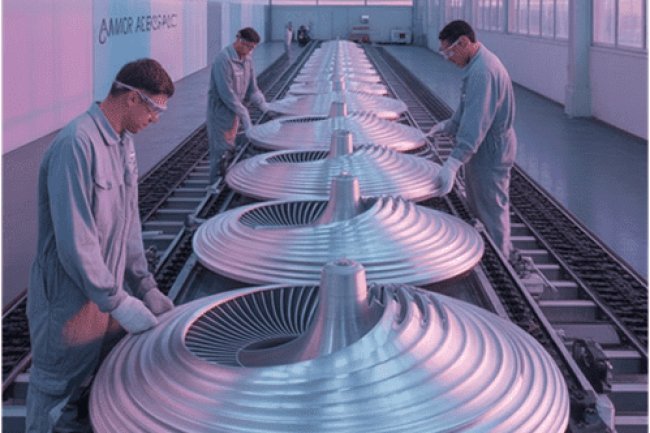
Directional solidification eliminates transverse grain boundaries, enabling blades to withstand extreme thermal and mechanical stress in high-performance environments.
Aerospace Structures
Single-crystal components deliver superior high-temperature strength, creep resistance, and oxidation resistance for aerospace-grade applications.
Power Generation
Directionally solidified parts in gas turbines improve efficiency and significantly extend service life under cyclic thermal and mechanical loading conditions.
Simulation Engineering
The Role of Simulation in Solidification
Solidification Front
Track front velocity and shape during controlled solidification to ensure directional stability and defect-free growth.
Defect Analysis
Identify porosity, shrinkage, and crack formation before production using predictive computational modeling.
Thermal Modeling
Predict temperature gradients across the mold to optimize cooling rates and control microstructure formation.
Grain Orientation
Predict microstructure alignment to ensure optimal mechanical performance and directional strength.
Advanced casting simulation software enables engineers to virtually replicate the directional solidification process — predicting thermal gradients, solidification front velocity, and grain structure before a single mold is poured. This significantly reduces costly trial-and-error iterations, improves yield quality, and accelerates time to qualification in high-performance manufacturing environments.
Simulation Insight
Key Simulation Parameters
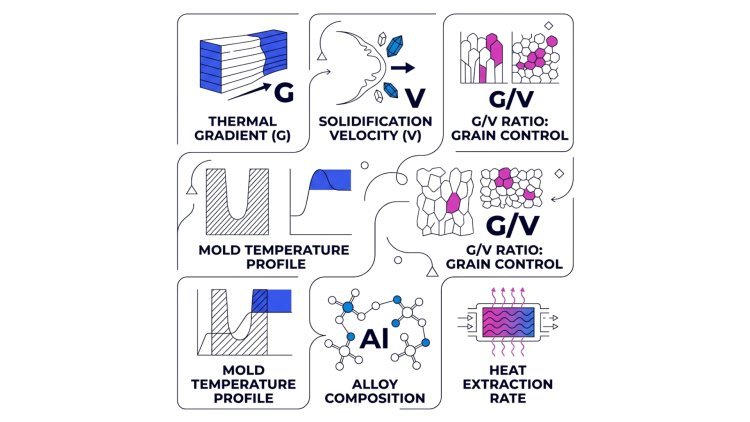
Accurate simulation depends on precisely defining interdependent thermal and metallurgical variables. Among these, the G/V ratio (temperature gradient to solidification velocity) plays a critical role in determining microstructural stability.
When the G/V ratio is optimized, the solidification front remains planar, which is ideal for single-crystal growth. If mismanaged, the interface becomes unstable and transitions into a dendritic structure, leading to defects and reduced mechanical integrity.
PoligonCast engineers calibrate simulation models against real-world casting data to ensure predictive accuracy across multiple alloy families. This validation loop between simulation and production reduces uncertainty, improves yield reliability, and strengthens process repeatability in industrial-scale foundry operations.
Simulation Advantage
PoligonCast’s Simulation Edge
Digital Twin Integration
Full-process digital twins replicate furnace, mold, and alloy behavior simultaneously for end-to-end process visibility and control.
Defect Prediction
Identify porosity, hot tears, and misoriented grains before physical trials begin using predictive simulation intelligence.
Process Optimization
Iterate withdrawal rates and thermal profiles virtually to maximize yield, improve quality, and reduce production variability.
Engineering Outlook
Engineering the Future of Solidification
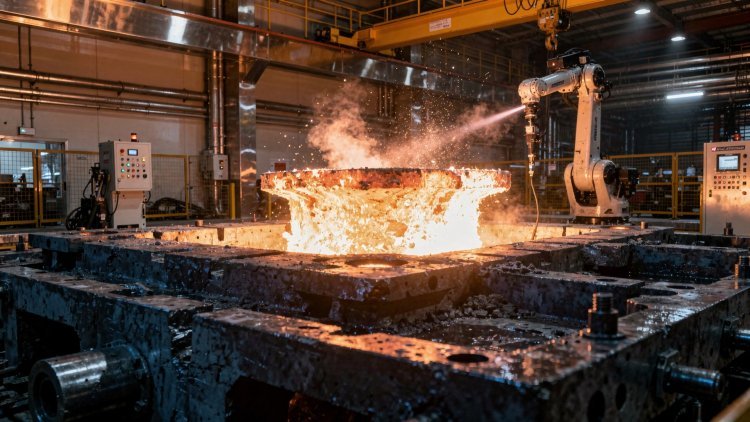
Directional solidification simulation is no longer a luxury — it is a competitive necessity for foundries supplying aerospace, energy, and defense sectors.
PoligonCast combines deep metallurgical expertise with state-of-the-art simulation tools to help manufacturers achieve first-time-right castings, reduce scrap rates, and meet the most demanding qualification standards in advanced manufacturing.
Ready to Optimize Your DS Process?
Partner with PoligonCast and bring simulation-driven precision directly to your foundry floor. Transform process uncertainty into engineered predictability.
Partner with PoligonCast