Mold Filling Prediction
Why Mold Filling Prediction Matters
Filling Stage Intelligence
Casting Integrity Starts During Mold Filling
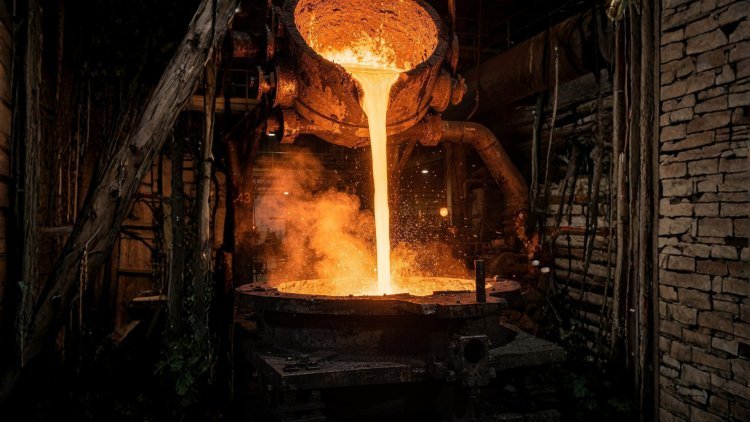
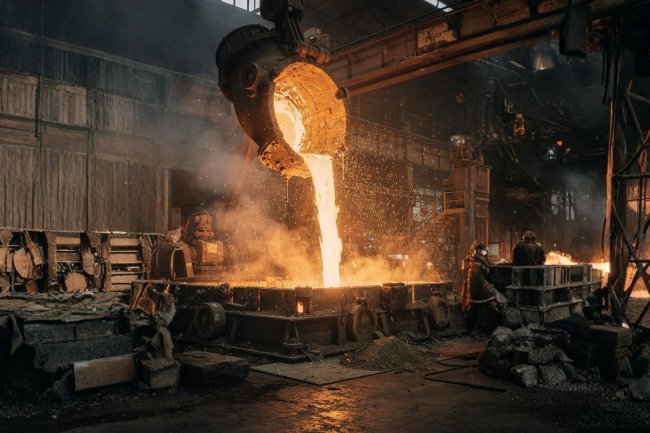
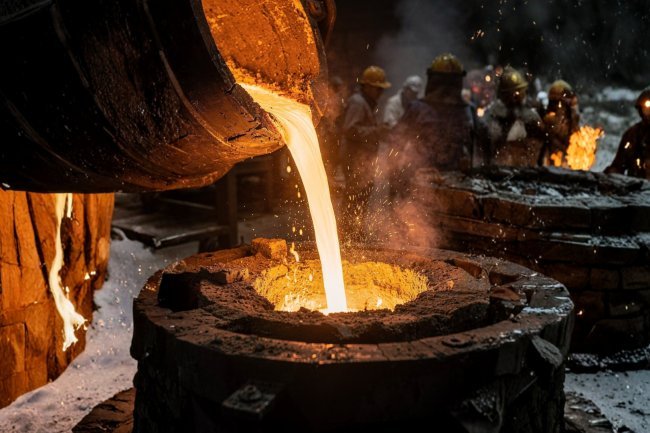
Mold filling directly determines casting integrity. Defects like porosity, cold shuts, and misruns originate during filling — making accurate prediction essential.
01
Quality Control
Predict and prevent defects before production begins.
02
Cost Reduction
Fewer trial runs and scrap parts lower operational costs.
03
Faster Time-to-Market
Accelerate design validation with data-driven simulation.
Machine Learning Simulation
How Machine Learning Enhances Simulation

Faster Predictive Intelligence
Real-Time Filling Prediction Without Heavy Compute Delays
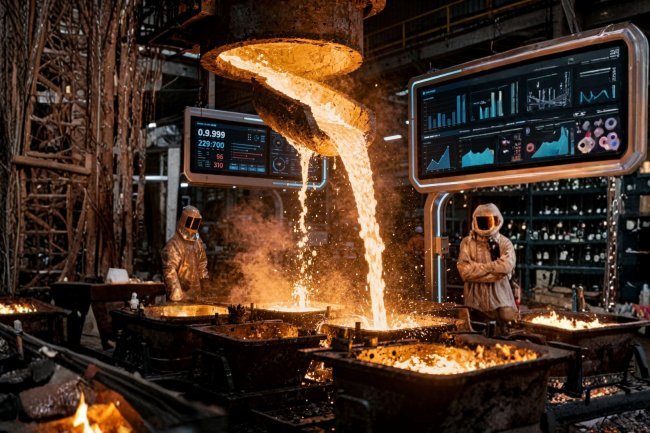
Traditional casting simulation relies on physics-based solvers — accurate but computationally expensive. Machine learning models trained on historical simulation and production data can predict filling behavior in real time, dramatically reducing compute time.
01
Neural Networks
Model complex fluid dynamics and learn nonlinear flow behavior from historical casting and simulation datasets.
02
Regression Models
Predict fill time, temperature evolution, and process response with faster computation than full physics-based solvers.
03
Classification Models
Flag defect-prone geometries and filling conditions before production, helping engineers focus on high-risk areas first.
Machine Learning Techniques
Key ML Techniques in Mold Filling
AI-Enhanced Mold Filling
Faster Prediction, Smarter Process Control
Machine learning techniques help engineers predict mold filling behavior, identify defect-prone conditions, and reduce dependency on time-consuming simulation cycles.
01
Deep Learning
CNNs and RNNs capture spatial and temporal flow patterns across complex mold geometries.
02
Random Forests
Ensemble methods identify key process parameters driving fill quality and defect formation.
03
Transfer Learning
Pre-trained models adapt to new alloy types or mold designs with minimal retraining data.
04
Surrogate Modeling
Lightweight ML surrogates replace expensive CFD solvers for rapid design-space exploration.
Defect Prevention Workflow
From Data to Defect Prevention
PoligonCast Workflow
Turning Foundry Data Into Actionable Process Optimization
PoligonCast integrates this pipeline into its casting simulation workflow — connecting foundry sensor data, historical simulation results, and ML inference to deliver actionable process optimization at every stage of production.
01
Collect Data
Sensor and simulation logs capture real process behavior from foundry equipment, molds, and previous casting runs.
02
Train Model
ML algorithms learn from historic data to recognize filling patterns, process deviations, and defect-prone conditions.
03
Predict Filling
Real-time inference predicts filling behavior, flow instability, and risk conditions before defects form.
04
Optimize Process
Parameter tuning enables prevention-focused decisions that improve fill quality and reduce casting defects.
Digital Manufacturing Edge
PoligonCast's Digital Manufacturing Edge

Simulation + Machine Learning
Competitive Advantage Through Intelligent Casting Workflows
PoligonCast combines advanced casting simulation with machine learning to give foundries a competitive advantage. By embedding ML into digital manufacturing workflows, clients achieve measurable gains in speed, quality, and predictive control.
01
Faster Simulation Cycles
Up to 60% faster simulation cycles through ML-enhanced prediction and reduced compute time.
02
Reduced Scrap Rates
Significant reduction in scrap rates by identifying defect-prone conditions earlier in the workflow.
03
Predictive Quality Assurance
Predictive quality assurance at scale, helping foundries control risk across production programs.
Intelligent Casting
The Future of Intelligent Casting
ML-Powered Foundry Intelligence
Smarter, Faster, More Confident Casting Decisions
Machine learning is no longer a future concept in foundry engineering — it is an active driver of quality, efficiency, and innovation today. As models grow more sophisticated and datasets richer, ML-powered mold filling prediction will become the industry standard.
PoligonCast is at the forefront of this transformation — delivering simulation intelligence that empowers foundries to cast smarter, faster, and with greater confidence.
01
Quality
Predict and reduce defect risks before production.
02
Efficiency
Reduce simulation delays and speed up validation.
03
Innovation
Build smarter workflows with simulation intelligence.