Physics-Informed Neural Networks (PINNs) in Casting Simulation
Bridging Data-Driven and Physics-Based Models.
AI + Physics-Based Engineering
The Challenge of Modern Casting Simulation
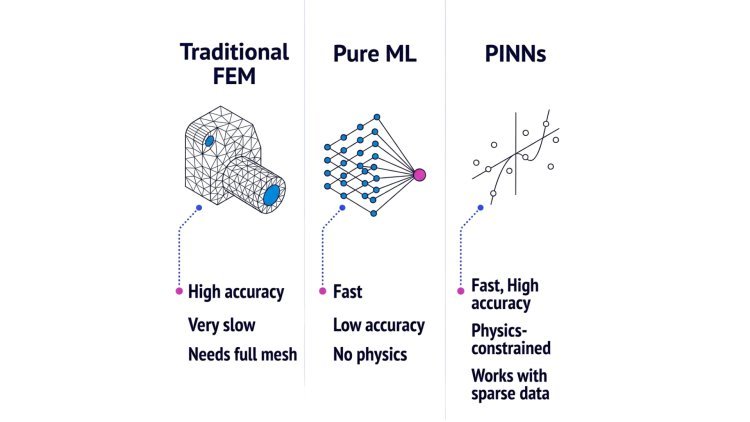
Traditional casting simulation depends heavily on physics-based solvers — powerful, but computationally expensive and often limited when material behavior is not fully characterized. Pure data-driven AI models face the opposite problem: they can identify patterns quickly, but without physical constraints they become unreliable for safety-critical foundry applications where accuracy and stability are essential.
01
Physics-Based Solvers
High-fidelity simulation delivers strong predictive capability, but computational cost, calibration complexity, and incomplete material characterization remain major challenges.
02
Pure AI Models
Data-driven AI can accelerate prediction and optimization, but without embedded physics it may produce unstable or non-physical results.
PINNs Offer a Third Path
Physics-Informed Neural Networks (PINNs) combine the strengths of physics-based simulation and machine learning by embedding governing equations directly into neural-network training. This creates models that learn efficiently from data while still respecting real-world thermodynamics, fluid flow, and metallurgical constraints.
AI + Governing Physics
What Are Physics-Informed Neural Networks?
PINNs are neural networks trained to satisfy both observed data and known physical laws simultaneously — including fluid-flow equations, heat-transfer behavior, and thermodynamic constraints. This creates AI models that remain physically consistent while learning from real or simulated foundry data.
01
Data Residual
Minimizes prediction error against measured experimental data or high-fidelity simulation outputs during network training.
02
Physics Residual
Penalizes violations of governing partial differential equations (PDEs) to preserve physically realistic behavior.
03
Boundary Conditions
Enforces physical constraints at domain boundaries, including thermal, geometric, and flow-related conditions.
Physics-Informed Casting Intelligence
PINNs Applied to Casting Processes
Physics-Informed Neural Networks bring physically constrained AI into real foundry operations, enabling faster and more accurate prediction of thermal, fluid-flow, and thermo-mechanical behavior across complex casting processes.
01
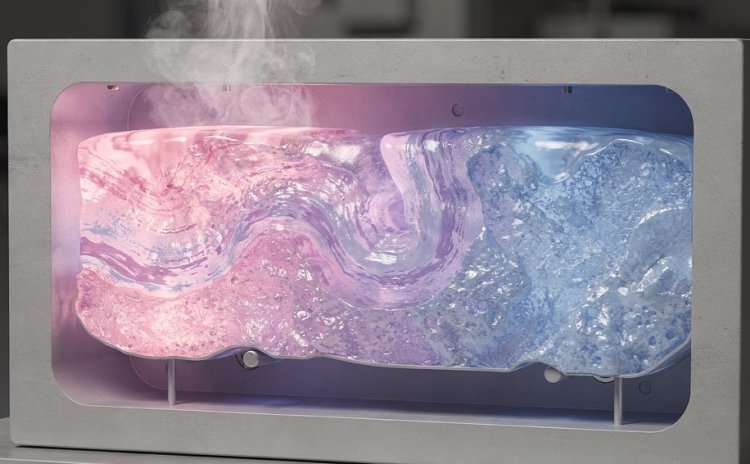
Solidification Modeling
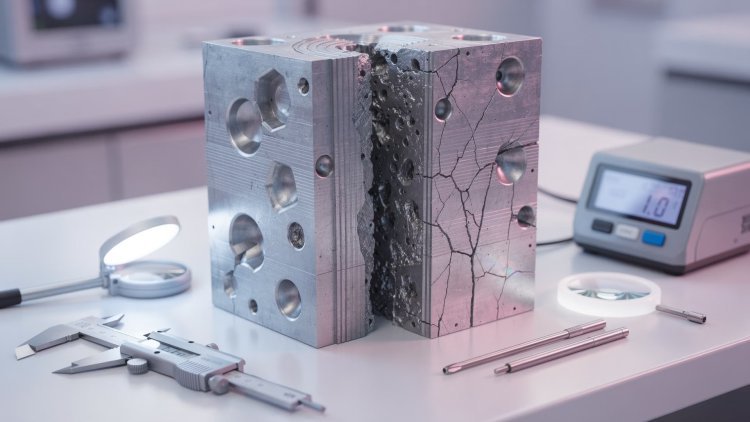
PINNs accurately predict solidification fronts and thermal gradients, helping reduce shrinkage porosity and thermal-defect formation.
02
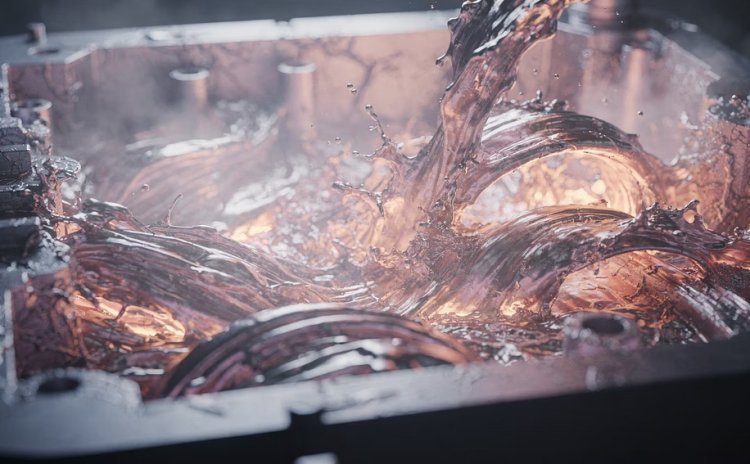
Mold Filling Dynamics
Embedded fluid-flow equations allow the network to capture turbulent melt behavior with significantly lower computational cost.
03
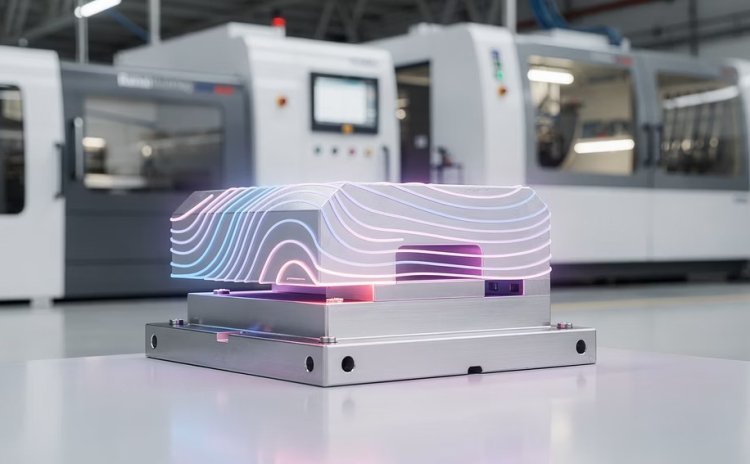
Residual Stress Prediction
Thermo-mechanical PDEs guide the network to predict residual stress fields in complex geometries using sparse sensor data.
AI-Accelerated Physics Simulation
Key Advantages Over Conventional Methods
Physics-Informed Neural Networks combine computational efficiency with physical realism, enabling foundries to accelerate simulation workflows while maintaining engineering reliability across complex casting processes.
Why PINNs Win
By embedding governing physics directly into machine-learning training, PINNs overcome many of the limitations associated with purely numerical or purely data-driven approaches.
Sparse Data Tolerance
PINNs can be trained effectively with limited experimental or sensor measurements.
Faster Inference
Predictions run orders of magnitude faster than conventional FEM-based solvers.
Strong Generalization
Embedded physics constraints reduce overfitting and improve reliability across new scenarios.
Inverse Problem Solving
Unknown material parameters can be identified directly from observational process data.
AI-Driven Digital Manufacturing
Implementation Roadmap at PoligonCast
PoligonCast integrates Physics-Informed Neural Networks into its digital manufacturing workflow — from alloy solidification to die casting — enabling faster design iterations, accelerated process optimization, and more reliable defect prediction for foundry clients.
01
Network Architecture
Design PINN architectures with embedded physics-loss functions tailored to casting, thermal, and fluid-flow behavior.
02
Physics Formulation
Define governing PDEs, thermal equations, and metallurgical constraints specific to each casting process.
03
Training & Validation
Calibrate and validate models against real foundry production data, thermal measurements, and defect outcomes.
04
Deployment
Integrate trained PINN models into digital-twin platforms for continuous optimization and predictive process control.
AI-Powered Foundry Optimization
By integrating PINNs directly into digital manufacturing workflows, PoligonCast enables foundries to move beyond static simulation toward adaptive, continuously improving process intelligence across casting operations.
Hybrid Simulation Intelligence
The Future of Casting
Simulation Is Hybrid
Physics-Informed Neural Networks represent a major paradigm shift in casting simulation — not replacing traditional physics-based solvers, but amplifying them with the adaptability, scalability, and speed of machine learning.
01
For Foundry Engineers
Faster iteration cycles and reliable prediction accuracy — even when experimental or sensor data is limited.
02
For Digital Manufacturing
A scalable path toward real-time, physics-consistent digital twins for intelligent process optimization.
03
PoligonCast's Commitment
Delivering cutting-edge, accuracy-first simulation technologies that bridge science, engineering, and industrial production.
Hybrid Intelligence for the Next Generation Foundry
The future of casting simulation lies in combining rigorous physics with adaptive machine learning. By integrating PINNs into advanced manufacturing workflows, PoligonCast helps foundries accelerate innovation while maintaining the engineering precision required for real-world production environments.