The Limits of Cloud & Batch Simulation
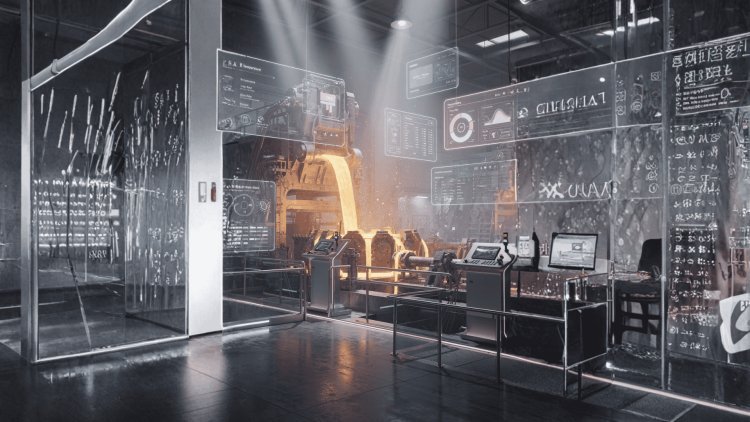
Traditional casting simulation workflows were never designed for real-time foundry decision-making. While cloud infrastructure improves accessibility, latency, bandwidth dependency, and delayed processing still prevent truly responsive manufacturing intelligence.
Traditional Approach
Conventional casting simulations operate in batch mode — engineers submit jobs, wait hours for results, then manually refine parameters.
Cloud-based systems improve scalability and accessibility, but they still depend heavily on network connectivity and centralized processing.
In a live foundry environment, delayed insight often means missed optimization opportunities — or costly casting defects.
Why It Falls Short
Latency
Cloud round-trips delay actionable simulation feedback during live operations.
Bandwidth
Streaming high-volume raw sensor data becomes expensive and operationally inefficient.
Offline Risk
Connectivity interruptions can halt monitoring, visibility, and process response entirely.
What Is Edge Computing in a Foundry Context?
Edge computing places processing power physically close to the data source — directly on the foundry floor. Local edge nodes collect, process, and act on sensor data in milliseconds, enabling real-time simulation feedback without depending on distant cloud infrastructure.
01
IoT Sensors
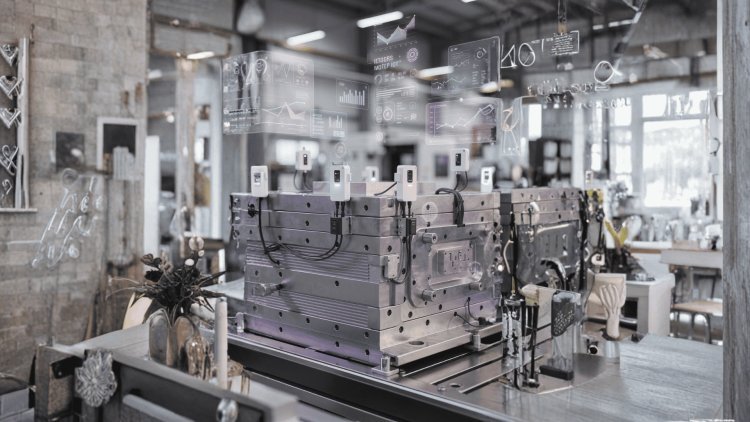
Smart foundry sensors continuously capture live process data including melt temperature, pouring rate, mold conditions, and vibration signals.
02
Edge Simulation
Local edge computing nodes process simulation data directly on-site, dramatically reducing latency and enabling immediate operational intelligence.
03
Real-Time Feedback
Instant process feedback enables responsive casting control, adaptive parameter adjustment, and proactive defect prevention on the foundry floor.
DIGITAL + PHYSICAL INTEGRATION
This architecture closes the loop between physical casting operations and digital simulation — enabling truly responsive, intelligent manufacturing directly at the point of production.
Key Applications on the Foundry Floor
Edge-enabled simulation transforms foundry operations from reactive manufacturing into intelligent, real-time process control. By combining live sensor streams with localized simulation and AI analytics, foundries gain instant visibility into thermal behavior, flow dynamics, and defect formation during production.
01
Thermal Monitoring
Edge nodes process thermocouple data in real time, comparing live temperatures against validated simulation models to instantly identify process drift and thermal instability.
02
Fill & Flow Analysis
Sensors continuously track molten metal flow rates and mold fill patterns while edge AI detects turbulence, imbalance, and anomalies before defects become permanent.
03
Defect Prediction
Machine learning models running locally predict shrinkage, porosity, cold shuts, and solidification issues — triggering proactive alerts and corrective actions.
04
Parameter Optimization
Edge systems dynamically recommend pouring temperature, fill speed, and cooling-rate adjustments based on continuously updated simulation outputs.
IoT + Simulation: A Powerful Convergence
How They Work Together
IoT sensors provide the live operational data stream, while casting simulation models deliver predictive engineering intelligence. At the edge, these technologies converge to create a continuously updated digital twin feedback loop that mirrors real-world foundry conditions in near real time.
PoligonCast's simulation expertise enables foundries to embed validated, high-fidelity casting models directly into edge architectures — ensuring the intelligence operating on the foundry floor is as precise as the engineering behind it.
01
Sense
IoT systems continuously capture live process variables including temperature, pressure, fill rate, vibration, and mold conditions.
02
Simulate
Local edge nodes run validated casting simulation models in real time to predict thermal behavior, flow dynamics, and defect risk.
03
Compare
Live sensor data is continuously compared against the simulation baseline to detect process drift, anomalies, and emerging risks.
04
Act
The system triggers operator alerts or automated process corrections to maintain stable, optimized casting performance.
Business & Operational Benefits
Edge-integrated casting simulation delivers more than technical insight — it creates measurable operational and financial impact across the foundry floor. By combining real-time monitoring, predictive analytics, and intelligent process control, foundries can reduce waste, accelerate production learning, and improve long-term manufacturing resilience.
01
Reduced Scrap
Real-time defect prediction identifies process issues before they become irreversible, dramatically reducing scrap rates, rework, and material waste across production cycles.
02
Faster Cycles
Immediate simulation feedback eliminates lengthy post-pour analysis delays, compressing process optimization cycles from days into actionable hours.
03
Operational Resilience
Local edge processing ensures simulation monitoring and intelligent process control continue uninterrupted during network outages or cloud downtime.
04
Continuous Improvement
Edge-collected operational data continuously feeds back into simulation models, enabling long-term process refinement and smarter manufacturing decisions.
Measurable Performance Gains
Foundries adopting edge-integrated casting simulation consistently report measurable improvements in first-pass yield, energy efficiency, process stability, and overall equipment effectiveness (OEE) — transforming simulation from an engineering tool into a strategic operational advantage.
The Future of Foundry Intelligence — Starting at the Edge
Edge computing is not a replacement for cloud simulation — it is the critical last mile that brings simulation intelligence directly to where casting actually happens. For foundries moving beyond delayed batch analysis, the convergence of IoT, edge processing, and advanced casting simulation represents the next evolution of digital manufacturing.
PoligonCast partners with foundries to design and deploy edge-integrated simulation frameworks — translating engineering precision into real-time, floor-level operational intelligence that continuously improves quality, efficiency, and process control.
01
Simulate Smarter
High-fidelity casting models validated specifically for edge deployment deliver predictive intelligence directly on the foundry floor.
02
Act Faster
Millisecond feedback loops enable operators and automated systems to respond instantly to changing casting conditions.
03
Scale Confidently
Flexible edge architectures grow alongside the foundry’s digital transformation journey and future manufacturing demands.