Improving Casting Accuracy with Adaptive Mesh Refinement
In modern foundry and manufacturing, achieving dimensional precision is no longer optional — it's a competitive necessity. Adaptive Mesh Refinement (AMR) is transforming how engineers simulate and optimize casting processes, enabling Poligoncast to deliver superior accuracy, reduced defects, and faster time-to-market.
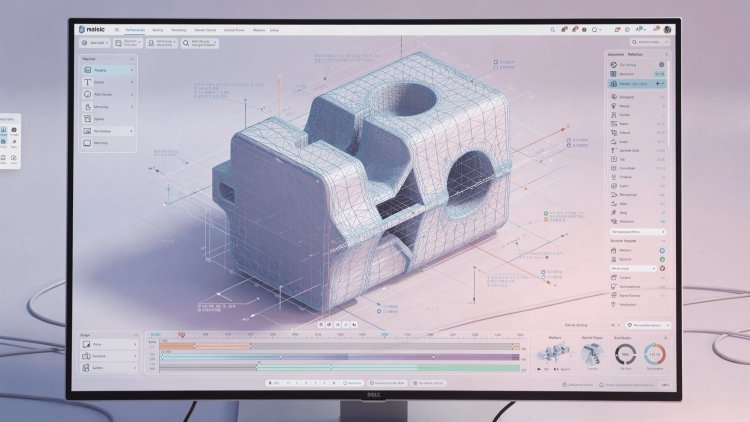

What Is Adaptive Mesh Refinement?
Adaptive Mesh Refinement (AMR) is a computational technique that dynamically adjusts simulation mesh density based on local solution gradients during analysis.
Instead of applying uniform resolution across the entire casting domain, AMR selectively concentrates computational power where physics are most complex and error-prone.
Gradient-Based Refinement
Mesh density increases automatically in regions with steep temperature, velocity, or pressure changes.
Computational Efficiency
Reduces total cell count while preserving accuracy, significantly lowering simulation time and hardware load.
Critical Zone Focus
Prioritizes thin walls, mold interfaces, and solidification fronts where casting defects are most likely to form.
Why Casting Accuracy Demands Smarter Simulation
Traditional uniform mesh approaches allocate computational resources evenly across the entire geometry, regardless of complexity. This leads to inefficiency and missed resolution in critical defect-prone regions.
Adaptive Mesh Refinement (AMR) solves this imbalance by intelligently concentrating resolution where physics matter most, enabling higher accuracy without excessive computational cost.
Uniform Mesh Limitation
Wastes computational power on simple regions while under-resolving critical thermal and flow gradients.
AMR Targeted Resolution
Focuses mesh refinement only where shrinkage, porosity, and thermal gradients are most critical.
High-Fidelity Results
Delivers accurate predictions of defects and flow behavior without excessive computational overhead.
Core Benefits of AMR in Casting Simulation
Enhanced Accuracy
Captures fine geometric features and sharp thermal gradients with high precision, improving defect prediction reliability.
Faster Computation
Reduces mesh density in low-complexity zones, significantly cutting simulation runtime without losing critical accuracy.
Defect Prediction
Identifies porosity, cold shuts, and shrinkage risks before physical trials, reducing costly rework and scrap.
Process Optimization
Enables iterative refinement of gating, risering, and process parameters with minimal cost and lead time.
How AMR Works: The Refinement Cycle
The Adaptive Mesh Refinement (AMR) process is iterative and self-correcting, continuously improving simulation accuracy through localized mesh adaptation based on error estimation.
Each cycle refines only the regions that require higher resolution, ensuring convergence toward a highly accurate solution without unnecessary computational overhead.
Initial Mesh
The simulation begins with a baseline mesh representing the full casting geometry.
Run Simulation
Governing equations are solved to compute flow, heat transfer, and solidification behavior.
Error Estimate
Solution gradients are analyzed to identify regions with high numerical error.
Selective Refinement
Mesh is locally refined in critical regions and simulation is rerun for improved accuracy.
AMR in Practice: Key Application Areas
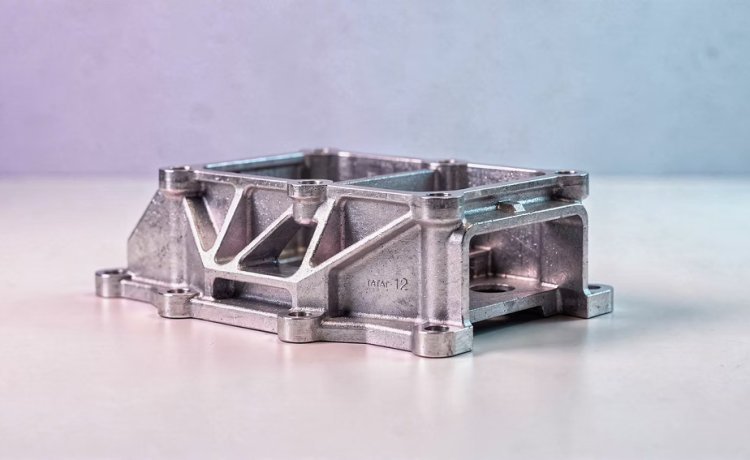
Thin-Wall Castings
AMR resolves critical fill and solidification behavior in aerospace and automotive thin-section components.
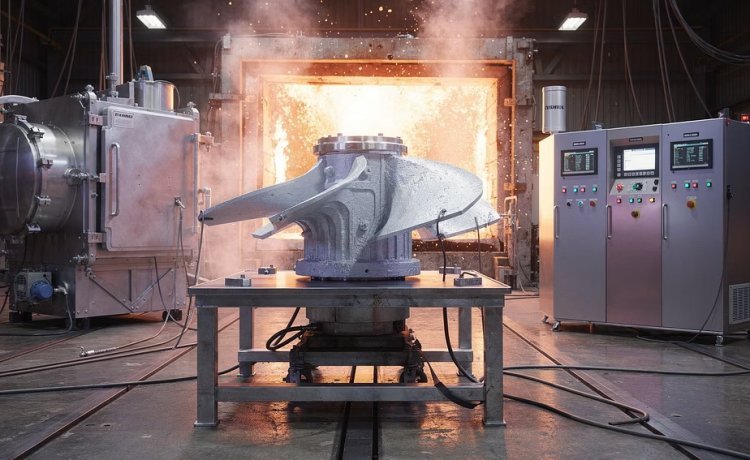
Investment Casting
Captures intricate ceramic shell interactions and thermal profiles in high-value precision components.
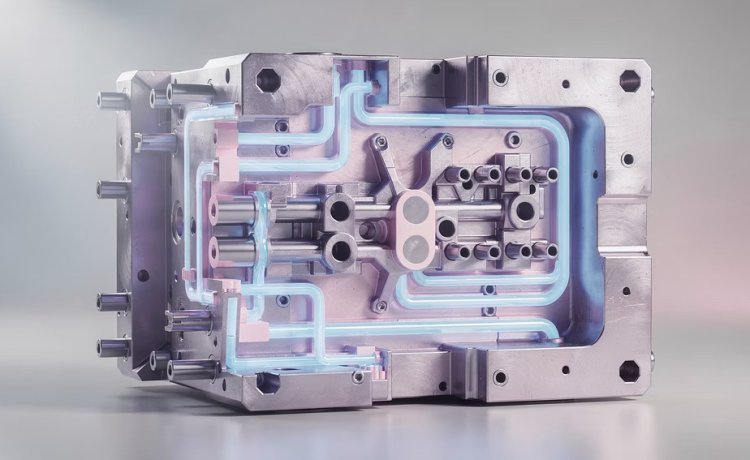
Die Casting
Optimizes gate design and cooling channel placement to minimize cycle time and warpage.
Poligoncast's AMR-Driven Approach
At Poligoncast, Adaptive Mesh Refinement (AMR) is integrated into every casting simulation workflow to deliver highly accurate, computationally efficient, and production-ready predictive models.
By leveraging AMR-capable simulation platforms, our engineers reduce physical prototyping cycles, accelerate decision-making, and improve first-pass casting success rates beyond industry benchmarks.
Predictive Accuracy
AMR dynamically concentrates resolution in critical thermal and flow regions for high-fidelity defect prediction.
Faster Engineering Cycles
Reduced computational overhead enables faster iteration, shorter development timelines, and rapid optimization studies.
First-Pass Success
Poligoncast clients achieve first-pass casting success rates that consistently exceed industry standards.
Smarter Simulation. Better Casting Outcomes.
By combining adaptive meshing with advanced CFD and solidification modeling, Poligoncast transforms simulation into a strategic engineering advantage — reducing risk, improving yield, and enabling data-driven foundry operations.
The Future of Casting Simulation
AI-Driven Adaptation
Intelligent error estimators will autonomously refine simulation regions in real time for faster and more accurate predictions.
Cloud HPC Integration
Scalable cloud-based computing will enable massively parallel casting simulations with dramatically reduced solve times.
Digital-Physical Convergence
Real-time adaptive simulation will continuously synchronize digital models with live production environments.
Real-Time Intelligent Foundries
The future of casting simulation lies in intelligent, adaptive, and continuously learning systems that close the gap between digital engineering and physical manufacturing — enabling faster innovation, higher yield, and truly predictive foundry operations.
Key Takeaways
Precision Where It Counts
AMR intelligently concentrates mesh resolution only in critical regions rather than uniformly across the entire casting model.
Defects Caught Early
Porosity, shrinkage, and thermal issues are identified during simulation instead of appearing later on the production floor.
Efficiency Gains Are Real
Reduced mesh complexity in low-gradient zones directly lowers computational cost and accelerates simulation runtime.
Poligoncast Leads the Way
AMR is central to Poligoncast's simulation methodology, delivering measurable engineering and production value to foundry partners.
What's Your Reaction?