Modeling Phase Transformations During Heat Treatment Using Kinetic Simulation Tools
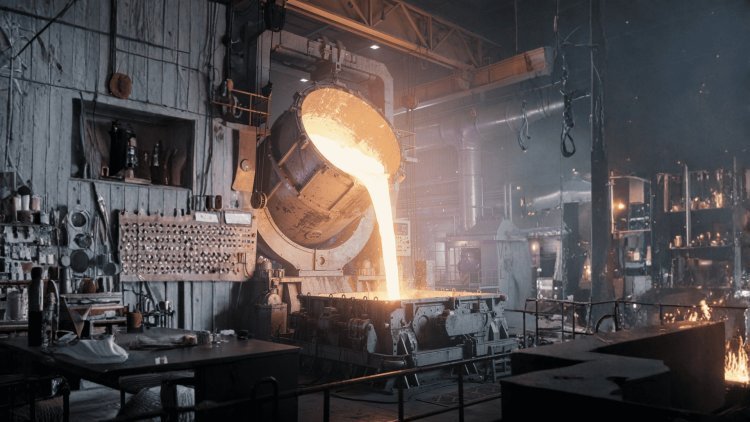
In modern foundry and manufacturing, understanding how metals transform at the microstructural level during heat treatment is critical to producing components with precise mechanical properties. At PoligonCast, kinetic simulation tools bridge the gap between casting and final performance.
Why Phase Transformations Matter
After casting, metals undergo complex solid-state transformations during heat treatment. The transition from austenite to martensite — along with transformations through bainite, ferrite, and pearlite — directly governs hardness, toughness, fatigue resistance, and long-term component reliability.
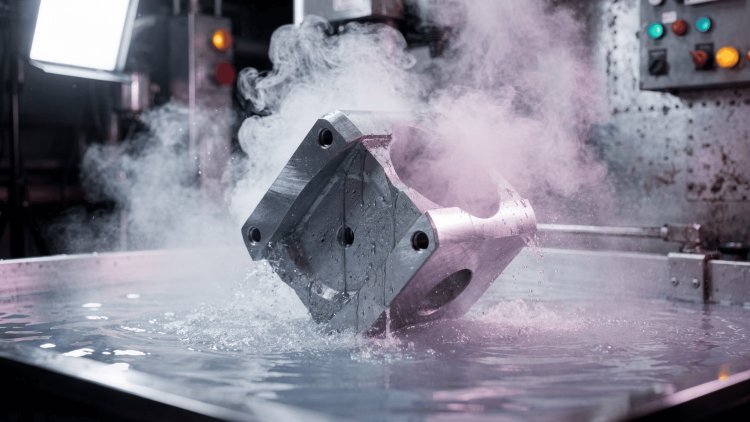
These microstructural changes are driven by tightly coupled thermal and metallurgical phenomena that evolve throughout quenching, tempering, and controlled cooling cycles. Even small deviations in temperature distribution or cooling rate can significantly alter final material performance.
Predicting phase transformations accurately is no longer optional. It is the foundation of quality-driven, defect-free manufacturing — enabling foundries and heat-treatment engineers to optimize mechanical properties, minimize distortion, and ensure repeatable production outcomes across critical industrial applications.
CALPHAD: The Thermodynamic Backbone
01
Phase Equilibria
CALPHAD calculates stable and metastable phase boundaries across varying alloy compositions and temperature ranges with high thermodynamic accuracy.
02
Multicomponent Alloys
Handles complex steel and iron alloys containing multiple alloying elements simultaneously — capturing interactions that govern real industrial behavior.
03
Database-Driven
Relies on validated thermodynamic databases to deliver high-fidelity predictions across industrial alloy grades and heat-treatment conditions.
Kinetic Modeling: From Equilibrium to Reality
01
Define Thermal Cycle
Specify heating and cooling rates, soak durations, and thermal holds that govern transformation behavior during heat treatment.
02
Simulate Kinetics
Run JMAK and diffusion-based transformation models to capture time-dependent phase evolution under real thermal conditions.
03
Predict Microstructure
Estimate final phase fractions, morphology, and transformation pathways to predict material properties after processing.
Kinetic models such as JMAK and diffusion-based simulations capture time-dependent phase evolution under realistic cooling and heating rates — extending beyond equilibrium thermodynamics to represent actual industrial heat-treatment conditions.
JMAK Models
Predict nucleation and growth kinetics for diffusional phase transformations during thermal processing.
Diffusion Simulations
Track carbon and alloy-element redistribution during austenitizing, quenching, and tempering operations.
CCT / TTT Diagrams
Generate continuous-cooling and isothermal transformation curves for robust process and heat-treatment design.
Austenite-to-Martensite: The Critical Transformation
01
Martensite Start (Ms)
Kinetic modeling tools precisely predict martensite-start temperature based on alloy chemistry and prior austenite grain structure.
02
Quench Rate Sensitivity
Cooling rate determines whether martensite, bainite, or mixed microstructures form — simulation removes process guesswork.
03
Residual Stress Coupling
Transformation strains are coupled with thermal gradients to predict distortion behavior and residual stress distributions.
PoligonCast's Simulation Workflow
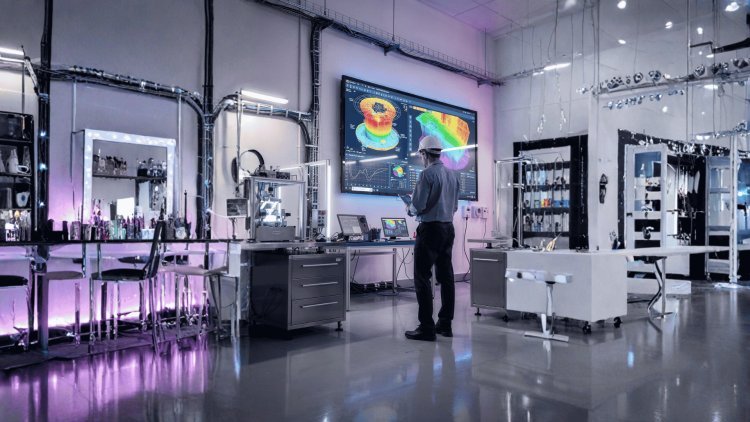
PoligonCast integrates casting simulation, thermodynamic modeling, kinetic analysis, and physical validation into a unified digital workflow that predicts final material performance before production begins.
01
Casting Simulation
Solidification behavior and initial microstructure evolution are simulated immediately after casting to establish the thermal and metallurgical baseline.
02
Heat Treatment Design
CALPHAD thermodynamics and kinetic models define optimized austenitizing, quenching, and tempering cycles for target performance requirements.
03
Phase Evolution Tracking
Real-time phase transformation modeling tracks martensite, bainite, ferrite, and carbide formation throughout the thermal cycle.
04
Property Validation
Predicted hardness, toughness, distortion, and residual stress behavior are validated against laboratory testing and production data.
Simulation-First Heat Treatment Engineering
This end-to-end digital workflow enables PoligonCast to optimize heat-treatment strategies before a single physical trial begins — dramatically reducing development time, material waste, and process uncertainty while improving final component performance.
The Future of Heat Treatment Is Digital
01
Reduce Trial Costs
Virtual heat-treatment cycles eliminate costly physical iterations, reducing scrap generation, furnace usage, and development expense.
02
Accelerate Development
Digital simulation compresses alloy qualification and process development timelines from months to days with faster engineering iteration.
03
PoligonCast Advantage
Integrated CALPHAD and kinetic-modeling expertise purpose-built for advanced foundry and heat-treatment applications.
Simulation-Driven Metallurgical Intelligence
Kinetic simulation is not just a research tool — it is a competitive advantage for foundries committed to precision, quality, process consistency, and digital transformation. By combining thermodynamics, kinetics, and simulation-driven process optimization, PoligonCast enables manufacturers to engineer heat-treatment performance with confidence before production even begins.