Digital Twin Technology in Foundries: The Next Revolution in Metal Casting
How Industry 4.0, IoT connectivity, real-time monitoring, and AI-driven predictive intelligence are transforming the way foundries cast, control, and compete in the modern era of smart manufacturing.
The Stakes: One Blind Spot Can Turn Metal into Scrap
The Hidden Cost of Casting Rejects
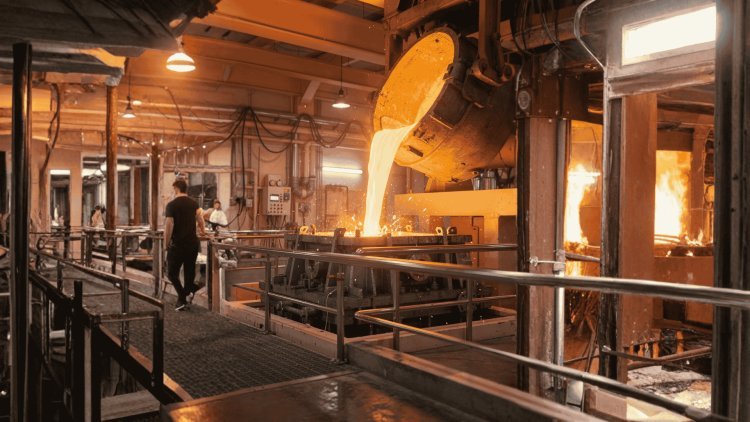
Casting rejects are far more than a line item on a cost report. Every rejected part represents a cascade of wasted resources: the energy consumed to melt and superheat the alloy, the labor invested in mold preparation and pouring, the machine time locked into a flawed cycle, and the downstream delivery commitments that cannot be met on time.
In a globally competitive metals market, margins are thin and tolerance for waste is even thinner.
Where the Chain Breaks Down
The melt-to-finished-part chain in a foundry passes through multiple interdependent stages — charge preparation, melting, alloying, pouring, solidification, shakeout, heat treatment, and finishing — and a failure at any single node can propagate invisibly until a downstream inspection reveals a scrap event.
Without real-time visibility, operators are essentially flying blind between data snapshots, relying on experience-based intuition rather than process signals.
The Compounding Risk
Reject rates compound into schedule risk, rework energy, and expediting costs that ripple across the supply chain. The foundry that cannot explain why a part failed cannot reliably prevent the next failure.
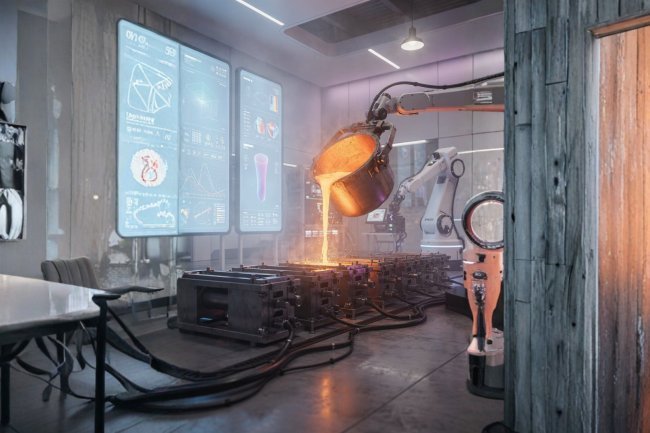
Digital twin technology directly attacks this blind spot by creating a continuously updated virtual model of the physical process — turning reactive quality management into proactive prediction.
Industry 4.0 for Foundries: From Machines to "Connected Operations"
Industry 4.0 is not simply about purchasing new equipment — it is a fundamental architectural shift in how foundry data is generated, shared, and acted upon across every process stage.
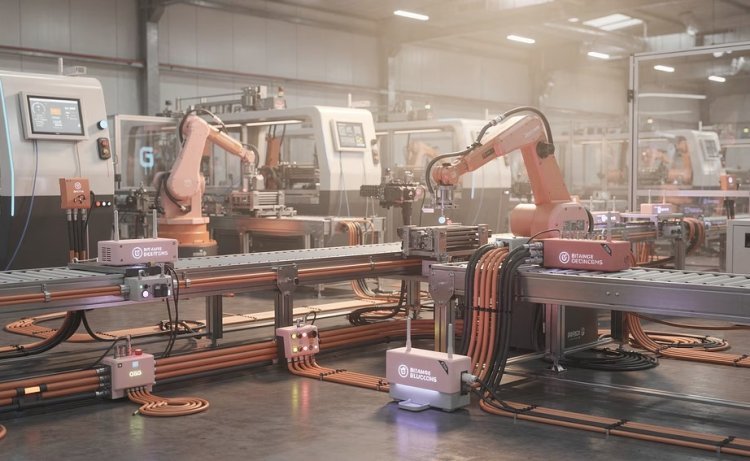
Sensing & Connectivity
The foundation of any Industry 4.0 foundry is dense sensor coverage across furnaces, molds, cooling lines, and handling equipment. Temperature probes, pressure transducers, vibration sensors, and spectrometers generate the raw data streams that feed every downstream intelligence layer.
Without this physical sensing infrastructure, there is nothing to analyze and no twin to build.
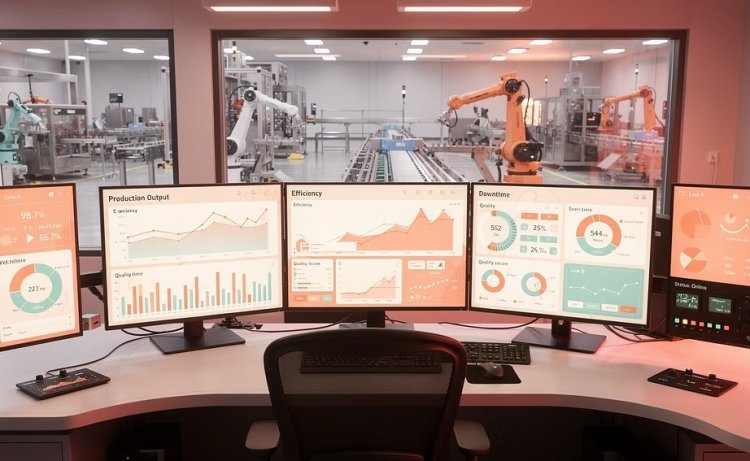
Analytics & AI Integration
Raw sensor streams become actionable only when processed through advanced analytics platforms. Machine learning models detect subtle correlations between process variables — metal temperature, fill velocity, die surface condition — and quality outcomes.
These models encode process knowledge that would take decades of human observation to accumulate, and they improve continuously as more production data flows through them.
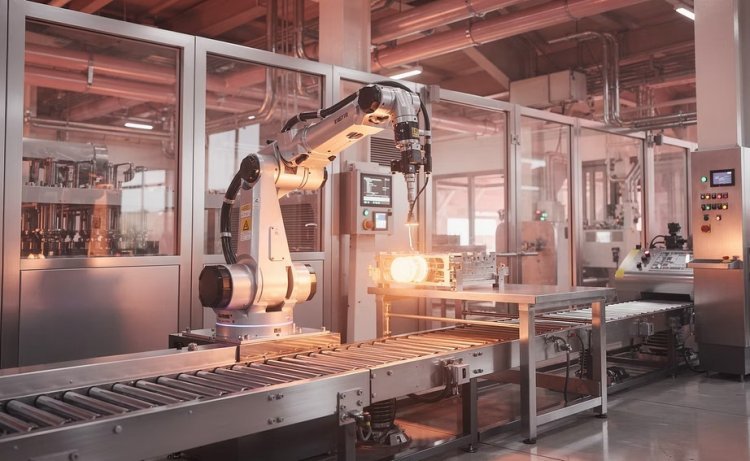
Automation & Closed-Loop Control
The ultimate objective of Industry 4.0 connectivity is closed-loop process control: the ability of the system to detect a process deviation and automatically correct it — adjusting alloy additions, pouring parameters, or cooling rates — without waiting for human intervention.
Automation converts insights from the digital twin into physical process adjustments in real time.
IoT-Enabled Casting Plants: The Sensors Start Talking
Modern foundries are evolving into connected, data-driven environments where machines, sensors, and analytics systems continuously exchange operational intelligence in real time.
The "Digital Melt Shop" Vision
The digital melt shop concept unifies IoT sensor networks, big data infrastructure, and AI analytics into a single operational intelligence layer. Every furnace, ladle, die casting machine, and cooling station becomes instrumented and connected to a shared data backbone.
Signals that were once isolated inside individual machine PLCs are now aggregated, time-stamped, and made available for cross-process analysis. The boundaries between traditional process control systems and enterprise IT begin to dissolve as data flows freely between the shopfloor and analytics platforms.
Progressive IoT implementations usually begin with high-value process points — furnace temperature control and alloy chemistry tracking — before expanding gradually across the plant to generate early ROI without disrupting active production.
Connectivity as the Non-Negotiable Prerequisite
The most important insight for any foundry considering digital twin deployment is this: connectivity is the prerequisite for everything else. A digital twin cannot exist without continuous, reliable data feeds from the physical process it represents.
IoT connectivity is not a nice-to-have enhancement — it is the structural foundation on which real-time twins, predictive models, and closed-loop control systems are built.
Real-Time Monitoring: Watch the Melt Like a Live Biometric
Real-time monitoring transforms foundry operations from periodic manual checks into continuously observed, data-driven manufacturing systems.
From Periodic Sampling to Continuous Signals
Traditional foundry quality control relied on periodic sampling — pulling a test bar every heat, running spectrometer checks, or recording thermocouple readings at fixed intervals. These snapshots often miss the dynamic variations occurring inside a single casting cycle.
Real-time monitoring replaces isolated snapshots with a continuous, high-resolution signal stream that captures thermal gradients, pressure spikes, chemistry drift, and process fluctuations as they actually occur.
The "Digital Shadow" Concept
Real-time monitoring feeds the digital shadow — a continuously updated virtual representation of the physical process that infers inaccessible internal states from observable external signals.
Machine learning models use die surface temperatures, injection pressures, and cooling flow rates to estimate internal temperature gradients, solidification behavior, and microstructural development that cannot be directly observed inside the casting.
The result is a shift from intuition-based operation toward live dashboards, predictive alerts, and immediate process validation.
The Breakthrough: A Twin That Explains Quality (Not Just Reports It)
The most significant advance in foundry digital twin research is the shift from descriptive monitoring to explanatory intelligence — twins that do not merely report what happened, but reveal why it happened at the microstructural level.
Fraunhofer IWM: The Transparent Die Casting Process
Researchers at the Fraunhofer Institute for Mechanics of Materials (IWM) developed a “transparent die casting process” digital twin that directly links die casting sensor data and machine control parameters to material condition and microstructural outcomes.
Rather than treating quality as a black-box output, the system encodes metallurgical knowledge into semantic data structures and knowledge graphs that connect process variables to physical material states.
This architecture allows the twin to explain quality in the language of materials science — linking injection speed, die temperature, and alloy chemistry directly to oxide distribution and porosity behavior inside the finished casting.
Machine Learning Reduces Complexity to Actionable Parameters
Die casting involves dozens of simultaneously changing parameters — pressure profiles, die temperatures, chemistry variation, lubricant application, and cooling behavior — interacting in nonlinear ways to determine final quality outcomes.
The Fraunhofer approach applies machine learning to reduce this complexity into a smaller set of high-impact explanatory variables carrying the strongest predictive power for defects and material inconsistencies.
In aluminum die casting, the model explained nearly 50% of oxide inclusion variance — turning previously “unexplained” scrap variation into traceable, controllable process behavior that can be optimized proactively.
Predictive Maintenance: Catch Failure Modes Before They Cast Their Own Evidence
Predictive maintenance transforms foundry operations from reactive troubleshooting into continuously monitored, intelligence-driven reliability management.
Why Reactive Maintenance Fails in Foundries
Foundry equipment operates under extreme thermal and mechanical stress. In reactive maintenance models, failures are only discovered after physical evidence appears — distorted castings, cooling failures, degraded temperature uniformity, or machine stoppages.
By the time visible evidence emerges, scrap and downtime have already occurred. Reactive maintenance is therefore always too late, forcing organizations into expensive root-cause investigations after losses have already propagated through production.
Even preventive maintenance based on fixed schedules remains inefficient because components are replaced regardless of actual wear, generating unnecessary downtime and wasting serviceable equipment life.
AI-Enabled Digital Twins as Predictive Engines
AI-enabled digital twins correlate signals from furnace power draw, injection pressure profiles, die cooling rates, cycle times, and part weight to predict future failure probabilities before defects emerge physically.
The twin learns what “normal” looks like for every machine configuration and detects anomalous signal patterns that historically precede failures — such as cooling flow drift, pressure instability, or progressive die wear.
These invisible failure signatures become detectable through models trained on thousands of historical cycles, enabling intervention before defects translate into scrap, downtime, or missed delivery schedules.
Maintenance Evolution Stages
Reactive
Failures are discovered only after visible evidence appears in cast parts or machine stoppages occur. Root-cause analysis is retrospective, scrap rates remain high, and unplanned downtime becomes chronic.
Preventive
Maintenance follows calendar schedules or cycle counts. Catastrophic failures are reduced, but healthy components are often replaced too early, creating unnecessary planned downtime and inefficient maintenance spending.
Predictive
AI-driven digital twins continuously evaluate equipment condition and predict failure windows based on live evidence. Maintenance interventions occur precisely when the data indicates degradation risk — before failures manifest as scrap or downtime.
Smart Manufacturing: Transparent Logistics, Visible Energy, Tunable Operating Points
The fully realized Industry 4.0 smart foundry extends digital twin intelligence beyond individual machines and processes to encompass the entire production system — from raw material intake to finished part dispatch — with end-to-end traceability, energy visibility, and system-wide optimization capability.
Full Process-Chain Transparency
Every charge batch, heat, die casting shot, heat treatment cycle, and finishing operation is tracked inside a unified production record that follows the material from raw stock to finished component.
Engineers and production teams can trace any casting back to the exact operating conditions under which it was produced, enabling rapid root-cause analysis, stronger customer certification evidence, and faster quality resolution workflows.
Energy & Resource Hotspot Visibility
Smart manufacturing platforms map energy consumption at the process-step level, exposing where energy intensity per kilogram of good casting is highest across melting, holding, heat treatment, and cooling operations.
This visibility enables targeted efficiency improvements such as optimizing furnace charge schedules, reducing idle holding energy, and dynamically tuning cooling systems to actual thermal loads rather than fixed operating setpoints.
Tunable Operating Points & System Interactions
In smart foundries, operating parameters are no longer static values fixed during commissioning — they continuously adapt based on live production feedback and digital twin analysis.
The system models how process variables interact: how alloy chemistry influences die temperature requirements, how pouring rate affects degassing efficiency, and how ambient conditions alter cooling behavior across the production line.
This enables operators to maintain optimal operating conditions dynamically instead of relying on fixed recipes optimized for past conditions.
Material Flow Optimization
Smart manufacturing systems continuously monitor scrap return rates, metal yield per heat, alloy addition efficiency, and inter-process buffer levels to reduce waste and optimize material utilization.
By correlating material flow data with quality outcomes, the platform can optimize charge compositions, maximize yield, maintain alloy specification compliance, and predict when inventory bottlenecks may constrain production throughput.
Evidence in Practice: Digital Twins for Rejection Rate and Property Improvement
Modern investment casting digital twins demonstrate how integrated process intelligence can reduce rejection rates, improve mechanical properties, and shift foundries from reactive inspection toward predictive process optimization.
Investment Casting Twin Architecture: Sentinel / PDManager Concept
The Sentinel/PDManager architecture demonstrates how multi-process digital twins can be deployed practically within investment casting foundries by gathering data from every critical process stage into a unified intelligence platform.
Wax injection, shell building, drying, dewaxing, sintering, casting, knockout, and finishing operations are continuously linked through a central database that enables full process-chain visibility and cross-process correlation analysis.
The system reveals relationships invisible in isolated monitoring — such as how shell thickness distribution influences fill behavior, or how dewax temperature excursions alter shell permeability and downstream defect probability.
Predictive Optimization Across Coating and Melting Phases
One of the most valuable capabilities of the investment casting twin is predicting rejection probability before metal is ever poured.
Shell-building conditions historically associated with elevated failure rates trigger early alerts, allowing foundries to intervene before committing an expensive casting campaign.
Melt chemistry, superheat temperature, and pouring conditions are continuously evaluated against predictive quality models, enabling pre-casting optimization rather than post-casting rejection management.
The economic impact is dramatic: correcting alloy chemistry before pouring costs pennies compared to rejecting finished aerospace-grade castings worth thousands of dollars.
Process Intelligence Layers
Call to Action: Build the Twin in the Order That Works
Digital twin implementation is not a single deployment — it is a staged capability-building journey where each layer creates the infrastructure and process intelligence required for the next.
Connect — Real-Time Monitoring Foundation
Instrument high-priority process points with IoT sensors and establish a shared data infrastructure where signals across the foundry are aggregated, time-stamped, and continuously accessible.
Replace periodic manual readings with live operator dashboards that improve process visibility, reduce blind spots, and accelerate response to deviations before defects propagate downstream.
Encode — Traceability & Knowledge Graph
Link every finished part to its complete process history — from charge preparation through finishing — while encoding metallurgical and process knowledge into structured ontologies and machine-readable knowledge graphs.
This stage transforms production history from passive records into an active intelligence base that future AI prediction models can continuously learn from and improve upon.
Predict — AI Models for Quality & Maintenance
Deploy machine learning models trained on integrated process-quality datasets to predict rejection risk, mechanical property outcomes, and future equipment failures before they physically manifest.
Production teams begin receiving actionable recommendations — parameter adjustments, maintenance alerts, and quality risk warnings — enabling real-time intervention and continuous model improvement as datasets expand.
Scale — Full Smart Manufacturing Integration
Extend digital twin intelligence across the full production chain — including logistics traceability, energy optimization, ERP connectivity, material flow control, and closed-loop process automation.
At maturity, the foundry evolves into a continuously self-optimizing manufacturing system capable of dynamically adjusting operating points, anticipating maintenance needs, and improving quality outcomes through accumulated process intelligence.
What's Your Reaction?