Multi-Objective Optimization in Casting
Balancing Quality, Cost, and Cycle Time Through Simulation.
Advanced Foundry Optimization
The Modern Foundry Challenge
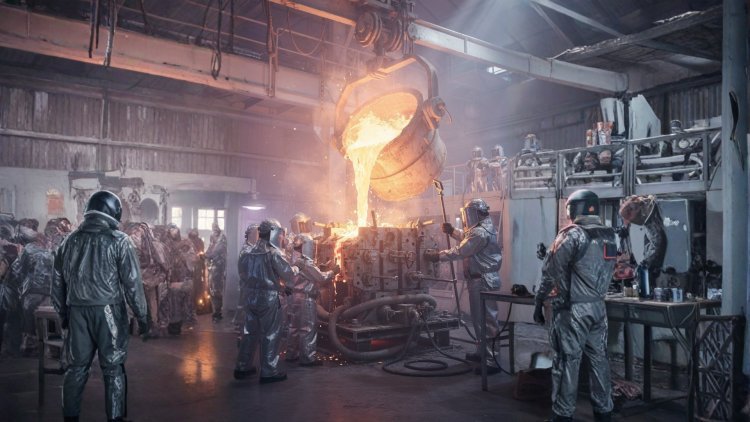
Today’s foundries face relentless pressure to deliver higher-quality castings at lower cost and faster cycle times — simultaneously. Traditional trial-and-error process development can no longer keep pace with modern manufacturing demands. Multi-objective optimization through simulation enables engineers to balance multiple KPIs at once, including yield, energy consumption, throughput, and defect reduction, without sacrificing one performance metric for another.
Why Single-KPI Thinking Falls Short
01
Quality vs. Cost
Reducing defects often increases material consumption or energy costs — optimization helps engineers identify the true operational balance.
02
Speed vs. Yield
Faster cycle times can introduce porosity, shrinkage, and thermal instability, ultimately reducing usable casting output.
03
Energy vs. Throughput
Lower-energy operating settings may extend solidification time and cooling cycles, limiting overall production throughput.
Simulation-Driven Optimization
Simulation as the Optimization Engine
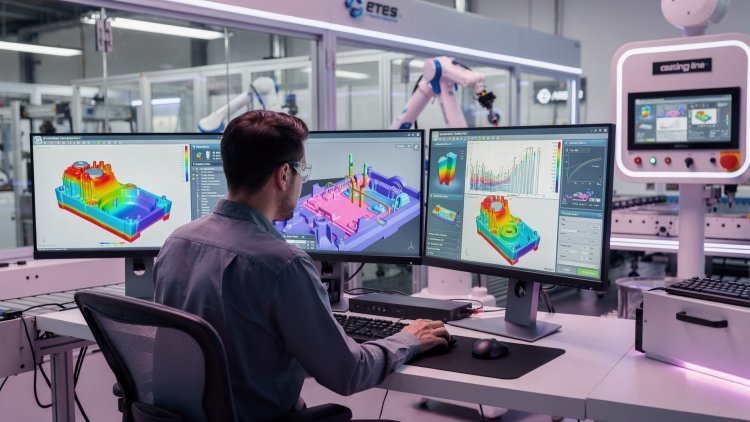
Simulation-driven optimization replaces costly physical trials with intelligent virtual iterations, enabling foundries to accelerate process development, reduce scrap, and optimize multiple production variables simultaneously.
01
Define Objectives
Establish performance targets, process constraints, yield goals, energy thresholds, and casting quality requirements before optimization begins.
02
Run Simulation Models
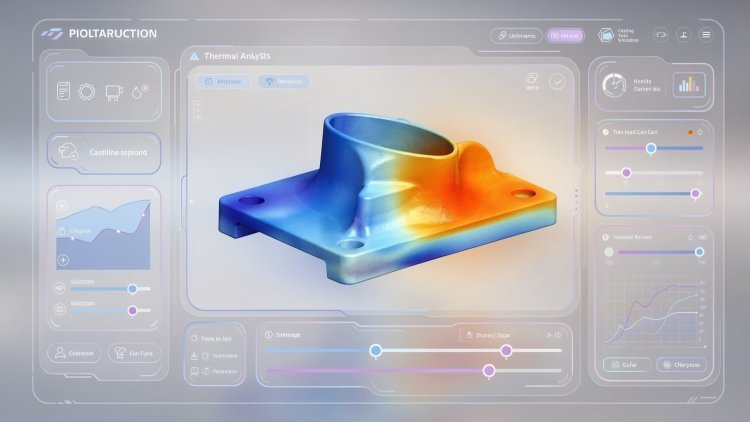
Execute thermal, metallurgical, and fluid-flow simulations across multiple operating scenarios to predict casting behavior.
03
Analyze Trade-offs
Compare conflicting KPIs such as quality, throughput, yield, and energy efficiency to identify the most balanced process conditions.
04
Apply Optimal Parameters
Implement optimized process settings for validation and production-scale deployment with greater confidence and consistency.
Key Simulation Capabilities
Thermal and fluid-flow modeling for fill and solidification behavior.
Defect prediction including porosity, cold shuts, shrinkage, and misruns.
Parametric sweeps across gating, timing, pouring temperature, and process variables.
Energy-consumption profiling and thermal-efficiency analysis per production cycle.
Multi-Objective Optimization
The Three Core KPIs in Focus
Modern foundry optimization depends on balancing multiple production KPIs simultaneously. Simulation enables engineers to improve quality, productivity, and energy efficiency together rather than optimizing one metric at the expense of another.
01
Yield & Quality
Maximize the ratio of defect-free castings per pour by optimizing mold geometry, pouring temperature, and cooling-rate control.
02
Cycle Time
Reduce total process time from pour to shakeout through intelligent solidification scheduling and die-temperature management.
03
Energy Use
Profile furnace and die-heating energy per casting cycle to identify efficiency gains without compromising metallurgical integrity.
Advanced Foundry Intelligence
PoligonCast's Simulation-Driven Approach
PoligonCast combines advanced casting simulation with deep foundry engineering expertise to transform multi-objective optimization into a structured, repeatable process — not a one-time adjustment. Our methodology enables manufacturers to continuously refine process performance, reduce production risk, and accelerate decision-making with data-driven confidence.
What Sets Us Apart
01
Digital Twin Integration
Virtual replicas of real foundry processes enable continuous parameter refinement, predictive analysis, and process optimization.
02
Pareto-Front Analysis
Visual trade-off analysis helps clients evaluate competing KPIs and make more informed engineering decisions with confidence.
03
Validated Results
Simulation outputs are benchmarked against real foundry production data to ensure predictive accuracy and process reliability.
Simulation-Driven Foundry Performance
Optimize Everything.
Compromise Nothing.
Multi-objective optimization through simulation is no longer a luxury — it is the competitive standard for modern foundry operations seeking higher quality, lower cost, and faster production simultaneously.
Higher Yield
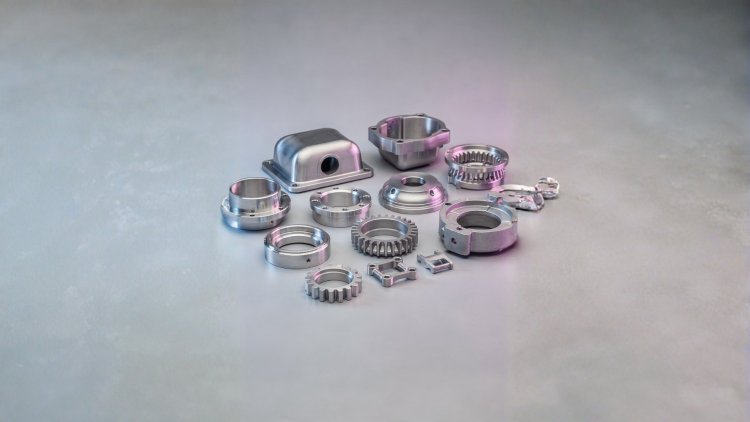
Fewer casting defects and more usable parts produced per manufacturing run.
Faster Cycles
Optimized process parameters reduce total time-to-part and improve throughput.
Lower Energy
Smarter thermal and process control reduces energy consumption per casting.
PoligonCast — Precision Engineering Through Advanced Simulation