Managing Certification Requirements for Aerospace Cast Components
A comprehensive guide to Nadcap audit standards, investment casting processes, and the certification rigor required to ensure flight-ready integrity in aerospace metallic components.
The Hidden Risk: Before Standardization
Castings as Critical Flight Hardware
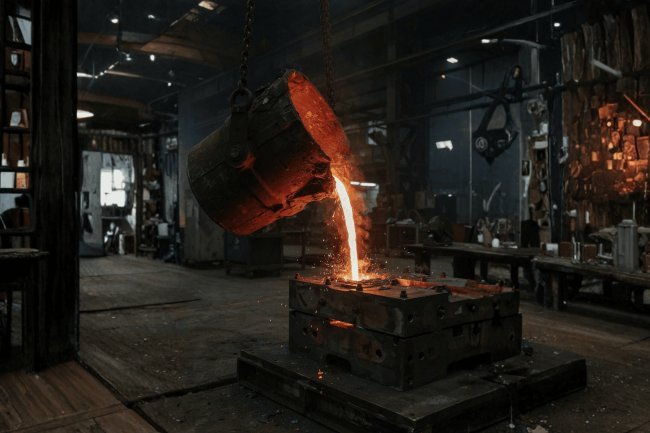
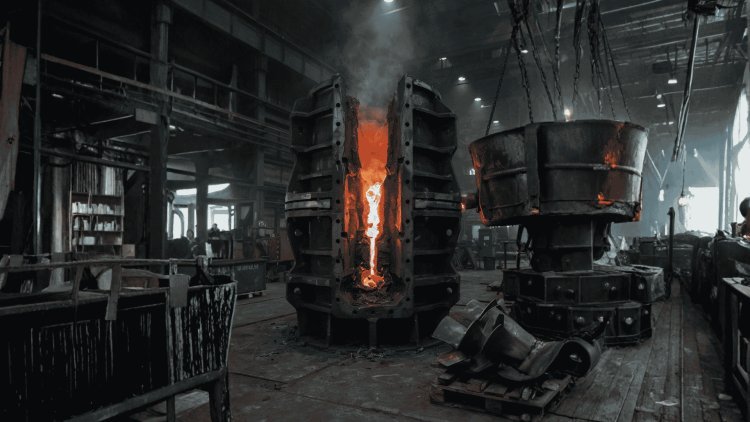
Turbine blades, engine housings, structural nodes, and airframe castings were among the most safety-critical parts in aviation. Yet qualification often focused on finished-component inspection rather than systematic control of the casting process itself. Defects introduced during manufacturing could remain hidden until late-stage testing, creating substantial financial and operational risk.
Fragmented Supplier Specifications
Suppliers frequently navigated different requirements from Boeing, Airbus, GE, Pratt & Whitney, and other primes simultaneously. The resulting patchwork of proprietary standards created compliance complexity, inconsistent process controls, and significant quality variation across the aerospace casting supply chain.
AS9100 Was Necessary — But Not Sufficient
AS9100 established an effective quality-management framework, but it was not designed to audit the highly specialized physics and metallurgy of casting. Critical variables such as melt chemistry, shell permeability, thermal gradients, solidification behavior, and process simulation remained largely outside its technical scope.
How Risk Moved Through the Supply Chain
Process Quality Matters as Much as Product Quality
Without process-level oversight, even suppliers operating under certified quality systems could unknowingly produce non-conforming flight hardware. The aerospace industry's push toward standardized casting controls, process qualification, simulation-based validation, and specialized audits emerged from the recognition that final inspection alone could never guarantee casting integrity.
OEM technical leads, supplier engineers, and regulatory stakeholders identified the gaps in existing oversight for casting operations.
The sand casting checklist established standardized requirements for mold preparation, metal chemistry, pouring practice, and post-cast operations.
The investment casting checklist added deep technical coverage for ceramic shells, directional solidification, single crystal growth, and HIP densification.
Trained auditors now conduct live job audits worldwide as suppliers transition from OEM-specific audits to the Nadcap model.
AC7141 and AC7142 were built collaboratively by primes, suppliers, and experts, so the criteria are both technically rigorous and practically achievable.
Nadcap’s process-specific checklists trace every audit item to a defect mode, process variable, or verification requirement, marking a major step beyond generic quality management systems.
The Industry Mandate: Creating Nadcap Oversight
Task Group Formation
AC7142 Published
AC7141 Published
Global Deployment
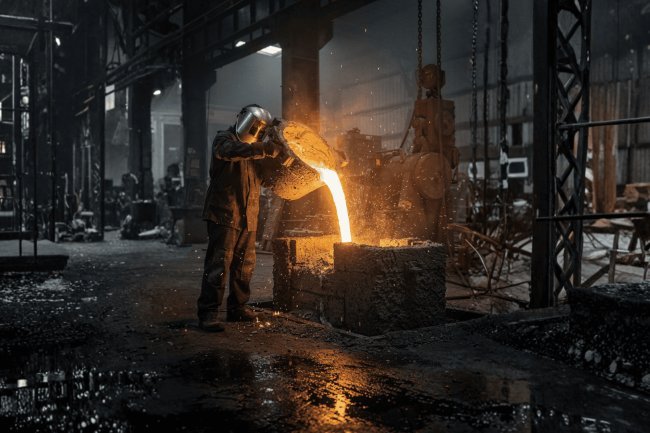
Auditors verify wax injection parameters, die temperature controls, dimensional validation procedures, ceramic core qualification, positional tolerances, and gating-system configuration to ensure castings can solidify soundly and consistently.
Slurry chemistry, shell coat sequences, stucco materials, drying conditions, superheat temperature, melt duration, and vacuum or controlled-atmosphere operations are reviewed against qualified process specifications.
AC7141 applies separate criteria for equiaxed, directionally solidified (DS), and single-crystal (SX) castings. Thermal gradients, withdrawal rates, mold temperatures, grain selectors, and microstructure verification are all scrutinized.
HIP cycles, heat treatment, chemical milling, fluorescent penetrant inspection (FPI), radiography, and all downstream operations are validated against approved procedures and calibration records.
The defining feature of an AC7141 audit is real-time traceability verification. Auditors follow a single production lot from raw material receipt through every manufacturing and inspection step, confirming that actual shop-floor activity matches approved procedures, specifications, records, and qualification requirements.
Inside the AC7141 Investment Casting Audit
Wax Patterns & Core Design
Shell Molding & Melting
Solidification Control
HIP & Post-Cast Processing
The Auditor's Journey Through a Single Job Lot
Live Job Lot Traceability Drives the Entire Audit
Auditors observe active production on real hardware, verifying each process step and checking objective evidence such as records, calibration, qualifications, and certifications.
Nonconformances require root-cause analysis, containment, corrective action, and effectiveness verification before accreditation can be granted or renewed.
Trained auditors apply the same technical baseline across major aerospace manufacturing regions, reducing geographic variation in quality expectations.
Strong performers may receive longer audit intervals, while recurring nonconformances trigger more frequent oversight and stronger continuous-improvement pressure.
OEM subscribers participate directly by reviewing audit findings, shaping technical criteria, and using accreditation as a supplier qualification gate.
The result is a disciplined, globally consistent verification model that emphasizes real process control rather than paper compliance.
The Modern Era: Rigor and Verification
Job Audits
Corrective Action
Standardization
Audit Frequency
The true purpose of Nadcap casting accreditation is not paperwork compliance. It is the establishment of repeatable manufacturing systems capable of delivering conforming aerospace hardware every time, under controlled and validated conditions.
Conclusion: The Path to Flight-Ready Integrity
The Objective Goes Beyond Passing an Audit
Recommended Supplier Action Plan
What's Your Reaction?