Jet Formation in Casting Flow Simulation: Engineering Control
In modern foundry engineering, the difference between a flawless casting and a scrapped part often comes down to milliseconds of turbulent flow during mold filling. Jet formation — the high-velocity, uncontrolled stream of molten metal that pierces into a mold cavity — is one of the most destructive and least visible phenomena in metal casting. Understanding, simulating, and eliminating it is the hallmark of precision foundry practice.

The Hidden Danger:
Turbulent Flow
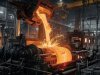
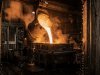
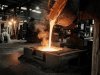
Molten metal behaves like a volatile, high-density river. When it enters a mold cavity without proper control, the consequences are immediate and severe — jet formation, mold erosion, entrapped oxides, and structural defects that compromise the entire casting. These defects often remain invisible until the part fails in service, making prevention at the simulation stage absolutely critical.
Mold Erosion & Velocity Breach
Mold erosion occurs the moment flow velocity exceeds the threshold that the mold material can withstand.
High-velocity molten metal acts like a hydraulic drill, scouring sand grains from the mold wall and mixing them into the metal stream.
The result is a casting riddled with hard inclusions — ceramic or sand particles embedded in the solidified matrix — creating stress risers that initiate fatigue cracks under service loads.
Once erosion begins, it accelerates; each pass of turbulent metal widens the damage zone and worsens subsequent filling cycles.
Shear Forces & Oxide Entrapment
High-velocity metal streams generate intense shear forces at the liquid-gas and liquid-mold interfaces.
These forces dislodge sand grains and simultaneously fold the oxide skin — which forms instantly on the surface of reactive alloys like aluminum — back into the bulk metal.
These bifilm oxides are planar, double-layered defects that dramatically reduce tensile strength and fatigue life. Unlike porosity, they cannot be healed by heat treatment. Managing turbulence is therefore not just about surface quality; it is a fundamental requirement for achieving acceptable mechanical properties in safety-critical components.
Jet Formation Mechanics
A casting jet forms when the metal stream entering the mold cavity has sufficient momentum to detach from the gating wall and project freely through the mold space.
The free-flying stream entrains air and oxide along its entire length before it contacts the mold or the rising metal pool.
The impact zone at the base of the jet creates a splashing crater that propagates secondary turbulence throughout the cavity.
Controlling the point, angle, and velocity of metal entry is the single most effective intervention available to the gating system designer — and it begins in the simulation environment.
High-velocity flow strips mold material and introduces inclusions into the casting.
Turbulence folds oxide films into the melt, creating bifilm defects that weaken the casting.
Hidden defects can remain undetected until service, where they become crack initiation sites and failure points.
Molten metal behaves like a volatile, high-density river. When it enters a mold cavity without proper control, the consequences are immediate and severe — jet formation, mold erosion, entrapped oxides, and structural defects that compromise the entire casting. These defects often remain invisible until the part fails in service, making prevention at the simulation stage absolutely critical.
PoligonSoft employs an Euler flow solver to compute velocity vectors and pressure distributions across the entire 3D mold domain at every timestep of the filling process. Unlike Lagrangian methods that track individual fluid parcels, the Eulerian framework provides a continuous field description of the flow — ideal for capturing the complex, evolving free surface of molten metal.
Local Velocity Magnitude
Pressure Gradient
Turbulence Kinetic Energy
Free-Surface Topology
These parameters are available as animated, three-dimensional outputs that reveal jet formation risk zones before a single gram of metal is melted.
Engineers visualize recirculation zones and aspiration risks before the first pour, replacing costly physical trials with high-fidelity virtual prototyping.
Recirculation zones — rotating vortices of metal trapped in corners or behind gating features — are particularly dangerous because they create local low-pressure regions that aspirate atmospheric air and oxide films back into the metal stream.
Simulation identifies these zones explicitly, allowing the gating geometry to be redesigned digitally in hours rather than weeks.
The cost savings compared to physical iteration are substantial: eliminating a single defect-driven scrap event on a large iron casting can recover the entire annual cost of simulation software investment.
Advanced hydrodynamics allow for real-time analysis of filling dynamics to ensure flow remains laminar and stable throughout the entire mold-filling sequence, from the initial contact of metal with the sprue base to the final filling of the riser.
This end-to-end digital workflow compresses the design-validate-optimize cycle from weeks of physical trials into hours of computational analysis, enabling foundries to deliver first-time-right castings with confidence.
Euler Flow Solver & 3D Velocity Mapping
What Engineers Can Interrogate
Virtual Prototyping & Recirculation Analysis
Understanding Recirculation Zones
The Economics of Virtual Iteration
Analyzing the Entire Filling Sequence
From Geometry to Engineering Insight
Preprocessing
Solver Execution
Postprocessing
The Physics of Perfection
The convergence of advanced flow simulation, physics-based solidification modeling, and intelligent gating design has fundamentally changed what is achievable in production foundry operations. The chaotic, unpredictable reality of molten metal filling a complex cavity can now be tamed—not by luck or experience alone, but by rigorous digital engineering conducted before a single mold is made.
Modern simulation allows foundries to achieve near-zero defect rates by optimizing all critical design parameters—gating geometry, pouring temperature, fill time, and riser placement—entirely in the digital environment.
By masterfully managing flow dynamics through simulation-driven design, engineers transform the chaotic reality of casting into a precise, predictable, and repeatable manufacturing process. Every pour—whether the first production unit or the ten-thousandth—behaves according to the validated simulation model.
Stop testing by trial and error; simulate your way to structural integrity and manufacturing excellence. The return on investment in casting simulation is measured not just in scrap reduction, but in accelerated product development, reduced tooling revision cycles, and the competitive advantage of delivering first-time-right quality to demanding customers.
From Simulation
to Zero-Defect ManufacturingOptimize all critical parameters digitally.
Every pour behaves according to the model.
Master the digital process first—
the physical result will follow with precision and confidence.
What's Your Reaction?