Casting Solutions for Next- Generation Mobility Platforms
As the mobility industry accelerates toward electrification and lightweighting, advanced casting solutions are redefining how structural and powertrain components are engineered — and PoligonCast is at the forefront of this transformation.
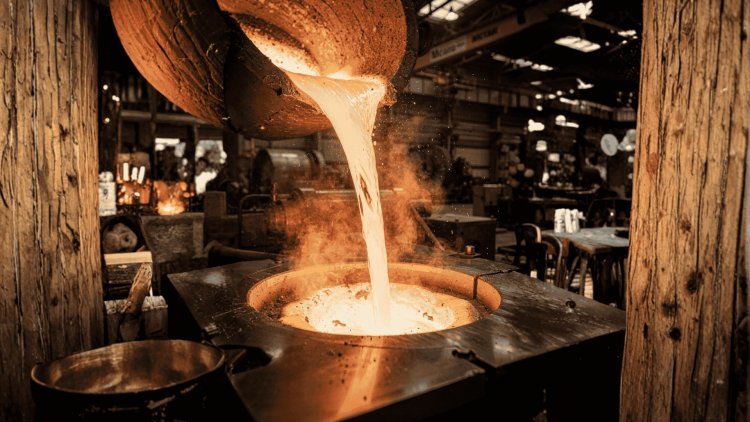
Why Casting Matters for Modern Mobility

Mobility Innovation Requires Better Components
Next-generation mobility platforms are being designed around ambitious goals for efficiency, safety, sustainability, and performance. Whether powering electric vehicles, autonomous transportation systems, or advanced mobility solutions, manufacturers need components that are lighter, stronger, and more precisely engineered than ever before.
What Modern Mobility Needs
- Lightweight structures
- High-strength materials
- Complex integrated designs
- Scalable production methods
What Casting Delivers
- Geometric freedom
- Cost-effective manufacturing
- High-volume scalability
- Material efficiency
Casting Is the Foundation of Future Transportation
As mobility platforms evolve, casting continues to provide the unique combination of performance, flexibility, and manufacturing efficiency required by modern transportation systems. From EV battery structures and motor housings to autonomous vehicle components, casting remains one of the most powerful enablers of next-generation mobility innovation.
Simulate solidification, shrinkage, and porosity before a single mold is built.
Reduce trial-and-error iterations, cutting time-to-production significantly.
Optimize gating and riser systems to minimize waste and improve yield.
The Role of Casting Simulation
Defect Prevention
Cycle Optimization
Material Efficiency
The preferred technology for high-volume EV production. HPDC enables lightweight, thin-walled components with excellent dimensional consistency, making it ideal for battery housings, motor enclosures, mega-castings, and structural vehicle nodes.
Lost foam technology supports highly complex geometries with minimal assembly requirements and reduced machining. It is particularly valuable for lightweight structural frames and integrated mobility components.
LPDC offers superior metallurgical quality and enhanced mechanical properties. It is commonly selected for safety-critical wheels, suspension components, and structural applications requiring excellent fatigue performance.
Whether using HPDC, Lost Foam Casting, or Low-Pressure Casting, simulation enables engineers to optimize filling behavior, predict defects, validate tooling concepts, and improve production outcomes before manufacturing begins. The result is faster development, lower risk, and higher-quality mobility components.
Key Casting Technologies for Mobility
High-Pressure Die Casting
Lost Foam Casting
Low-Pressure Casting
Choosing the Right Process for the Right Application
Thin-wall structures
Reduced machining
Superior propertiesSimulation Maximizes Every Casting Technology
Each project begins with a structured review of geometry, performance targets, and manufacturability.
Virtual testing confirms process behavior before tooling investment.
Optimized tooling and process settings support a smoother ramp to production.
Real-time process mirroring for continuous quality control.
Deep knowledge of aluminum, magnesium, and specialty alloys for mobility.
Solutions validated for ICE, hybrid, and full-EV architectures.
PoligonCast's Engineering Approach
Design Analysis
Simulation Validation
Production Launch
Reduced vehicle mass allows batteries to deliver greater driving distance with the same energy capacity.
Efficient vehicles consume less energy throughout their operating life, reducing environmental impact.
Simulation ensures weight reduction is achieved without sacrificing strength, durability, or safety.
PoligonCast's simulation-driven design methodology enables manufacturers to achieve 15–25% weight reduction compared to conventional approaches while maintaining structural performance. The result is better EV range, lower emissions, reduced material usage, and measurable sustainability gains across the entire product lifecycle.
Lightweighting & Sustainability Impact
The Lightweighting Impact Chain
Extended Range
Lower Emissions
Structural Integrity
Sustainability Starts with Smarter Design
Predict and eliminate defects digitally before production.
Expert process design for complex, high-performance components.
Integrated Industry 4.0 solutions for scalable, quality-driven output.
Partner with PoligonCast
Advanced Simulation
Foundry Engineering
Digital Manufacturing
What's Your Reaction?