Cybersecurity Challenges in Smart Foundries
As foundries embrace Industry 4.0 — integrating IoT sensors, AI-driven simulation, and networked automation — they unlock unprecedented efficiency. But this digital transformation also opens the door to serious cybersecurity vulnerabilities that can disrupt operations, compromise intellectual property, and threaten worker safety.
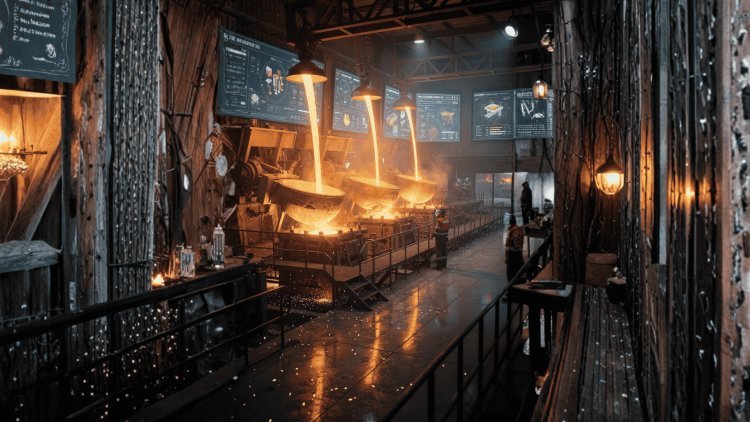
The Connected Foundry: A New Attack Surface
OT/IT Convergence
As operational technology and enterprise IT systems merge, organizations face new hybrid vulnerabilities that did not exist in traditional manufacturing environments.
IoT Proliferation
Sensors, edge devices, controllers, and connected equipment dramatically increase the number of endpoints requiring active security management.
As more manufacturing systems become interconnected, cybersecurity must extend across engineering software, business applications, operational technology, and every device deployed on the shop floor.
Connectivity Must Be Matched by Security
Smart manufacturing success depends on both digital connectivity and cyber resilience. Foundries that secure OT networks, protect IoT infrastructure, and modernize legacy system controls are better positioned to safeguard intellectual property, maintain operational uptime, and confidently scale Industry 4.0 initiatives.
Foundries hold high-value assets — proprietary alloy formulas, simulation models, and production blueprints. Cybercriminals and state-sponsored actors increasingly target manufacturers for competitive intelligence and operational disruption.
A single ransomware attack on a smart foundry can halt production lines, costing millions per day.
Key Cybersecurity Threats
Why Foundries Are Targeted
The Impact
Casting simulation software and digital twin environments are central to modern foundry engineering—but they also contain highly valuable process data that must be protected against cyber threats.
Tampered simulation inputs can produce flawed castings, quality failures, and expensive recalls.
Weak authentication exposes proprietary casting models, process parameters, and engineering data.
Cloud-hosted digital twins require encryption, identity management, and strict access controls.
Vulnerabilities in Casting Simulation & Digital Twins
Data Integrity Risks
Unauthorized Access
Cloud Exposure
Identify critical assets, connected devices, OT systems, software platforms, and vulnerabilities across the foundry network to establish risk visibility.
Implement network segmentation, access controls, authentication policies, patch management, and endpoint security across IT and OT environments.
Building a Cybersecurity Framework for Smart Foundries
Assess
Protect
Isolate OT networks from corporate IT to contain breaches and limit lateral movement across systems.
Verify every user and device continuously—never assume trust within the network perimeter.
Regular cybersecurity awareness training helps reduce phishing attacks and other human-error risks.
Maintain disciplined update schedules for connected systems, including legacy foundry equipment.
Strong cybersecurity combines secure network architecture, continuous authentication, workforce awareness, and proactive system maintenance to protect modern digital foundries from evolving cyber threats.
Best Practices for Foundry Cybersecurity
Secure Digital Foundry
Network Segmentation
Zero Trust Architecture
Staff Training
Patch Management
Defense in Depth
Safeguard valuable simulation models, process parameters, casting designs, engineering knowledge, and proprietary manufacturing data from cyber threats and unauthorized access.
Reduce the risk of production interruptions by protecting critical manufacturing systems, shop-floor equipment, and operational technology networks.
Expand digital capabilities, automation initiatives, and connected manufacturing platforms without increasing operational cyber risk.
As PoligonCast advances casting simulation, digital engineering, and smart manufacturing solutions, cybersecurity remains essential to protecting innovation. Embedding security into design, simulation, cloud infrastructure, operational technology, and production systems ensures that digital transformation delivers long-term value without compromising resilience.
Smart foundries that invest in cybersecurity today are building the resilient, efficient, and competitive manufacturing operations of tomorrow. By protecting intellectual property, ensuring operational continuity, maintaining compliance, and enabling secure growth, cybersecurity becomes a strategic advantage that powers sustainable innovation across the entire foundry ecosystem.
Securing the Future of Smart Manufacturing
Protect IP
Ensure Uptime
Scale Securely
Security Enables Sustainable Digital Transformation
Secure Today. Lead Tomorrow.
What's Your Reaction?