Designing High-Performance Cast Alloys Through Modeling
In modern foundry and manufacturing, the ability to engineer cast alloys with precision before a single mold is filled is transforming how industries approach material performance, cost efficiency, and product reliability.
Why Alloy Design Matters

Every Alloy Decision Shapes the Final Casting
Cast alloy performance is governed by a complex interaction between chemical composition, solidification behavior, and microstructure evolution. Traditional trial-and-error development methods often require multiple casting trials, extensive testing, and significant engineering effort before an optimal formulation is achieved.
Predict Before You Produce
Property Prediction
Forecast strength, hardness, ductility, and performance characteristics before manufacturing begins.
Defect Forecasting
Identify porosity, shrinkage, segregation, and other risks before costly production trials occur.
Phase Transformation Analysis
Understand microstructure evolution and transformation behavior throughout solidification and cooling.
CALPHAD-based tools predict phase stability, phase diagrams, and solidification pathways for complex alloy systems, reducing uncertainty during material selection.
Casting simulation maps thermal gradients, feeding behavior, shrinkage, and porosity risks—providing engineers with early visibility into potential production challenges.
The Role of Simulation in Alloy Development
Thermodynamic Modeling
Solidification Simulation
Integrated Simulation Workflow
Define composition targets for the desired property balance.
Model thermal and flow behavior across the casting route.
Predict grain evolution and phase outcomes with digital tools.
Deliver alloy guidance tailored to client process and application needs.
Key Modeling Methodologies
Alloy Chemistry
Process Simulation
Microstructure Design
Recommendation Engine
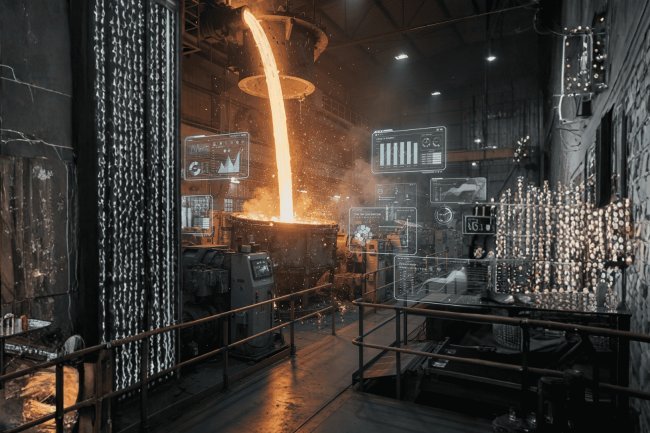
Computational tools evaluate alloy chemistry, phase transformations, and casting behavior long before physical validation begins, allowing engineers to make informed decisions early in the development cycle.
Reduce dependence on costly physical trials while achieving faster alloy qualification and shorter time-to-production.
This structured workflow ensures every alloy recommendation is supported by simulation data. By connecting alloy definition, virtual testing, microstructure validation, and casting optimization, foundries can reduce costly physical iterations, improve quality, and bring high-performance components to production significantly faster.
From Model to Foundry: The Design Workflow
Define Alloy
Run Simulation
Validate Microstructure
Optimize Casting
Build Confidence Before Production
Accelerate Innovation
Data-Driven Decisions at Every Step
Lightweight aluminum and magnesium alloys optimized for superior strength-to-weight ratios in structural components, powertrain systems, and next-generation electric vehicle architectures.
Nickel-based superalloys and titanium castings engineered to withstand extreme temperatures, aggressive environments, and demanding fatigue loads in aerospace applications.
Iron and steel alloy systems tailored for mining, power generation, construction, and heavy machinery castings requiring exceptional wear resistance and dimensional stability.
Across automotive, aerospace, and industrial manufacturing, simulation-based alloy design enables faster development, lower risk, improved material performance, and greater confidence before production begins.
Applications Across Industries
Automotive
Aerospace
Industrial Equipment
Better Materials Through Digital Engineering
Fewer physical trials through accurate simulation predictions.
Minimize defects and optimize microstructure before production.
Advanced casting simulation and foundry engineering expertise at your service.
PoligonCast: Engineering the Future of Cast Alloys
Reduce Development Time
Improve Part Quality
Partner with PoligonCast
What's Your Reaction?