Advanced Modeling Techniques for Molten Metal Flow in Casting
A deep dive into the simulation methods and digital tools that are transforming how foundries predict, optimize, and perfect the casting process — brought to you by Poligoncast.
Why Molten Metal Flow Modeling Matters
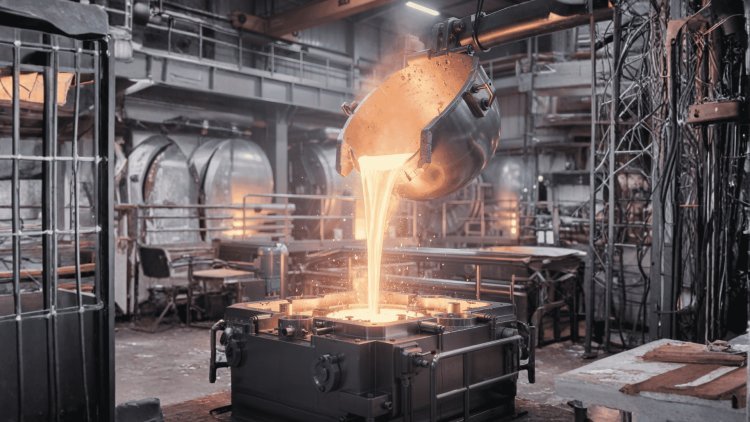
In modern foundry and manufacturing environments, the ability to predict and control molten metal behavior during casting is no longer optional — it is essential for producing high-integrity, defect-free components across aerospace, automotive, and energy industries.
As performance standards tighten and metallurgical tolerances shrink, traditional trial-and-error methods for mold design and process optimization have become increasingly impractical. They consume time, increase production costs, and introduce unnecessary variability into critical manufacturing operations.
Advanced molten metal flow modeling provides a rigorous computational framework for analyzing fluid dynamics, thermal gradients, solidification behavior, and defect formation before a single pour is made. At Poligoncast, this simulation-driven intelligence forms the foundation of every casting solution we deliver.
Thermal Control
Simulation tools help engineers understand temperature gradients, cooling rates, and solidification patterns that directly affect casting integrity.
Fluid Dynamics
Advanced flow modeling predicts turbulence, air entrapment, and mold filling behavior before production begins.
Defect Prevention
Engineers can identify shrinkage, porosity, inclusions, and hot spots digitally before physical casting takes place.
Computational Intelligence
AI-enhanced simulation platforms accelerate optimization while reducing trial casting iterations and development costs.
The Physics Behind the Flow
Accurate molten metal flow simulation requires solving multiple tightly coupled physical equations simultaneously. Advanced casting simulation platforms combine computational fluid dynamics, thermal analysis, and phase-change modeling to predict real-world casting behavior with remarkable precision.
Navier-Stokes Equations
These equations govern the conservation of mass and momentum for viscous molten metal flow through complex mold geometries.
They form the mathematical backbone of CFD-based casting simulation systems.
Energy Conservation
Thermal models track heat transfer throughout the casting cycle, including convection, conduction, and superheat dissipation.
Latent heat release during solidification is also incorporated into the simulation environment.
Volume of Fluid (VOF)
VOF methods capture free-surface melt behavior as molten metal advances through the mold cavity.
This enables accurate prediction of turbulence, air entrapment, misruns, and cold shuts.
Solidification Kinetics
Phase-change models simulate mushy zone development, shrinkage porosity formation, and grain evolution during cooling.
These models connect metallurgical behavior directly with fluid flow and thermal gradients.
Core Modeling Techniques in Modern Casting Simulation
Modern casting simulation platforms integrate advanced numerical methods to analyze molten metal behavior, thermal stress evolution, and solidification performance with exceptional precision. These modeling techniques enable foundries to optimize quality, reduce defects, and accelerate process development.
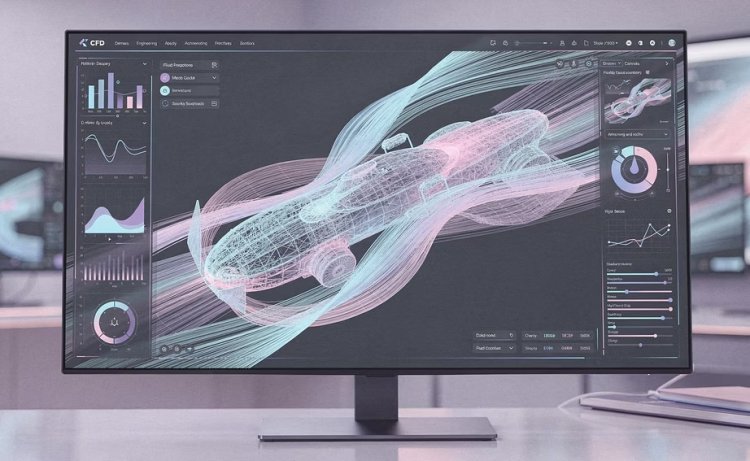
Computational Fluid Dynamics (CFD)
CFD solvers divide mold geometry into fine computational meshes and solve flow equations across millions of nodes.
Advanced turbulence models such as k-ε and k-ω SST capture transitions between laminar and turbulent flow conditions.
These simulations help predict oxide generation, inclusion transport, and gating system performance.
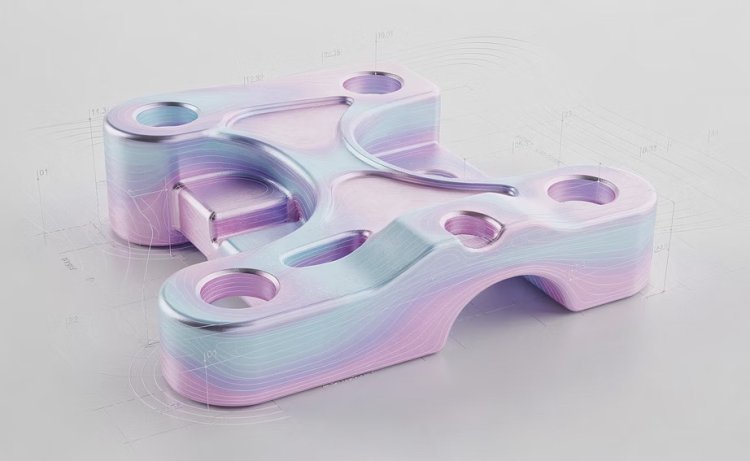
Finite Element Analysis (FEA)
FEA models quantify thermally induced stress, distortion, and contraction behavior during cooling and solidification.
Coupled thermal-mechanical solvers predict hot tearing, residual stress concentration, and dimensional deviation.
These analyses improve structural integrity and dimensional consistency in critical cast components.
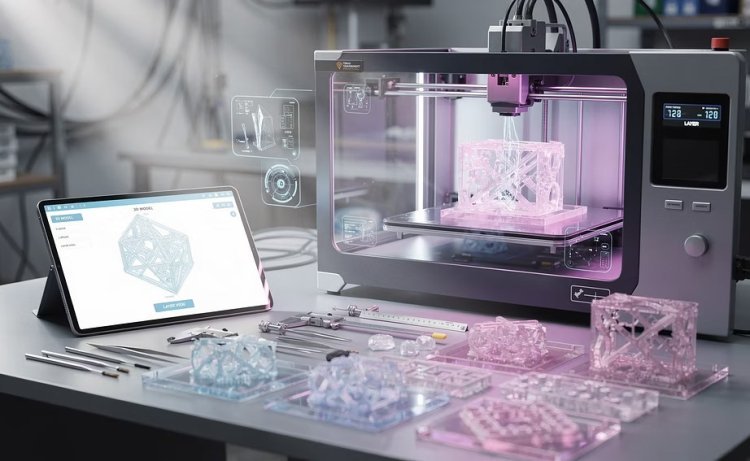
Lattice Boltzmann Method (LBM)
LBM simulates fluid behavior at the mesoscale and delivers exceptional computational parallelization on GPU hardware.
The method performs especially well in thin-walled geometries and highly complex mold structures.
It is increasingly used for investment casting and porous-media flow applications in advanced tooling systems.
Turbulence, Free Surface, and Inclusion Modeling
One of the most critical — and historically underappreciated — aspects of molten metal flow is turbulence within the gating and runner system. Excessive turbulence introduces oxide formation, gas entrapment, and inclusion defects that directly compromise casting quality and mechanical performance.
Advanced casting simulation platforms now employ high-resolution multiphase Volume of Fluid (VOF) models capable of tracking the metal-air interface with sub-millimeter accuracy throughout mold filling.
At Poligoncast, these simulations are used to redesign gating architectures that reduce turbulent kinetic energy while preserving optimal fill velocity — balancing casting integrity, productivity, and cycle efficiency simultaneously.
Air Entrapment Detection
Simulation models identify gas pockets and trapped air caused by improper gating geometry and unstable mold filling behavior.
Oxide & Inclusion Tracking
High-velocity turbulence zones can generate oxide bifilms and inclusion defects that reduce metallurgical integrity.
Melt Front Stability
Flow instability analysis helps predict cold shuts, misruns, and irregular fill patterns during mold cavity progression.
Gating Optimization
Engineers optimize runner layouts and gate configurations to reduce turbulent kinetic energy while maintaining fill efficiency.
Key Turbulence Metrics Tracked
Solidification Modeling and Defect Prediction
Flow simulation does not end when mold filling is complete. The transition from liquid to solid — the solidification phase — is where many of the most critical casting defects originate. Advanced simulation platforms couple thermal fields, fluid behavior, and microstructural evolution to predict defect formation with remarkable spatial precision.
Shrinkage Porosity
Simulation models track liquid-fraction gradients and apply Niyama criterion analysis across the solidifying domain.
Engineers can optimize riser placement and chilling strategies to achieve directional solidification and reduce void formation.
Hot Tearing
Thermal stress analysis identifies cracking risk in the semi-solid mushy zone during late-stage solidification.
Defects occur when accumulated strain exceeds the coherency strength of the partially solidified structure.
Macrosegregation
Solute transport models coupled with interdendritic flow analysis predict compositional non-uniformity during solidification.
Macrosegregation can significantly affect corrosion resistance, fatigue performance, and mechanical reliability.
Microstructure Prediction
CAFÉ (Cellular Automaton – Finite Element) methods simulate grain nucleation, growth, and phase evolution.
These models help control grain size distribution and columnar-to-equiaxed transition behavior in critical castings.
Digital Twin Integration and Real-Time Process Optimization
The most transformative advancement in modern casting simulation is not simply faster computation — it is the integration of simulation intelligence into live digital twin environments that mirror physical foundry operations in real time.
By linking validated simulation models with live production data — including melt temperature, pouring rate, mold conditions, and ambient variables — digital twins continuously update process predictions as operating conditions evolve.
At Poligoncast, this real-time computational framework enables predictive process optimization, adaptive control strategies, and intelligent manufacturing workflows across distributed foundry environments.
Process Drift Detection
Digital twins continuously compare real-time production conditions against validated simulation baselines to detect deviations before defects occur.
Adaptive Process Control
Closed-loop control systems dynamically adjust pouring parameters and thermal conditions to maintain stable casting performance.
Machine Learning Datasets
Historical process data collected through digital twins becomes a powerful training foundation for predictive AI optimization systems.
Remote Process Monitoring
Distributed foundry networks can be monitored remotely through centralized digital twin platforms with live operational visibility.
Simulation-Driven Gating and Riser System Design
The design of gating and riser systems remains the single most powerful lever available to foundry engineers for controlling casting quality, fill stability, and solidification behavior.
Traditional empirical design rules — while historically valuable — cannot fully capture the complex, geometry-specific flow patterns generated within modern net-shape casting components.
At Poligoncast, simulation-driven iteration replaces expensive physical trial pours with rapid virtual optimization cycles that dramatically reduce tooling lead time, improve fill uniformity, minimize turbulence, and enhance directional solidification simultaneously.
Initial Design
Engineers develop preliminary gating and riser layouts based on casting geometry and process constraints.
CFD Flow Analysis
Simulation platforms analyze molten metal flow behavior, turbulence zones, and thermal evolution.
Defect Identification
Potential defects such as porosity, air entrapment, hot spots, and cold shuts are detected virtually.
Design Optimization
Gating architecture is refined iteratively to achieve stable filling and directional solidification performance.
Why Simulation-Driven Iteration Matters
Each virtual iteration cycle takes hours rather than weeks, dramatically reducing physical trial pours, tooling revisions, and process uncertainty. The result is a highly optimized gating and riser system engineered for fill consistency, turbulence reduction, and superior casting integrity from the very first production run.
Material Property Databases and Alloy-Specific Calibration
A casting simulation model is only as accurate as the material properties it consumes. Molten metal behavior is highly sensitive to alloy chemistry, where even small compositional changes can significantly influence viscosity, thermal conductivity, surface tension, density, and latent heat behavior.
At Poligoncast, simulation workflows are powered by a proprietary alloy-calibrated material database developed through decades of foundry partnerships and real-world production validation.
Through physical pour experiments, thermocouple measurements, and alloy-specific calibration routines, simulation evolves from a qualitative visualization tool into a quantitative engineering platform capable of highly predictive casting analysis.
Aluminum Alloys
Simulation libraries include calibrated datasets for A356, A380, 319, 7075, and other high-performance aluminum systems.
Iron & Steel Systems
Gray iron, ductile iron, stainless steels, and low-alloy steel grades are calibrated for solidification and stress analysis workflows.
Copper & Nickel Alloys
Databases include bronzes, brasses, beryllium copper, and nickel superalloys used in aerospace-grade investment casting.
Magnesium Applications
Lightweight magnesium alloy models support advanced automotive casting applications focused on mass reduction and efficiency.
Alloy-Specific Models
Simulation parameters are calibrated independently for each alloy family and chemistry range.
Thermocouple Validation
Physical temperature measurements close the loop between predicted and real-world solidification behavior.
Proprietary Database
Decades of foundry production knowledge are embedded into continuously refined simulation datasets.
Software Platforms Used in Advanced Casting Simulation
Poligoncast’s simulation engineering team works across multiple commercial and research-grade casting simulation platforms, selecting the optimal solver environment based on alloy behavior, casting geometry, process complexity, and production requirements.
MAGMASOFT
Industry-standard casting process simulation platform with integrated optimization capabilities for gating, risering, and autonomous process parameter development.
Widely deployed for aluminum, iron, and steel casting applications across high-volume manufacturing environments.
ProCAST / CALCOSOFT
Advanced FEA-based simulation environments with strong thermomechanical and microstructure prediction capabilities.
Frequently preferred for aerospace investment casting, medical-grade components, and precision foundry applications.
FLOW-3D CAST
High-fidelity CFD platform focused on free-surface molten metal flow and advanced mold filling dynamics.
Particularly effective for die casting, low-pressure permanent mold systems, and tilt-pouring operations.
AnyCasting / NovaFlow
Practical and commercially efficient simulation tools designed for rapid setup and streamlined foundry workflows.
Widely used for gravity sand casting and high-pressure die casting applications requiring fast iteration cycles.
High-Pressure Die Casting: A Simulation-Intensive Process
High-pressure die casting (HPDC) is one of the most simulation-intensive manufacturing processes due to extreme injection velocities, ultra-short fill times often below 100 milliseconds, and highly sensitive venting and thermal conditions.
Accurate prediction of melt behavior requires coupled modeling of fluid dynamics, air entrapment, die thermal response, and solidification kinetics — making simulation essential for defect-free production.
Shot Profile Optimization
Simulates slow-shot and fast-shot transitions to reduce air entrapment and stabilize melt front progression.
Overflow & Vent Design
Models gas evacuation pathways to ensure trapped air is safely directed away from the casting cavity.
Thermal Die Balance
Simulates cyclic die temperature distribution to prevent hot spots, thermal fatigue, and inconsistent solidification.
Why Simulation Is Critical in HPDC
With fill times under 100 milliseconds and extreme injection dynamics, even minor design inefficiencies can cause porosity, cold shuts, and die failure. Simulation enables engineers to optimize the entire process chain before production begins, reducing scrap rates and extending tooling life.
Investment Casting and the Challenge of Thin-Wall Flow
Investment casting is the process of choice for aerospace turbine blades, medical implants, and high-complexity precision components, but it introduces unique simulation challenges due to extremely thin wall sections often below 2 mm and highly complex internal geometries.
In such regimes, flow behavior is dominated by surface tension, rapid heat extraction into ceramic shells, and the constant risk of premature solidification, making accurate predictive simulation essential for yield and quality.
Shell Preheat Optimization
Controls ceramic shell temperature to maintain metal fluidity and reduce premature solidification during mold filling.
Wax Pattern Cluster Design
Optimizes multi-cavity thermal balance to ensure uniform cooling and consistent filling across complex tree structures.
Directional Solidification Control
Manages grain structure evolution for single-crystal and columnar airfoils used in aerospace turbine applications.
Shell Permeability Modeling
Simulates gas evacuation through ceramic shells to prevent porosity and trapped air defects during filling.
Machine Learning and AI-Augmented Casting Simulation
The frontier of casting simulation is increasingly defined by the integration of artificial intelligence and machine learning into simulation-to-process workflows. While CFD and FEA remain highly accurate, they are computationally intensive, often requiring hours of solve time per high-resolution model.
AI-augmented simulation frameworks dramatically accelerate decision-making by learning from historical simulation datasets, production feedback, and defect databases.
Surrogate Modeling
Neural networks trained on simulation datasets provide instant predictions of fill behavior and defect risk, enabling rapid exploration of complex design spaces in seconds instead of hours.
Automated Design Optimization
Genetic algorithms and gradient-based optimizers automatically refine gating, risering, and process parameters across thousands of virtual iterations to converge on optimal casting configurations.
Defect Classification from CT Data
Computer vision models analyze X-ray and CT scan data to correlate internal defects with root causes, creating a closed-loop feedback system that continuously improves simulation accuracy.
Validation: Closing the Loop Between Simulation and Reality
No simulation model has value unless it is rigorously validated against physical experimental data. Validation ensures that simulation outputs reliably represent real casting behavior within defined uncertainty limits.
At Poligoncast, validation is treated as a continuous engineering process — not a one-time check — forming the foundation of predictive accuracy across all casting simulation workflows.
Benchmark Pour Trials
Instrumented molds with thermocouples capture real thermal and flow data for calibration.
X-Ray & CT Inspection
Internal defect maps are compared with simulated porosity predictions for spatial accuracy validation.
Mechanical Testing Correlation
Tensile, hardness, and fatigue results are matched with predicted microstructure zones.
Iterative Refinement
Simulation models are continuously updated until results match defined acceptance criteria.
Business Impact: From Simulation to the Bottom Line
Advanced molten metal flow modeling is not an academic exercise. It directly impacts profitability, operational efficiency, and competitive advantage across modern foundry operations.
The ROI of simulation-driven engineering is measurable across tooling, scrap reduction, energy consumption, and time-to-market performance.
Reduction in Tooling Trials
Fewer physical trial pours are required due to accurate simulation-driven design validation.
Scrap Rate Reduction
Defect prediction and process optimization significantly reduce rework and rejected castings.
Faster Time-to-First-Good-Part
Optimized designs reach production quality in fewer physical iterations.
Energy Cost Savings
Optimized thermal control reduces furnace energy consumption per unit produced.
Poligoncast's Approach: Engineering Precision at Every Stage
At Poligoncast, advanced molten metal flow modeling is not a standalone service — it is embedded across the entire casting lifecycle, from early feasibility analysis to full-scale production optimization and digital twin deployment.
Each stage is engineered to reduce risk, improve yield, and ensure repeatable casting quality through simulation-driven decision-making.
Feasibility & Geometry Review
Early simulation identifies castability risks before design freeze, preserving flexibility and reducing downstream cost.
Gating & Riser Simulation
CFD and solidification analysis optimize gating, risers, and chills for yield and internal soundness.
Process Parameter Optimization
Pour temperature, fill speed, and cycle time are optimized to establish robust, repeatable process windows.
Production Monitoring & Digital Twin
Validated models evolve into live digital twins for continuous monitoring and process improvement.
Conclusion: The Future of Foundry Engineering Is Simulated First
The foundry industry stands at an inflection point. The increasing complexity of aerospace, automotive, and energy components — combined with pressure on cost, lead time, and quality — makes simulation-driven engineering a necessity rather than an option.
Advanced molten metal flow modeling is now a deployed engineering reality, not a theoretical concept.
State-of-the-Art Simulation Tools
VOF flow modeling, turbulence simulation, AI optimization, and digital twin systems define modern casting engineering practice.
Production-Ready Engineering Tools
These techniques are actively deployed in industrial environments to reduce defects, improve yield, and stabilize production.
Partnership with Poligoncast
Poligoncast supports organizations in eliminating casting defects and building predictable, data-driven manufacturing systems.
If your organization is looking to reduce defects, shorten development cycles, and improve casting predictability, Poligoncast is ready to partner with you.
What's Your Reaction?