Heavy Casting Challenges
The Challenge of Heavy Castings
Critical Industrial Components
Complexity Increases Risk at Every Stage
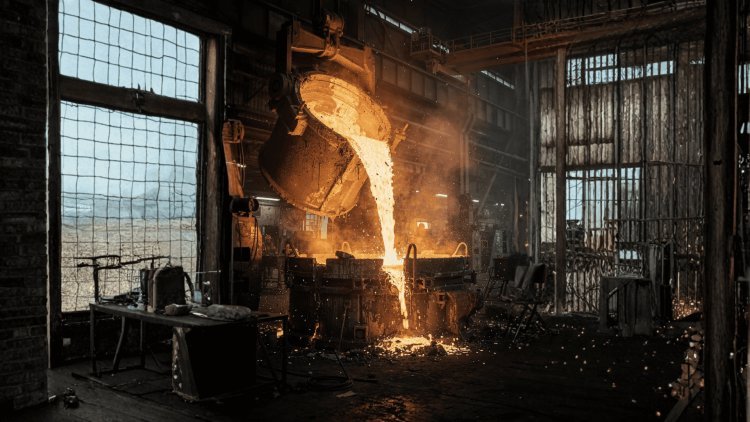
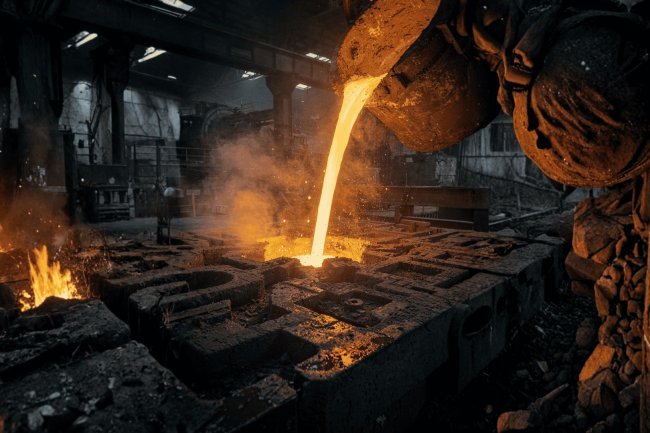
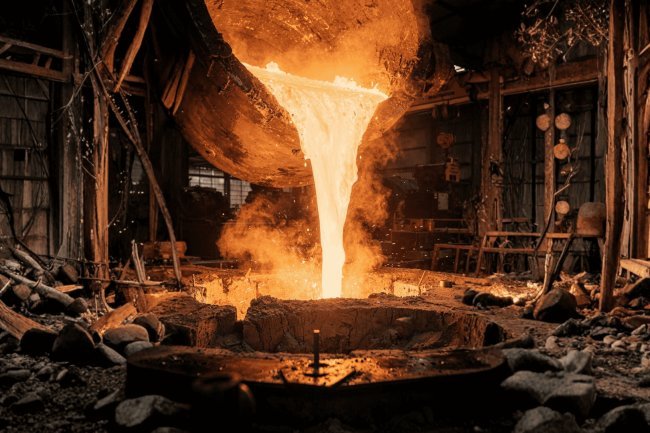
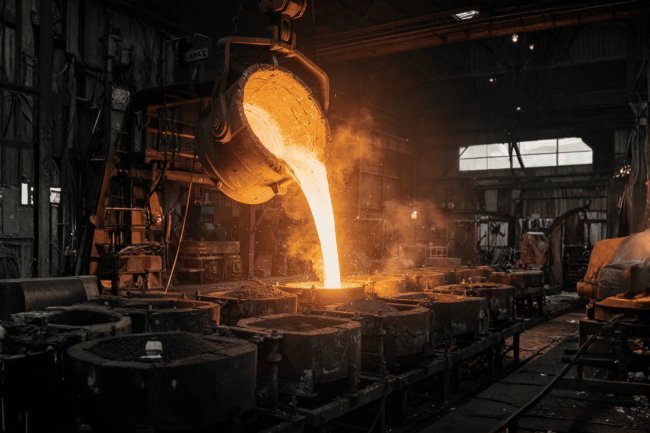
Heavy castings are among the most demanding components in manufacturing, serving critical applications across energy, mining, infrastructure, and heavy machinery sectors. Their large sections, complex geometries, and challenging solidification behavior make them highly susceptible to defects that impact structural integrity, increase scrap rates, and drive up production costs.
SP
Shrinkage Porosity
Voids formed during solidification weaken mechanical performance, reduce reliability, and compromise structural integrity.
HT
Hot Tears
Thermal stresses generated during cooling can create cracks in critical regions, leading to costly part rejection.
MC
Misruns & Cold Shuts
Incomplete mold filling and poor metal fusion produce rejected castings, wasted material, and additional production delays.
Simulation-Driven Manufacturing
How PoligonCast Applies Simulation
01
Geometry & Gating
Define casting geometry, feeders, runners, and gating systems
02
Thermal & Flow
Analyze mold filling, temperature gradients, and solidification
03
Defect Prediction
Identify porosity, shrinkage, hot tears, and flow defects
04
Process Validation
Optimize process parameters and approve for production
SIM
Full Lifecycle Coverage
Every Heavy Casting Validated Before the First Pour
PoligonCast's simulation workflow spans the entire casting lifecycle—from initial geometry and gating design through thermal-flow analysis, defect prediction, and final process validation. By evaluating every critical stage digitally, heavy castings can be optimized for yield, quality, and manufacturability before production begins, reducing risk and ensuring first-pour success.
Simulation-Driven Design
What Is Simulation-Driven Design?
Simulation-driven design integrates computational modeling into every stage of the casting process — from gating system layout to solidification analysis — before physical production begins.
Digital Twin Creation
A virtual replica of the casting is built and tested digitally.
Process Optimization
Parameters are refined to eliminate defect-prone conditions.
Validated Tooling
Mold and die designs are confirmed before costly fabrication.
Advanced Simulation Tools
Key Simulation Capabilities
SM
Defect Prediction

Solidification Modeling
Predicts shrinkage, porosity, hot spots, and feeding behavior with high accuracy before production begins.
MF
Flow Analysis

Mold Filling Analysis
Simulates molten-metal flow to prevent misruns, turbulence, air entrapment, and oxide inclusions.
SD
Structural Validation

Stress & Distortion Analysis
Identifies residual stresses, dimensional deviation, and deformation risks before tooling and production.
Comprehensive Digital Validation
Predict Quality Before Manufacturing
By combining solidification modeling, mold-filling analysis, and stress prediction, PoligonCast enables engineers to identify casting risks early, optimize process parameters, and achieve higher first-pass quality with fewer production iterations.
Start Your Digital Casting Journey
Partner with PoligonCast
Engineering Excellence
Defect-Free Heavy Castings. Delivered with Confidence.
Simulation-driven design is transforming how the world's most demanding castings are engineered. PoligonCast combines deep foundry expertise with advanced digital tools to reduce risk, improve yield, accelerate production readiness, and consistently deliver high-quality castings.
SIM
Advanced Simulation
State-of-the-art casting process modeling enables accurate prediction of filling, solidification, thermal behavior, and defect formation.
ENG
Foundry Engineering
Decades of practical metallurgical and foundry expertise ensure simulation insight translates into real manufacturing success.
DM
Digital Manufacturing
End-to-end digital solutions integrate design validation, optimization, qualification, and production support for modern foundries.
PC
Build Better Castings from Day One
From concept development through production release, PoligonCast helps foundries reduce defects, minimize risk, and accelerate time-to-market using a proven simulation-driven engineering approach designed for today's most demanding casting applications.