Simulation-Based Optimization of Cooling Channel Design
A deep dive into how digital simulation is transforming thermal management in modern casting and foundry engineering — brought to you by Poligoncast.
Thermal Management
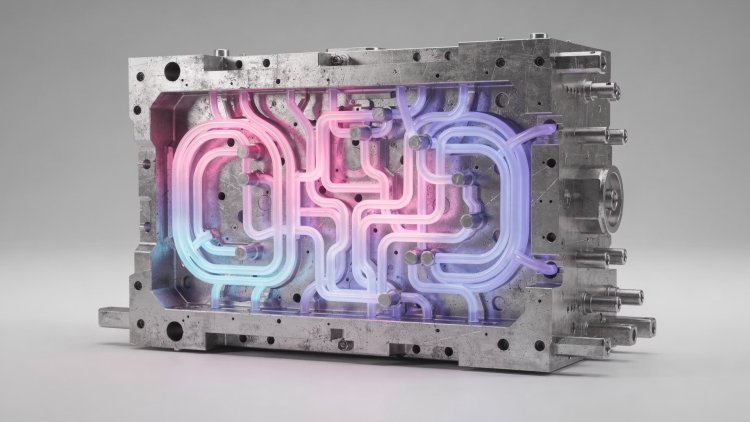
In casting and foundry operations, cooling channel design is one of the most critical factors influencing part quality, cycle time, and tooling longevity. Effective thermal management ensures uniform solidification, minimizes defects, and improves manufacturing efficiency.
01
Uneven Solidification
Poor cooling distribution creates inconsistent solidification rates, increasing the risk of distortion, dimensional inaccuracies, and warpage.
02
Hot Spot Formation
Localized heat accumulation can cause shrinkage defects, porosity, and metallurgical inconsistencies within critical casting regions.
03
Premature Die Failure
Excessive thermal gradients accelerate wear, cracking, and thermal fatigue, shortening tooling lifespan and increasing maintenance costs.
04
Extended Cycle Times
Inefficient heat removal slows production cycles, reducing throughput and limiting overall manufacturing productivity.
Digital Foundry Engineering
The Role of Simulation in Modern Foundry Engineering
Traditional trial-and-error tooling approaches are costly and time-consuming. Simulation-based optimization replaces guesswork with data-driven precision, enabling engineers to validate cooling performance, improve quality, and reduce development costs before production begins.
01
Thermal Analysis
Predict heat distribution across the mold before any metal is poured, enabling optimized cooling strategies and uniform solidification.
02
Flow Simulation
Model coolant flow rates, pressure drops, and turbulence within cooling channels to maximize thermal efficiency.
03
Cycle Time Reduction
Identify optimal cooling durations that minimize production cycle times while maintaining dimensional accuracy and quality.
04
Defect Prevention
Detect shrinkage porosity, hot spots, and solidification issues virtually before production begins, reducing costly rework.
Optimization Workflow
The Simulation-Based Optimization Process
By iterating digitally, Poligoncast engineers compress weeks of physical prototyping into hours of virtual testing — delivering optimized tooling designs with confidence and precision.
01
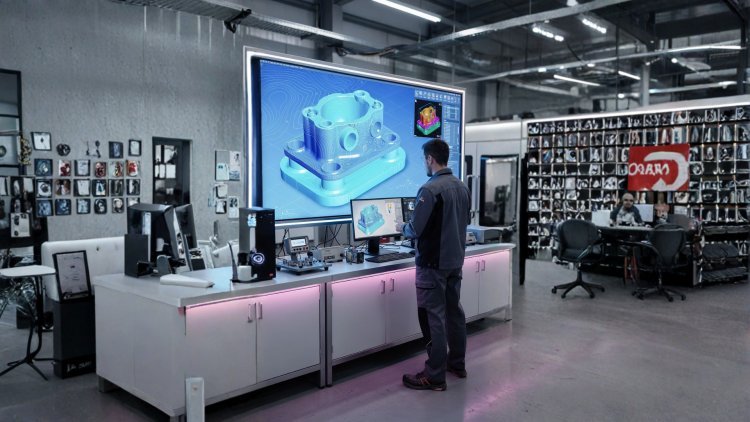
CAD Modeling
Define cooling channel geometry and tooling layout.
02
Thermal & Flow Simulation
Evaluate temperature distribution, coolant flow, and velocity fields.
03
Design Iteration
Optimize channel geometry and thermal performance through virtual testing.
04
Validated Tooling
Produce and confirm tooling with confidence before manufacturing.
Faster Development. Better Results.
Simulation-driven optimization enables rapid design refinement, reduces costly physical prototypes, and delivers higher-quality tooling in a fraction of the traditional development timeline.
Advanced Cooling Technology
Conformal vs. Conventional Cooling Channels
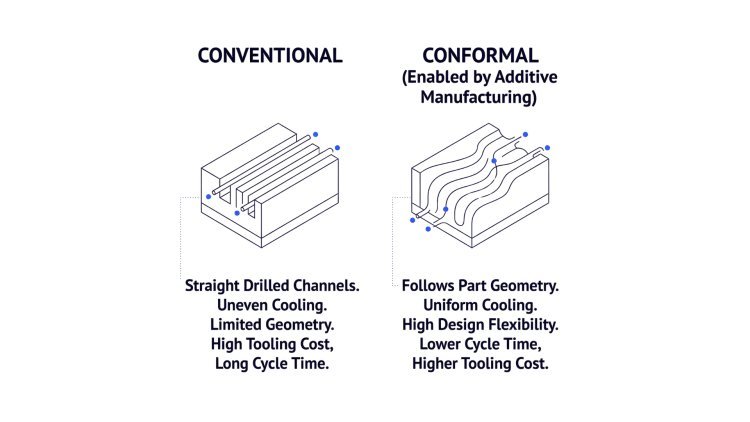
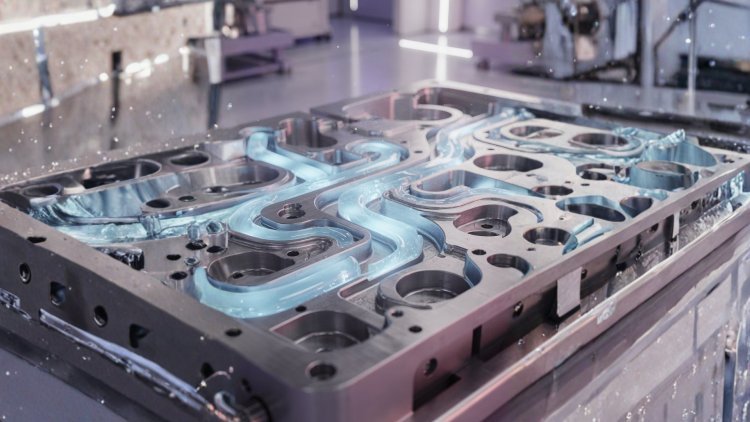
Conformal cooling channels follow the contour of the part geometry, enabling uniform heat extraction that conventional straight-drilled channels simply cannot achieve. Enabled by additive manufacturing and advanced simulation, conformal designs have become a cornerstone of high-performance die casting tooling.
OLD
Conventional Cooling
- Straight-drilled channel layouts
- Limited proximity to complex surfaces
- Uneven cooling performance
- Greater risk of hot spots
- Longer cycle times
- Higher thermal gradients
NEW
Conformal Cooling
- Channels follow part geometry
- Uniform heat extraction
- Improved thermal control
- Reduced hot spot formation
- Shorter production cycles
- Enhanced casting quality
30–40%
Faster Cycle Times
In optimized applications, conformal cooling channel designs can reduce cycle times by up to 30–40% while improving thermal uniformity, casting quality, and overall manufacturing efficiency.
Engineering Methodology
Poligoncast's Simulation-Driven Approach
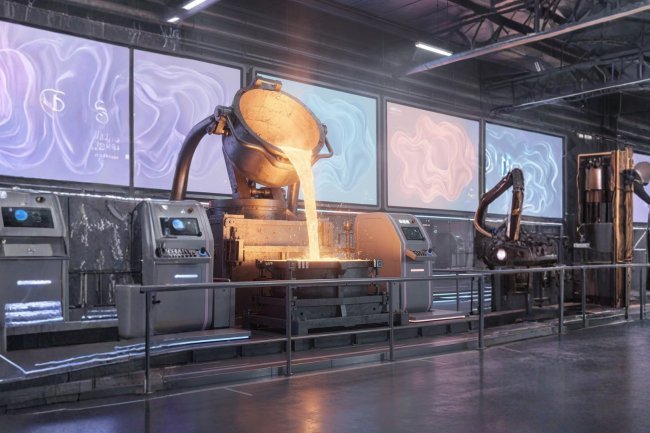
At Poligoncast, simulation is not a final validation step — it is the foundation of every tooling design decision. Our data-driven methodology enables faster development, reduced risk, and consistently optimized casting outcomes.
01
Integrated Workflow
Casting simulation is embedded from concept through final tooling sign-off, ensuring every design decision is backed by data.
02
Multi-Physics Modeling
Thermal, structural, and fluid simulations run in tandem to capture real-world interactions between coolant, mold, and molten metal.
03
Iterative Optimization
Multiple design variants are evaluated virtually, selecting the configuration that best balances quality, cost, and cycle time.
Final Insights
Key Takeaways
Simulation-driven cooling channel optimization delivers measurable improvements in casting quality, tooling performance, and manufacturing efficiency. These principles form the foundation of modern digital foundry engineering.
01
Simulation Replaces Guesswork
Digital thermal and flow modeling eliminates costly physical trial-and-error, enabling smarter and faster cooling channel development.
02
Geometry-following cooling channels provide uniform heat extraction, fewer defects, and significantly shorter cycle times.
03
Quality and Efficiency Improve Together
Optimized cooling reduces shrinkage, warpage, and hot spots while simultaneously increasing throughput and productivity.
04
Poligoncast Leads with Digital Engineering
Advanced casting simulation sits at the core of every Poligoncast solution, from initial design through production-ready tooling.