Simulating Cast Components Under Cyclic Loading for Fatigue Prediction
In modern foundry and manufacturing, predicting how cast components behave under repeated stress is critical to product reliability. PoligonCast leverages advanced simulation to help engineers anticipate fatigue failure before a single part leaves the foundry floor.

Why Fatigue Prediction Matters
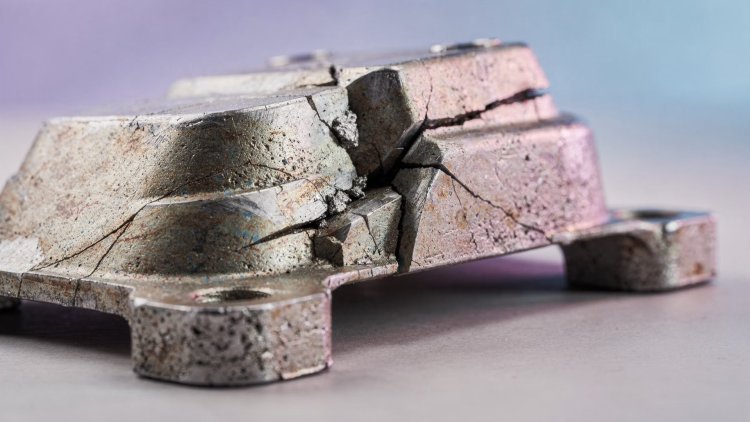
Cast components in automotive, aerospace, and heavy machinery are subjected to cyclic loading — repeated stress cycles that gradually degrade material integrity.
Without accurate fatigue prediction, failures occur unexpectedly, leading to costly recalls, safety risks, and production downtime. Simulation closes this gap before physical prototyping begins.
Automotive
Ensure durability of engine, suspension, and drivetrain castings.
Aerospace
Prevent fatigue-driven failures in mission-critical components.
Heavy Machinery
Improve reliability under extreme operating loads and cycles.
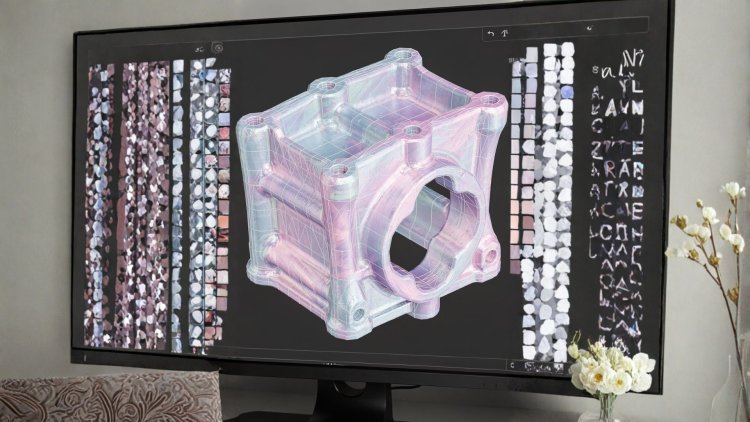
Advanced simulation combines structural analysis, material science, and fatigue algorithms to predict component performance long before production begins.
The Role of Simulation in
Cyclic Loading Analysis
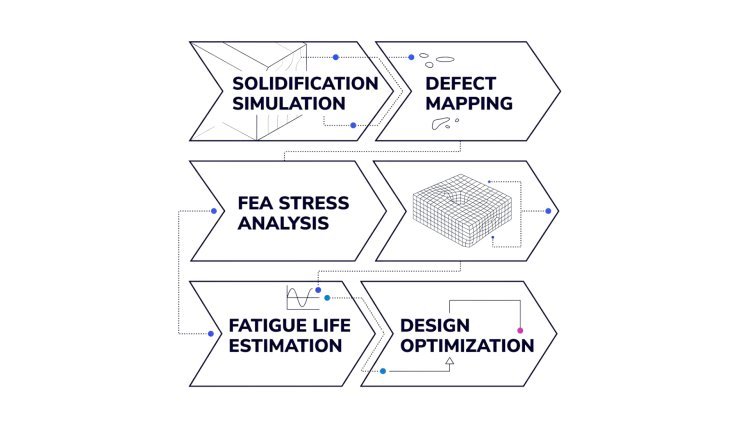
Casting defects — shrinkage porosity, cold shuts, and inclusions — act as stress concentrators that dramatically reduce fatigue life. PoligonCast's simulation workflow links solidification analysis directly to structural fatigue models.
Detect high-risk areas early in the design phase before production begins.
Measure how defects influence fatigue performance and service life.
Optimize gating and risering strategies to minimize defect formation.
Verify performance digitally before committing to tooling investment.
From Casting Defects to Fatigue Life
Defects
Analysis
Fatigue Life
Identify Critical Defect Locations
Quantify Lifespan Impact
Optimize Process Design
Validate Before Tooling
Maps stress amplitude to cycles-to-failure for high-cycle fatigue scenarios common in rotating machinery.
Ideal for low-cycle fatigue, capturing plastic deformation in highly stressed cast regions.
Models crack initiation and propagation from existing defects, predicting remaining service life.
Combining multiple fatigue methodologies provides a comprehensive understanding of component durability, from initial loading cycles to final failure mechanisms.
Key Simulation Methodologies
S-N Curve Approach
Strain-Life Method
Fracture Mechanics
Engineering the Full Fatigue Lifecycle
PoligonCast integrates advanced simulation technologies with practical foundry expertise, enabling manufacturers to reduce risk, accelerate development, and achieve predictable product performance.
PoligonCast's Digital
Manufacturing AdvantageEngineering Confidence Through Simulation
Engineering Confidence
Through Simulation
What's Your Reaction?