Foundry Futures: Closing the Loop on Metal Casting
The foundry industry stands at a pivotal crossroads. After millennia of linear production — extract, melt, cast, discard — a new paradigm is emerging. Circular economy principles are reshaping how foundries think about waste, energy, and materials, transforming yesterday's by-products into tomorrow's competitive advantage. This presentation explores the full spectrum of circular opportunities available to modern metal casters.
The Linear Legacy:
A High-Waste Reality
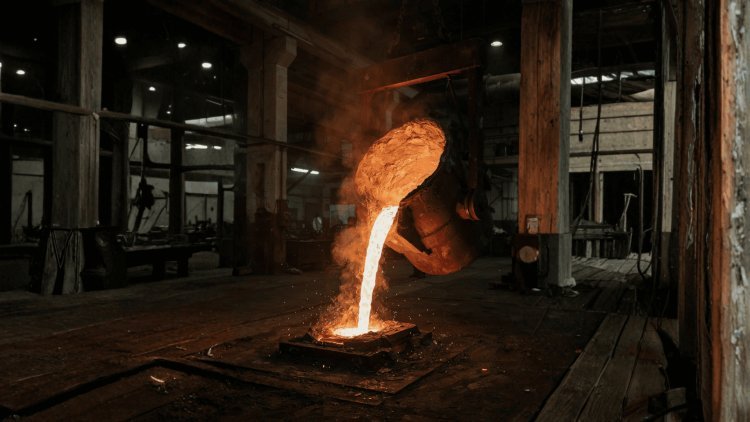
For more than 10,000 years, foundries have transformed raw materials into critical industrial products. Yet behind every shipped casting lies a hidden stream of wasted sand, lost metal, unrecovered heat, and mounting environmental liabilities.
Preventable waste can consume up to 4% of annual turnover in many foundry operations.
Millions Lost Through Inefficiency
Scrapped castings, landfill disposal fees, unrecovered thermal energy, process variability, and environmental compliance expenses collectively create a substantial profitability burden. For a €50M foundry, waste-related losses can exceed €2M annually.
The Traditional Foundry Resource Flow
Spent Foundry Sand
The largest solid waste stream generated by foundries. Millions of tonnes are produced annually, with much of the material historically directed to landfill despite retaining significant residual value and reuse potential.
Rejected Castings
Defect rates between 2% and 10% represent far more than lost metal. Every rejected casting contains embedded energy, labor, machine time, and production capacity that cannot be recovered.
Energy Dissipation
High-temperature furnaces generate significant thermal energy, yet substantial amounts escape through walls, cooling systems, and exhaust gases without being captured or repurposed.
Mechanical and thermal reclamation systems can recover up to 90% of spent sand, cutting raw material purchases, landfill volumes, and disposal fees.
Furnace exhaust heat can be captured for building heating, sand and core pre-drying, and industrial hot water, reducing energy use and carbon footprint.
Better gating, risering, and feeding design improves metal yield by 5–15 percentage points and directly lowers melting energy and alloy consumption.
The First Frontier
Sand Reclamation
Waste Heat Recovery
Methoding Optimization
Partnerships with universities unlock the hidden value of spent foundry sand. Research shows processed sand can substitute for natural sand in concrete, road sub-base, and cement manufacture — transforming disposal costs into revenue streams.
Foundry waste streams can become raw materials for other industries. Cement kilns, brick manufacturers, and road contractors can incorporate spent sand, neutralizing binders and reducing landfill reliance. Logistics and regulatory planning formalize these symbiotic relationships.
Ferrous and non-ferrous scraps — dross, runners, and rejected castings — are recyclable. Partnering with certified processors ensures materials re-enter the supply chain. Careful alloy segregation and traceability maximize recovery value, especially for high-energy metals like aluminum and copper.
Beyond the Factory Gate
Industry-Academia Collaboration
Industrial Symbiosis
Scrap Metal Recovery
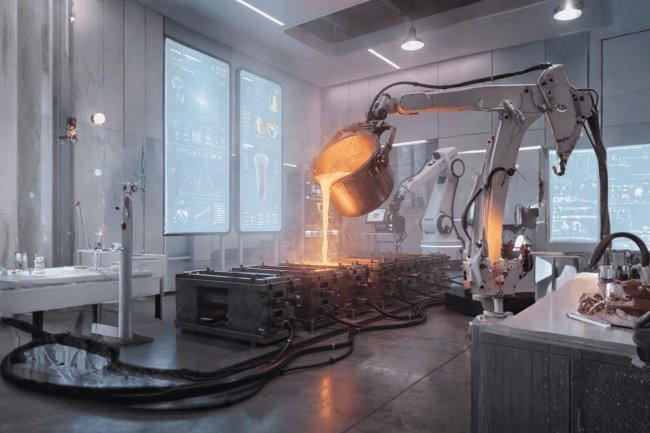
Advanced simulation platforms, IoT monitoring systems, and data-driven decision making are transforming foundries from traditional manufacturing operations into intelligent resource ecosystems where waste, energy, and materials can be continuously optimized.
Reported by foundries combining simulation and digital monitoring programs.
Foundries implementing simulation-driven design and real-time operational monitoring commonly achieve major reductions in scrap generation, improved first-pass quality, and substantial energy efficiency gains. Every avoided defect directly translates into lower material consumption and reduced environmental impact.
Tools such as MAGMASOFT, ProCAST, and NovaFlow&Solid simulate mold filling and solidification behavior before production begins. Engineers can identify shrinkage porosity, cold shuts, hot tears, and flow defects virtually, eliminating costly trial-and-error development.
When defects are removed digitally, foundries avoid wasting metal, sand, energy, labor hours, and machine capacity. Quality improvement becomes a direct sustainability strategy as well as a productivity improvement initiative.
Continuous monitoring of energy, temperature, flow, and process conditions.
Smart meters, thermal sensors, flow monitors, and process instrumentation provide live visibility into foundry operations. Energy peaks, compressed-air leaks, binder consumption anomalies, and process deviations become immediately detectable, enabling predictive optimization instead of reactive troubleshooting.
Digitalization and Design:
The New ToolsBetter Quality, Less Waste, Lower Cost
Prevent Defects Before Casting
Every Defect Avoided Saves Resources
Simulation-Driven Engineering Workflow
Turning Data Into Resource Efficiency
Sustainability initiatives frequently unlock operational savings at the same time. Reduced energy demand, lower disposal costs, fewer defects, and improved material utilization drive stronger profitability while improving environmental performance.
Internal recycling, sand reclamation, and resource recovery reduce dependence on volatile raw-material markets and strengthen long-term business stability against supply-chain disruption.
OEMs increasingly evaluate suppliers on recycled content, emissions reporting, resource efficiency, and environmental certification. Foundries that can prove circular performance gain preferential access to future contracts and strategic partnerships.
Tomorrow's industry leaders will compete on resource efficiency, circularity, resilience, and transparency as much as on cost and output. Foundries that embrace circular principles today are not simply responding to regulations. They are positioning themselves to become the preferred suppliers, innovation leaders, and most profitable organizations of the next manufacturing era.
The Competitive Edge:
Sustainability as StrategyProfit Through Greening
Material Resilience
Sustainability Is Becoming a Supplier Requirement
Four Steps to Circular Leadership
The Future Foundry Journey
Sustainability Is the New Competitive Moat
What's Your Reaction?