Geometry Defeaturing for Efficient Casting Simulation
A deep dive into how modern defeaturing workflows are eliminating manual bottlenecks, accelerating mesh preparation, and enabling higher-fidelity casting simulation at every stage of the design cycle.
The Hidden Bottleneck
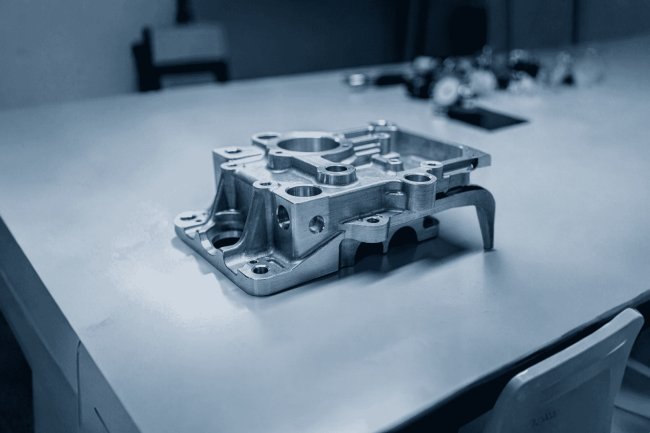
Long before the first mesh is generated or the first solver iteration begins, simulation projects encounter an often-overlooked obstacle: geometry preparation. Design CAD models are created for manufacturing and documentation purposes, not numerical simulation. As a result, they frequently contain countless geometric details that provide no analytical value while creating significant challenges for meshing workflows, solver robustness, and overall simulation efficiency.
Common CAD Issues Found in Imported Models
The Manual Burden
Complex casting models frequently require extensive manual preparation before meshing can even begin. Engineers may spend days repairing geometry, eliminating defects, and suppressing non-essential features simply to create a model that can successfully enter the simulation workflow.
Hours Per Complex Model
Large casting assemblies often require extensive geometry repair and simplification before they are suitable for meshing, consuming valuable engineering resources long before meaningful analysis begins.
Typical Geometry Cleanup Tasks
The Iteration Tax
Modern product development rarely follows a linear path. Geometry changes continuously as teams optimize performance, manufacturability, weight, and cost. Unfortunately, every design revision often triggers a complete restart of geometry preparation activities.
Common Design Changes That Restart Preparation
Why Minor CAD Features Become Major Problems
Tiny Gaps & Surface Overlaps
Small imperfections disrupt meshing algorithms, generate invalid elements, and create unnecessary repair operations.
Decorative Features
Logos, engraving, and cosmetic details inflate mesh size without contributing meaningful simulation value.
Manual Processes
Human-driven workflows increase variability and reduce consistency between successive design iterations.
Repeated Cleanup
Geometry preparation often becomes a recurring bottleneck whenever design modifications occur.
The evolution from manual geometry suppression to intelligent, automated defeaturing represents one of the most significant productivity advances in casting CAE—turning an undocumented, inconsistent practice into a reproducible, rule-based workflow.
Traditional defeaturing relied on engineers individually identifying and suppressing features within their CAD environment. The "No Defeaturing" philosophy—retaining all geometric detail—was common when simulation compute resources were not the bottleneck.
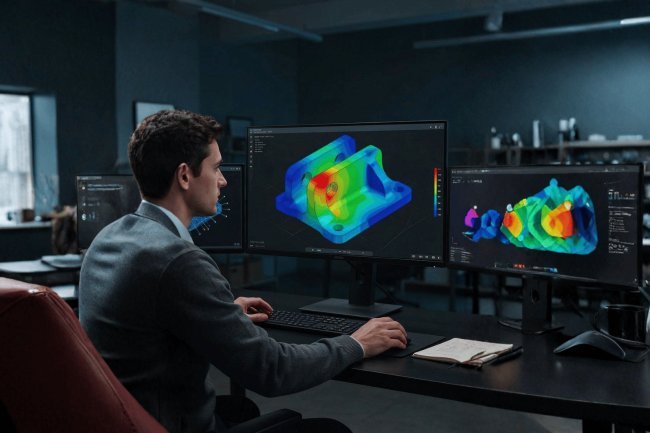
Contemporary tools such as the 3DEXPERIENCE Simulation Model Preparation app bring systematic, rule-based automation to the defeaturing process. Engineers define filter criteria—minimum fillet radius, maximum hole diameter, chamfer length thresholds—and the platform applies these rules consistently across the entire model geometry.
Each category can be tuned independently based on the simulation objective—ensuring that only features that do not meaningfully influence casting simulation results are suppressed, while preserving fidelity where it matters.
Traditional Defeaturing vs.
Automated WorkflowsUndocumented, inconsistent, slow.
Clean, reproducible, fast.
A comprehensive catalog of non-influential features.
into a clean, reproducible, fast workflow that scales across complexity and part count.
Platforms like Bench interpret SOPs written in natural language, combined with visual annotations on 3D models. They identify non-critical zones such as parting lines, cosmetic surfaces, and fastener bosses, creating explainable workflows with full traceability. Each action can be reviewed, modified, or rolled back — ensuring transparency and compliance.
AI-powered defeaturing delivers parametric CAD models in minutes instead of hours. Because outputs remain parametric, downstream teams can remesh or modify geometry without losing design intent. This accelerates workflows while preserving fidelity.
Bench exemplifies how context-aware automation transforms defeaturing into a transparent, rapid, and reproducible process — acting as a true extension of the engineering team.
Intelligent Automation with Bench
How AI-Powered Defeaturing Works
Speed and Format Fidelity
Streamlined defeaturing does far more than reduce geometry cleanup time. By eliminating unnecessary complexity before meshing, engineering teams achieve higher simulation throughput, improve defect prediction accuracy, and unlock advanced process simulations that would otherwise be computationally impractical. The result is a more agile, data-driven casting development workflow capable of evaluating more concepts, identifying defects earlier, and accelerating design optimization.
Cosmetic fillets, logos, engravings, tiny holes, and excessive curvature force mesh generators to create unnecessary local refinements. These refinements dramatically increase element count, memory consumption, and solver runtime while contributing little or nothing to simulation accuracy.
Proper geometry simplification combined with symmetry boundary conditions can reduce mesh generation time and solver runtime by up to eighty percent while maintaining engineering accuracy.
Geometry simplification creates an opportunity to redistribute mesh density toward simulation-critical regions. Instead of wasting computational resources on cosmetic details, engineers can concentrate refinement where defect mechanisms actually occur.
Some casting simulations are inherently computationally intensive. Cyclic thermal analyses, vacuum-assisted die casting studies, and multi-shot production simulations require efficient geometry preparation to remain practical within project schedules.
Achieved through geometry simplification and symmetry utilization.
Automated workflows replace repetitive cleanup activities.
More gating and runner concepts evaluated per development cycle.
When geometry preparation ceases to be a bottleneck, engineers gain the freedom to explore more design alternatives, compare more process conditions, and identify optimal solutions with greater confidence.
Fast, automated, and repeatable geometry simplification transforms the economics of casting simulation. Reduced element counts accelerate meshing and solver performance, while targeted mesh refinement improves prediction quality for porosity, air entrainment, and shrinkage defects. Equally important, efficient geometry workflows unlock advanced simulations such as cyclic die casting and vacuum-assisted processes that would otherwise be prohibitively expensive. The result is a simulation organization capable of evaluating more concepts, learning faster, reducing scrap risk, and making higher-confidence engineering decisions throughout the product development cycle.
Strategic Benefits
for Casting CAEThree Major Benefits of Defeaturing
Meshing & Solve Time Reduction
How Unnecessary Geometry Increases Computational Cost
Faster Meshing & Calculations
Additional Efficiency Through Symmetry
Enhanced Defect Prediction
Mesh Density Where It Matters
Critical Defects Better Predicted
Advanced Process Enablement
Making Advanced Simulation Practical
Quantified Business Impact
Means Better Design Decisions
Defeaturing Is Not Merely
A Preprocessing Task.
It Is A Strategic Multiplier.
The shift from manual to automated defeaturing is not merely a productivity improvement—it is a strategic transformation in how casting simulation programs are structured, how quickly teams can iterate, and ultimately, how well the final casting performs in service.
Automated, rule-based and AI-assisted defeaturing pipelines deliver repeatable, documented, and auditable model preparation that survives design changes without requiring engineering rework.
When defeaturing is fast, engineers can afford to evaluate more design alternatives. This directly translates to optimized gate and runner system designs, better thermal management through die design adjustments, and superior as-cast part quality.
Simulation environments are evolving toward interactive, immersive, 3D-centered experiences where geometry preparation, meshing, solving, and post-processing are deeply integrated and largely automated.
Faster Insights,
Higher QualityManual cleanup is neither scalable nor consistent.
More alternatives → better designs.
Integrated, immersive, automated.
— it is a core capability that determines how fast, how accurately,
and how frequently casting simulation can deliver actionable engineering insight.
What's Your Reaction?